17β-HSD11 Rabbit Polyclonal Antibody
APRab06288-20μL · 20μL
Verified Partner
Sign in to see pricing and request a quote.
Brand Store Product
No external links. Get your quote directly here.

Description
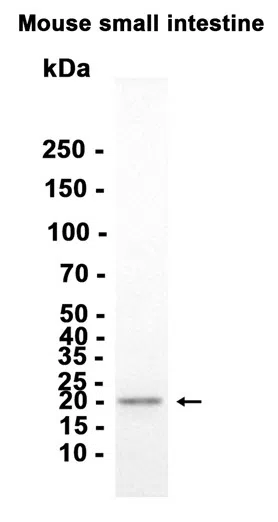
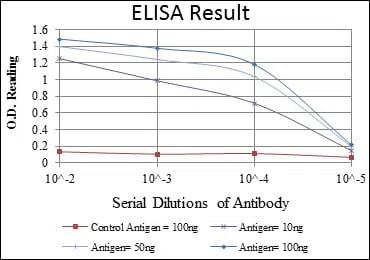
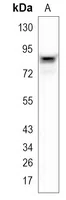
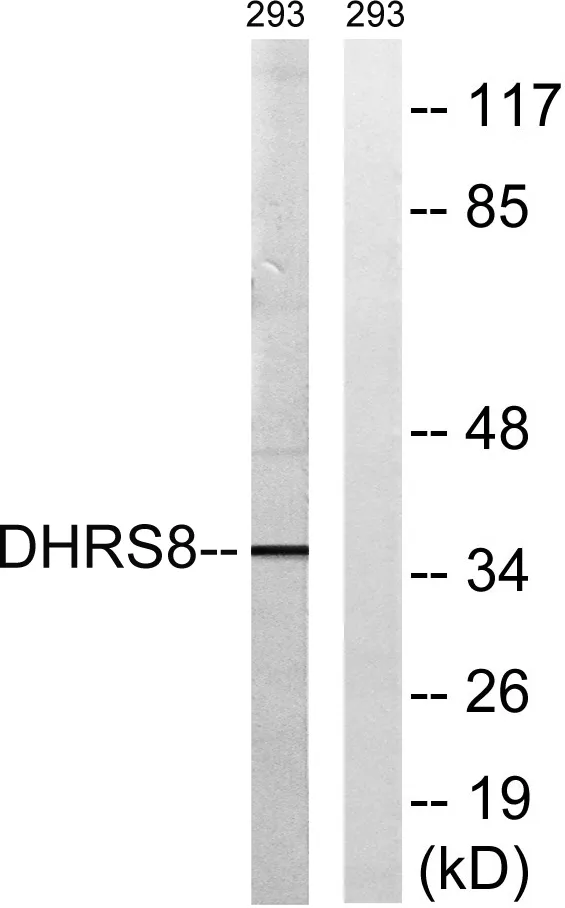
EnkiLife offers the 17β-HSD11 Rabbit Polyclonal Antibody. This antibody reacts with Human,Rat,Mouse species and is suitable for WB,ICC/IF,ELISA application. Alternative Names of Immunogen: HSD17B11; DHRS8; PAN1B; PSEC0029; Estradiol 17-beta-dehydrogenase 11; 17-beta-hydroxysteroid dehydrogenase 11; 17-beta-HSD 11; 17bHSD11; 17betaHSD11; 17-beta-hydroxysteroid dehydrogenase XI; 17-beta-HSD XI; 17betaHSDXI; Cutaneous T-cell lym. The product boasts remarkable high specificity, outstanding reproducibility, and exceptional affinity, making it a reliable and superior choice for your needs. Dilution Ratio: WB 1:500-1:2000,ICC/IF 1:100-1:300,ELISA 1:5000-1:10000 Background: Short-chain alcohol dehydrogenases, such as HSD17B11, metabolize secondary alcohols and ketones (Brereton et al., 2001 [PubMed 11165019]).[supplied by OMIM, Jun 2009],catalytic activity:Estradiol-17-beta + NAD(P)(+) = estrone + NAD(P)H.,function:Can convert androstan-3-alpha,17-beta-diol (3-alpha-diol) to androsterone in vitro, suggesting that it may participate in androgen metabolism during steroidogenesis. May act by metabolizing compounds that stimulate steroid synthesis and/or by generating metabolites that inhibit it. Has no activity toward DHEA (dehydroepiandrosterone), or A-dione (4-androste-3,17-dione), and only a slight activity toward testosterone to A-dione. Tumor-associated antigen in cutaneous T-cell lymphoma.,similarity:Belongs to the short-chain dehydrogenases/reductases (SDR) family. 17-beta-HSD 3 subfamily.,tissue specificity:Present at high level in steroidogenic cells such as syncytiotrophoblasts, sebaceous gland, Leydig cells, and granulosa cells of the dominant follicle and corpus luteum. In lung, it is detected in the ciliated epithelium and in acini of adult trachea, in bronchioles, but not in alveoli. In the eye, it is detected in the nonpigmented epithelium of the ciliary body and, at lower level, in the inner nuclear layer of the retina (at protein level). Widely expressed. Highly expressed in retina, pancreas, kidney, liver, lung, adrenal, small intestine, ovary and heart.,
More from EnkiLife