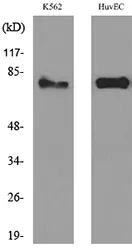
17β-HSD4 Rabbit Polyclonal Antibody
APRab06289-20μL · 20μL
Verified Partner
Sign in to see pricing and request a quote.
Brand Store Product
No external links. Get your quote directly here.

Description
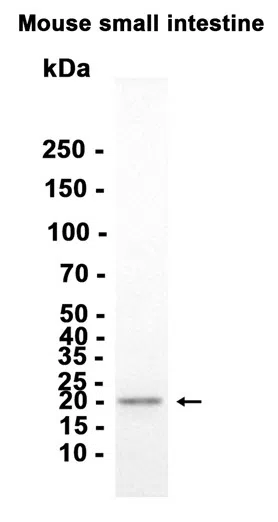
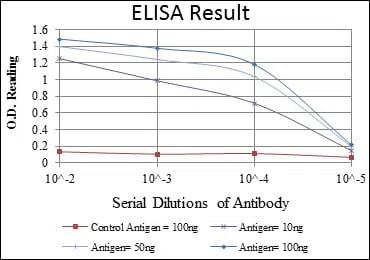
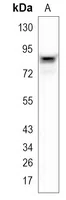
EnkiLife offers the 17β-HSD4 Rabbit Polyclonal Antibody. This antibody reacts with Human,Mouse,Rat species and is suitable for WB,IHC,ICC/IF,ELISA application. Alternative Names of Immunogen: HSD17B4; EDH17B4; Peroxisomal multifunctional enzyme type 2; MFE-2; 17-beta-hydroxysteroid dehydrogenase 4; 17-beta-HSD 4; D-bifunctional protein; DBP; Multifunctional protein 2; MPF-2. The product boasts remarkable high specificity, outstanding reproducibility, and exceptional affinity, making it a reliable and superior choice for your needs. Dilution Ratio: WB 1:500-1:2000,IHC 1:100-1:300,ICC/IF 1:50-1:200,ELISA 1:10000-1:20000 Background: hydroxysteroid 17-beta dehydrogenase 4(HSD17B4) Homo sapiens The protein encoded by this gene is a bifunctional enzyme that is involved in the peroxisomal beta-oxidation pathway for fatty acids. It also acts as a catalyst for the formation of 3-ketoacyl-CoA intermediates from both straight-chain and 2-methyl-branched-chain fatty acids. Defects in this gene that affect the peroxisomal fatty acid beta-oxidation activity are a cause of D-bifunctional protein deficiency (DBPD). An apparent pseudogene of this gene is present on chromosome 8. Multiple alternatively spliced transcript variants encoding distinct isoforms have been found for this gene. [provided by RefSeq, May 2014],catalytic activity:(24R,25R)-3-alpha,7-alpha,12-alpha,24-tetrahydroxy-5-beta-cholestanoyl-CoA = (24E)-3-alpha,7-alpha,12-alpha-trihydroxy-5-beta-cholest-24-enoyl-CoA + H(2)O.,catalytic activity:(S)-3-hydroxyacyl-CoA + NAD(+) = 3-oxoacyl-CoA + NADH.,disease:Defects in HSD17B4 are a cause of D-bifunctional protein deficiency (DBPD) [MIM:261515]. DBPD is a disorder of peroxisomal fatty acid beta-oxidation.,function:Bifunctional enzyme acting on the peroxisomal beta-oxidation pathway for fatty acids. Catalyzes the formation of 3-ketoacyl-CoA intermediates from both straight-chain and 2-methyl-branched-chain fatty acids.,pathway:Lipid metabolism; fatty acid beta-oxidation.,similarity:Belongs to the short-chain dehydrogenases/reductases (SDR) family.,similarity:Contains 1 SCP2 domain.,tissue specificity:Present in many tissues with highest concentrations in liver, heart, prostate and testis., Research Area: Primary bile acid biosynthesis;
More from EnkiLife