3β-HSD7 Rabbit Polyclonal Antibody
APRab06321-100μL · 100μL
Verified Partner
Sign in to see pricing and request a quote.
Brand Store Product
No external links. Get your quote directly here.

Description
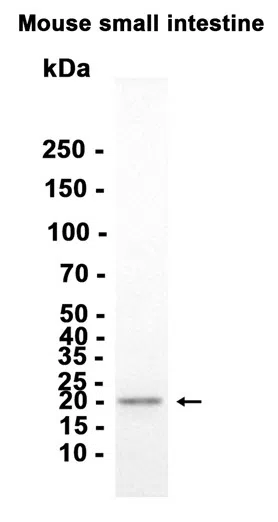
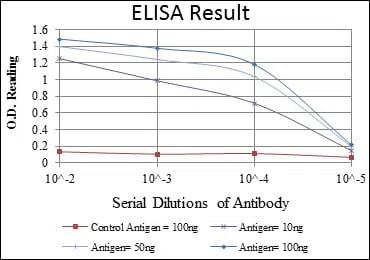
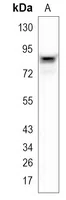
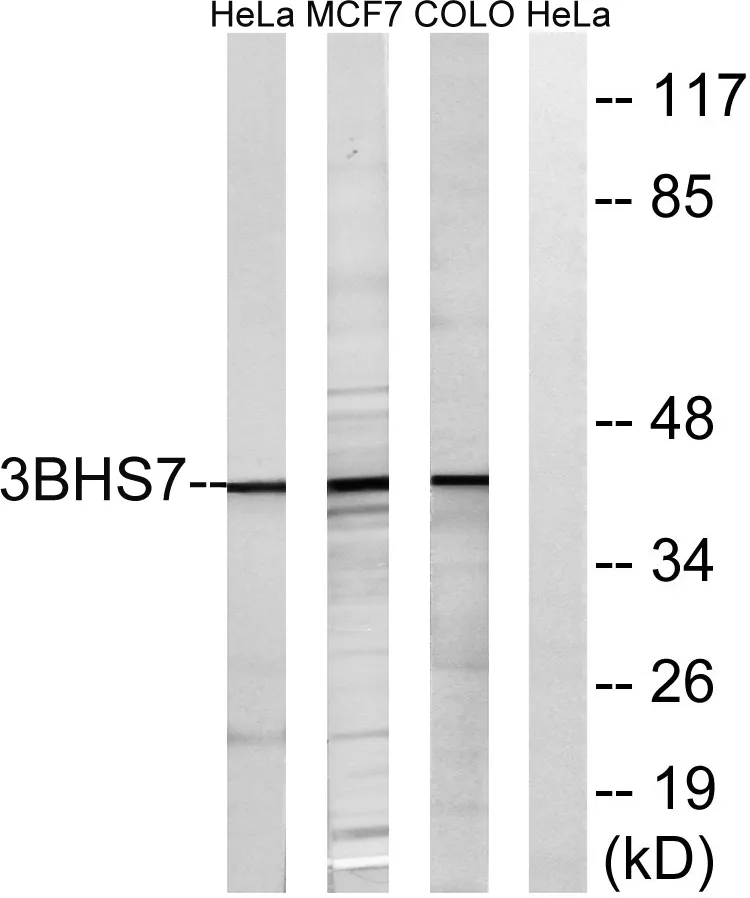
EnkiLife offers the 3β-HSD7 Rabbit Polyclonal Antibody. This antibody reacts with Human,Mouse,Rat species and is suitable for WB,ELISA application. Alternative Names of Immunogen: HSD3B7; 3 beta-hydroxysteroid dehydrogenase type 7; 3 beta-hydroxysteroid dehydrogenase type VII; 3-beta-HSD VII; 3-beta-hydroxy-Delta(5)-C27 steroid oxidoreductase; C(27) 3-beta-HSD; Cholest-5-ene-3-beta; 7-alpha-diol 3-beta-dehydrogenase. The product boasts remarkable high specificity, outstanding reproducibility, and exceptional affinity, making it a reliable and superior choice for your needs. Dilution Ratio: WB 1:500-1:2000,ELISA 1:10000-1:20000 Background: This gene encodes an enzyme which is involved in the initial stages of the synthesis of bile acids from cholesterol and a member of the short-chain dehydrogenase/reductase superfamily. The encoded protein is a membrane-associated endoplasmic reticulum protein which is active against 7-alpha hydrosylated sterol substrates. Mutations in this gene are associated with a congenital bile acid synthesis defect which leads to neonatal cholestasis, a form of progressive liver disease. Multiple transcript variants encoding different isoforms have been found for this gene. [provided by RefSeq, Dec 2008],catalytic activity:3-beta-hydroxy-Delta(5)-steroid + NAD(+) = 3-oxo-Delta(5)-steroid + NADH.,catalytic activity:Cholest-5-ene-3-beta,7-alpha-diol + NAD(+) = 7-alpha-hydroxycholest-4-en-3-one + NADH.,disease:Defects in HSD3B7 are the cause of congenital bile acid synthesis defect type 1 (CBAS1) [MIM:607765]; also known as neonatal progressive intrahepatic cholestasis. CBAS1 is due to a primary defect in bile synthesis leading to progressive liver disease. Clinical features include neonatal jaundice, severe intrahepatic cholestasis and cirrhosis.,function:Plays a central role during spermatogenesis by repressing transposable elements and prevent their mobilization, which is essential for the germline integrity. Plays an essential role in meiotic differentiation of spermatocytes, germ cell differentiation and in self-renewal of spermatogonial stem cells. Its presence in oocytes suggests that it may participate to similar functions during oogenesis in females. Acts via the piRNA metabolic process, which mediates the repression of transposable elements during meiosis by forming complexes composed of piRNAs and Piwi proteins and govern the methylation and subsequent repression of transposons. Directly binds piRNAs, a class of 24 to 30 nucleotide RNAs that are generated by a Dicer-independent mechanism and are primarily derived from transposons and other repeated sequence elements. Associates with primary piRNAs in the cytoplasm and is required for PIWIL4/MIWI2 nuclear localization and association with secondary piRNAs antisense. The piRNA process acts upstream of known mediators of DNA methylation. Participates to a piRNA amplification loop. Besides their function in transposable elements repression, piRNAs are probably involved in other processes during meiosis such as translation regulation. Indirectly modulate expression of genes such as PDGFRB, SLC2A1, ITGA6, GJA7, THY1, CD9 and STRA8. Inhibits tumor cell growth when repressed. When overexpressed, acts as an oncogene by inhibition of apoptosis and promotion of proliferation in tumors.,function:The 3-beta-HSD enzymatic system plays a crucial role in the biosynthesis of all classes of hormonal steroids. HSD VII is active against four 7-alpha-hydroxylated sterols. Does not metabolize several different C(19/21) steroids as substrates. Involved in bile acid synthesis.,pathway:Lipid metabolism; steroid biosynthesis.,sequence caution:Translated as Arg.,similarity:Belongs to the 3-beta-HSD family.,similarity:Belongs to the argonaute family. Piwi subfamily.,similarity:Contains 1 PAZ domain.,similarity:Contains 1 Piwi domain.,subcellular location:Present in chromatoid body. Probable component of the meiotic nuage, also named P granule, a germ-cell-specific organelle required to repress transposon during meiosis.,subunit:Interacts with DDX4, MAEL, EIF3A, EIF4E and EIF4G. Associates with EIF4E- and EIF4G-containing m7G cap-binding complexes.,tissue specificity:Expressed in adult testis and in most tumors., Research Area: Primary bile acid biosynthesis;Dorso-ventral axis formation;
More from EnkiLife