AASS Rabbit Polyclonal Antibody
APRab06382-20μL · 20μL
Verified Partner
Sign in to see pricing and request a quote.
Brand Store Product
No external links. Get your quote directly here.

Description
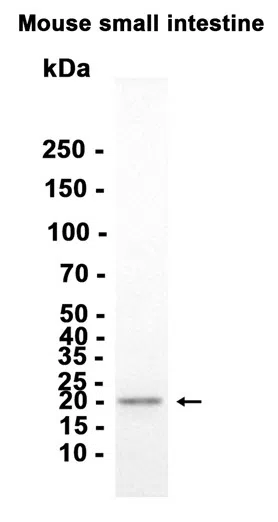
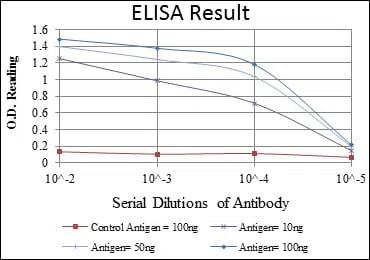
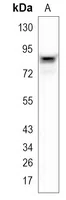
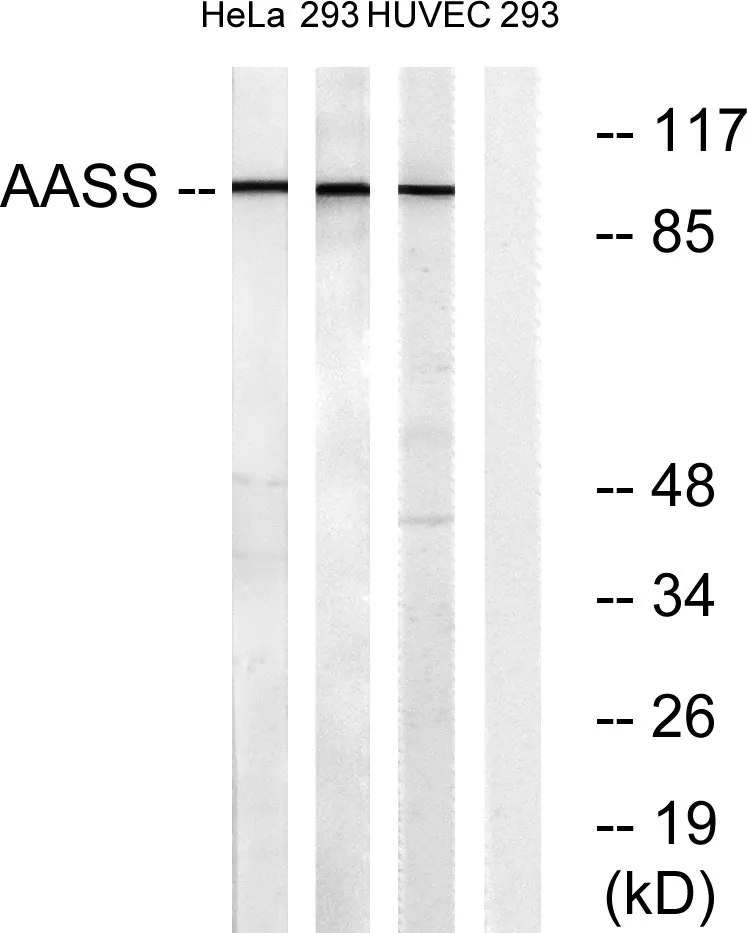
EnkiLife offers the AASS Rabbit Polyclonal Antibody. This antibody reacts with Human,Rat,Mouse species and is suitable for WB,ELISA application. Alternative Names of Immunogen: AASS; Alpha-aminoadipic semialdehyde synthase; mitochondrial; LKR/SDH. The product boasts remarkable high specificity, outstanding reproducibility, and exceptional affinity, making it a reliable and superior choice for your needs. Dilution Ratio: WB 1:500-1:2000,ELISA 1:5000-1:20000 Background: This gene encodes a bifunctional enzyme that catalyzes the first two steps in the mammalian lysine degradation pathway. The N-terminal and the C-terminal portions of this enzyme contain lysine-ketoglutarate reductase and saccharopine dehydrogenase activity, respectively, resulting in the conversion of lysine to alpha-aminoadipic semialdehyde. Mutations in this gene are associated with familial hyperlysinemia. [provided by RefSeq, Jul 2008],catalytic activity:N(6)-(L-1,3-dicarboxypropyl)-L-lysine + NAD(+) + H(2)O = L-glutamate + 2-aminoadipate 6-semialdehyde + NADH.,catalytic activity:N(6)-(L-1,3-dicarboxypropyl)-L-lysine + NADP(+) + H(2)O = L-lysine + 2-oxoglutarate + NADPH.,disease:Defects in AASS are the cause of hyperlysinemia [MIM:238700]. Hyperlysinemia is an autosomal recessive condition characterized by hyperlysinemia lysinuria and variable saccharopinuria.,function:Bifunctional enzyme that catalyzes the first two steps in lysine degradation. The N-terminal and the C-terminal contain lysine-ketoglutarate reductase and saccharopine dehydrogenase activity, respectively.,induction:Induced by starvation.,pathway:Amino-acid degradation; L-lysine degradation via saccharopine pathway; glutaryl-CoA from L-lysine: step 1/6.,pathway:Amino-acid degradation; L-lysine degradation via saccharopine pathway; glutaryl-CoA from L-lysine: step 2/6.,similarity:In the C-terminal section; belongs to the saccharopine dehydrogenase family.,similarity:In the N-terminal section; belongs to the AlaDH/PNT family.,subunit:Homodimer.,tissue specificity:Expressed in all 16 tissues examined with highest expression in the liver., Research Area: Lysine biosynthesis;Lysine degradation;
More from EnkiLife