
AMACR(4A12)Mouse Monoclonal Antibody
AMM06819-100μL · 100μL
Verified Partner
Sign in to see pricing and request a quote.
Brand Store Product
No external links. Get your quote directly here.

Description
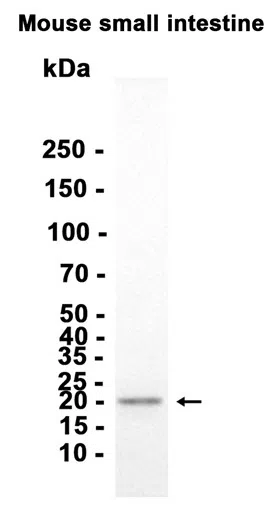
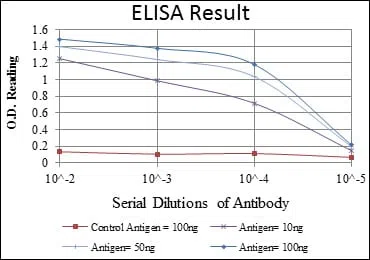
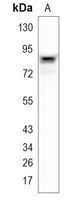
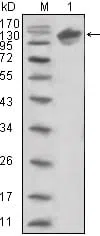
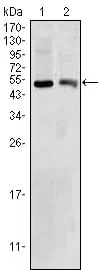
EnkiLife offers the AMACR(4A12)Mouse Monoclonal Antibody. This antibody reacts with Human,Mouse,Rat species and is suitable for WB,IHC,ICC/IF application. Alternative Names of Immunogen: AMACR; Alpha-methylacyl-CoA racemase; 2-methylacyl-CoA racemase. The product boasts remarkable high specificity, outstanding reproducibility, and exceptional affinity, making it a reliable and superior choice for your needs. Dilution Ratio: WB 1:500-1:2000,IHC 1:100-1:200,ICC/IF 1:100-1:200 Background: This gene encodes a racemase. The encoded enzyme interconverts pristanoyl-CoA and C27-bile acylCoAs between their (R)- and (S)-stereoisomers. The conversion to the (S)-stereoisomers is necessary for degradation of these substrates by peroxisomal beta-oxidation. Encoded proteins from this locus localize to both mitochondria and peroxisomes. Mutations in this gene may be associated with adult-onset sensorimotor neuropathy, pigmentary retinopathy, and adrenomyeloneuropathy due to defects in bile acid synthesis. Alternatively spliced transcript variants have been described. Read-through transcription also exists between this gene and the upstream neighboring C1QTNF3 (C1q and tumor necrosis factor related protein 3) gene. [provided by RefSeq, Mar 2011],catalytic activity:(2S)-2-methylacyl-CoA = (2R)-2-methylacyl-CoA.,disease:Defects in AMACR are the cause of alpha-methylacyl-CoA racemase deficiency (AMACRD) [MIM:604489]. AMACRD results in elevated plasma concentrations of pristanic acid C27-bile-acid intermediates. It can be associated with polyneuropathy, retinitis pigmentosa, epilepsy.,disease:Defects in AMACR are the cause of congenital bile acid synthesis defect type 4 (CBAS4) [MIM:214950]; also known as cholestasis, intrahepatic, with defective conversion of trihydroxycoprostanic acid to cholic acid or trihydroxycoprostanic acid in bile. Clinical features include neonatal jaundice, intrahepatic cholestasis, bile duct deficiency and absence of cholic acid from bile.,function:Racemization of 2-methyl-branched fatty acid CoA esters. Responsible for the conversion of pristanoyl-CoA and C27-bile acyl-CoAs to their (S)-stereoisomers.,pathway:Lipid metabolism; bile acid biosynthesis.,pathway:Lipid metabolism; fatty acid metabolism.,similarity:Belongs to the caiB/baiF CoA-transferase family.,similarity:Contains 1 C1q domain.,similarity:Contains 1 collagen-like domain., Research Area: Primary bile acid biosynthesis;
More from EnkiLife