CD231 Rabbit Polyclonal Antibody
APRab08293-50μL · 50μL
Verified Partner
Sign in to see pricing and request a quote.
Brand Store Product
No external links. Get your quote directly here.

Description
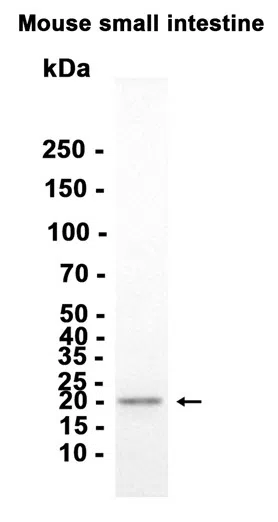
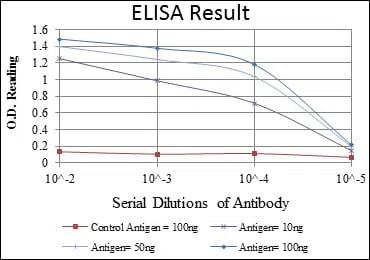
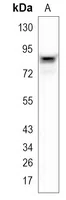
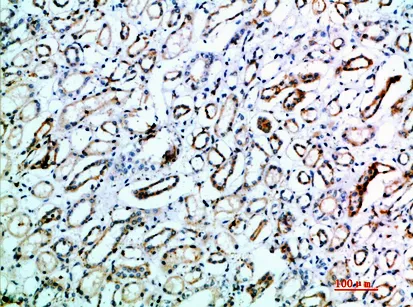
EnkiLife offers the CD231 Rabbit Polyclonal Antibody. This antibody reacts with Human,Mouse,Rat species and is suitable for IHC,ICC/IF,ELISA application. Alternative Names of Immunogen: Tetraspanin-7 (Tspan-7;Cell surface glycoprotein A15;Membrane component chromosome X surface marker 1;T-cell acute lymphoblastic leukemia-associated antigen 1;TALLA-1;Transmembrane 4 superfamily member 2;CD antigen CD231). The product boasts remarkable high specificity, outstanding reproducibility, and exceptional affinity, making it a reliable and superior choice for your needs. Dilution Ratio: IHC 1:50-1:200,ICC/IF 1:50-1:200,ELISA 1:10000-1:20000 Background: The protein encoded by this gene is a member of the transmembrane 4 superfamily, also known as the tetraspanin family. Most of these members are cell-surface proteins that are characterized by the presence of four hydrophobic domains. The proteins mediate signal transduction events that play a role in the regulation of cell development, activation, growth and motility. This encoded protein is a cell surface glycoprotein and may have a role in the control of neurite outgrowth. It is known to complex with integrins. This gene is associated with X-linked mental retardation and neuropsychiatric diseases such as Huntington's chorea, fragile X syndrome and myotonic dystrophy. [provided by RefSeq, Jul 2008],disease:Defects in TSPAN7 are the cause of mental retardation X-linked type 58 (MRX58) [MIM:300210]. Mental retardation is characterized by significantly sub-average general intellectual functioning associated with impairments in adaptative behavior and manifested during the developmental period. Non-syndromic mental retardation patients do not manifest other clinical signs.,function:May be involved in cell proliferation and cell motility.,similarity:Belongs to the tetraspanin (TM4SF) family.,tissue specificity:Not solely expressed in T-cells. Expressed in acute myelocytic leukemia cells of some patients.,
More from EnkiLife