CD305 Rabbit Polyclonal Antibody
APRab08347-20μL · 20μL
Verified Partner
Sign in to see pricing and request a quote.
Brand Store Product
No external links. Get your quote directly here.

Description
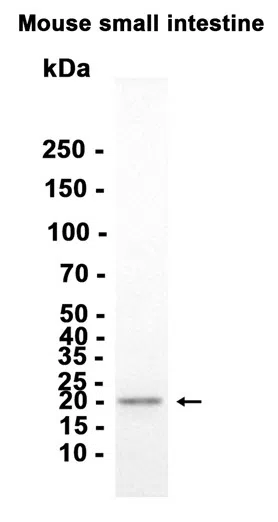
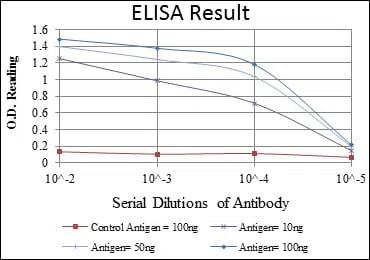
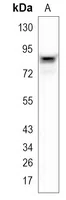
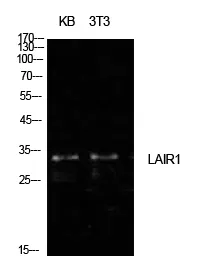
EnkiLife offers the CD305 Rabbit Polyclonal Antibody. This antibody reacts with Human,Rat,Mouse species and is suitable for WB,ELISA application. Alternative Names of Immunogen: LAIR1; CD305; Leukocyte-associated immunoglobulin-like receptor 1; LAIR-1; hLAIR1; CD305. The product boasts remarkable high specificity, outstanding reproducibility, and exceptional affinity, making it a reliable and superior choice for your needs. Dilution Ratio: WB 1:500-1:2000,ELISA 1:5000-1:20000 Background: The protein encoded by this gene is an inhibitory receptor found on peripheral mononuclear cells, including natural killer cells, T cells, and B cells. Inhibitory receptors regulate the immune response to prevent lysis of cells recognized as self. The gene is a member of both the immunoglobulin superfamily and the leukocyte-associated inhibitory receptor family. The gene maps to a region of 19q13.4 called the leukocyte receptor cluster, which contains at least 29 genes encoding leukocyte-expressed receptors of the immunoglobulin superfamily. The encoded protein has been identified as an anchor for tyrosine phosphatase SHP-1, and may induce cell death in myeloid leukemias. Alternative splicing results in multiple transcript variants. [provided by RefSeq, Jan 2014],developmental stage:Complete loss of expression when naive B-cells proliferates and differentiates into Ig-producing plasma cells under in vitro stimulation.,domain:ITIM (immunoreceptor tyrosine-based inhibitor motif) motif is a cytoplasmic motif present in 2 copies in the intracellular part of LAIR1. When phosphorylated, ITIM motif can bind the SH2 domain of several SH2-containing phosphatases, leading to down-regulation of cell activation.,function:Functions as an inhibitory receptor that plays a constitutive negative regulatory role on cytolytic function of natural killer (NK) cells, B-cells and T-cells. Activation by Tyr phosphorylation results in recruitment and activation of the phosphatases PTPN6 and PTPN11. It also reduces the increase of intracellular calcium evoked by B-cell receptor ligation. May also play its inhibitory role independently of SH2-containing phosphatases. Modulates cytokine production in CD4+ T-cells, downregulating IL2 and IFNG production while inducing secretion of transforming growth factor beta. Down-regulates also IgG and IgE production in B-cells as well as IL8, IL10 and TNF secretion. Inhibits proliferation and induces apoptosis in myeloid leukemia cell lines as well as prevents nuclear translocation of NF-kappa-B p65 subunit/RELA and phosphorylation of I-kappa-B alpha/CHUK in these cells. Inhibits the differentiation of peripheral blood precursors towards dendritic cells.,induction:By T-cell receptor stimulation in a process that requires p38 MAP kinase and ERK signaling.,PTM:N-glycosylated.,PTM:Phosphorylation at Tyr-251 and Tyr-281 activates it. May be phosphorylated by LCK.,similarity:Contains 1 Ig-like C2-type (immunoglobulin-like) domain.,subunit:Interacts with SH2 domains of tyrosine-protein phosphatases PTPN6 and PTPN11. The interaction with PTPN6 is constitutive. Interacts with the SH2 domain of CSK.,tissue specificity:Expressed on the majority of peripheral mononuclear cells, including natural killer (NK) cells, T-cells, B-cells, monocytes, and dendritic cells. Highly expressed in naive T-cells and B-cells but no expression on germinal center B-cells. Abnormally low expression in naive B-cells from HIV-1 infected patients. Very low expression in NK cells from a patient with chronic active Epstein-Barr virus infection.,
More from EnkiLife