CD84 Rabbit Polyclonal Antibody
APRab08470-20μL · 20μL
Verified Partner
Sign in to see pricing and request a quote.
Brand Store Product
No external links. Get your quote directly here.

Description
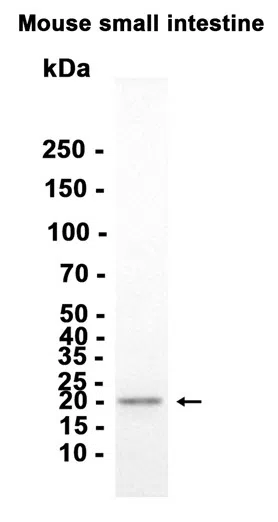
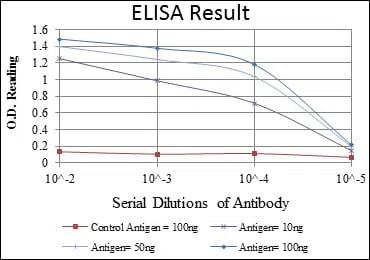
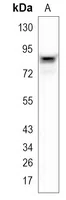
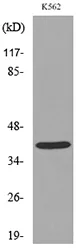
EnkiLife offers the CD84 Rabbit Polyclonal Antibody. This antibody reacts with Human,Mouse species and is suitable for WB,IHC,ICC/IF,ELISA application. Alternative Names of Immunogen: CD84; SLAMF5; SLAM family member 5; Cell surface antigen MAX.3; Hly9-beta; Leukocyte differentiation antigen CD84; Signaling lymphocytic activation molecule 5; CD84. The product boasts remarkable high specificity, outstanding reproducibility, and exceptional affinity, making it a reliable and superior choice for your needs. Dilution Ratio: WB 1:500-1:2000,IHC 1:100-1:300,ICC/IF 1:50-1:200,ELISA 1:10000-1:20000 Background: This gene encodes a membrane glycoprotein that is a member of the signaling lymphocyte activation molecule (SLAM) family. This family forms a subset of the larger CD2 cell-surface receptor Ig superfamily. The encoded protein is a homophilic adhesion molecule that is expressed in numerous immune cells types and is involved in regulating receptor-mediated signaling in those cells. Alternate splicing results in multiple transcript variants. [provided by RefSeq, Oct 2011],developmental stage:Expression is slightly increased in naive B-cells after the first dividion. By contrast, expression on memory B-cells decreased with each successive division.,domain:ITSM (immunoreceptor tyrosine-based switch motif) motif is a cytoplasmic motif which may bind SH2D1A.,function:Plays a role as adhesion receptor functioning by homophilic interactions and by clustering. Recruits SH2 domain-containing proteins SH2D1A/SAP. Increases proliferative responses of activated T-cells and SH2D1A/SAP does not seen be required for this process. Homophilic interactions enhance interferon gamma/IFNG secretion in lymphocytes and induce platelet stimulation via a SH2D1A/SAP-dependent pathway. May serve as a marker for hematopoietic progenitor cells.,PTM:N-glycosylated.,PTM:Phosphorylated by tyrosine-protein kinase LCK on tyrosine residues following ligation induced by agonist monoclonal antibody. The association with SH2D1A/SAP is dependent of tyrosines phosphorylation of its cytoplasmic domain Phosphorylated on Tyr-296 and Tyr-316 following platelet aggregation.,similarity:Contains 1 Ig-like C2-type (immunoglobulin-like) domain.,subunit:Homodimer; via its extracellular domain. Forms a head to tail dimer with a CD48 molecule from another cell. Interacts with SH2 domain-containing proteins SH2D1A/SAP and SH2D1B/hEAT-2. Interacts with tyrosine-protein phosphatases PTPN6 and PTPN11 via its phosphorylated cytoplasmic domain, and this interaction is blocked by SH2D1A.,tissue specificity:Predominantly expressed in hematopoietic tissues, such as lymph node, spleen and peripheral leukocytes. Expressed in macrophages, B-cells, monocytes, platelets, thymocytes, T-cells and dendritic cells. Highly expressed in memory T-cells.,
More from EnkiLife