CEP290 Rabbit Polyclonal Antibody
APRab08662-20μL · 20μL
Verified Partner
Sign in to see pricing and request a quote.
Brand Store Product
No external links. Get your quote directly here.

Description
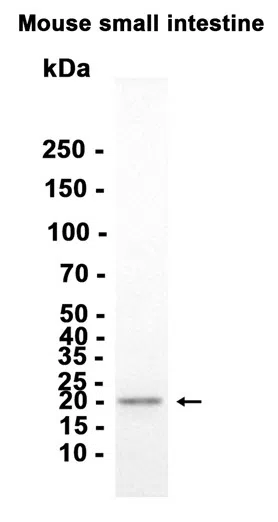
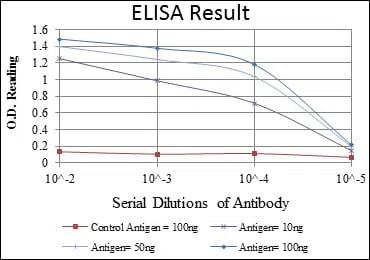
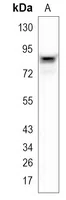
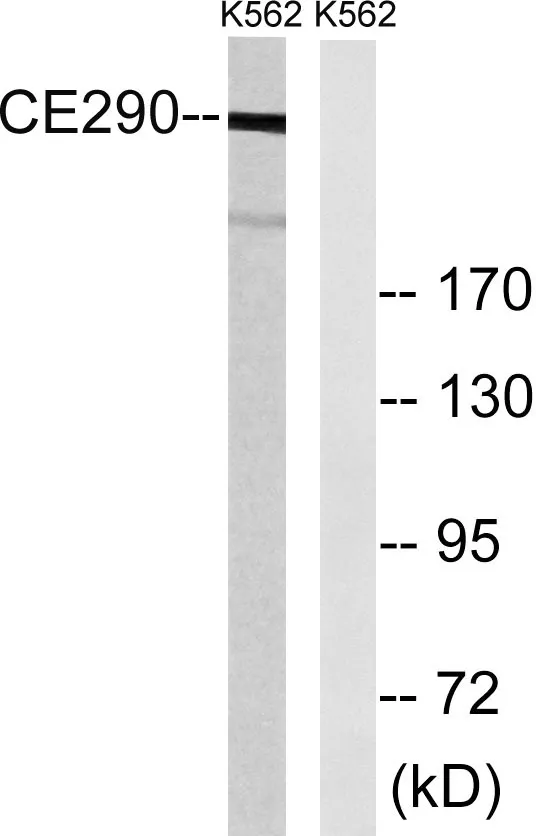
EnkiLife offers the CEP290 Rabbit Polyclonal Antibody. This antibody reacts with Human,Mouse species and is suitable for WB,ELISA application. Alternative Names of Immunogen: CEP290; BBS14; KIAA0373; NPHP6; Centrosomal protein of 290 kDa; Cep290; Bardet-Biedl syndrome 14 protein; Cancer/testis antigen 87; CT87; Nephrocystin-6; Tumor antigen se2-2. The product boasts remarkable high specificity, outstanding reproducibility, and exceptional affinity, making it a reliable and superior choice for your needs. Dilution Ratio: WB 1:500-1:2000,ELISA 1:10000-1:20000 Background: centrosomal protein 290(CEP290) Homo sapiens This gene encodes a protein with 13 putative coiled-coil domains, a region with homology to SMC chromosome segregation ATPases, six KID motifs, three tropomyosin homology domains and an ATP/GTP binding site motif A. The protein is localized to the centrosome and cilia and has sites for N-glycosylation, tyrosine sulfation, phosphorylation, N-myristoylation, and amidation. Mutations in this gene have been associated with Joubert syndrome and nephronophthisis and the presence of antibodies against this protein is associated with several forms of cancer. [provided by RefSeq, Jul 2008],disease:Antibodies against CEP290 are present in sera from patients with cutaneous T-cell lymphomas, but not in the healthy control population.,disease:Defects in CEP290 are a cause of Joubert syndrome type 5 (JBTS5) [MIM:610188]. Joubert syndrome is an autosomal recessive disease characterized by cerebellar vermis hypoplasia with prominent superior cerebellar peduncles (the 'molar tooth sign' on axial magnetic resonance imaging), psychomotor delay, hypotonia, ataxia, oculomotor apraxia and neonatal breathing abnormalities. JBTS5 shares the neurologic and neuroradiologic features of Joubert syndrome together with severe retinal dystrophy and/or progressive renal failure characterized by nephronophthisis.,disease:Defects in CEP290 are a cause of Senior-Loken syndrome type 6 (SLSN6) [MIM:610189]. Senior-Loken syndrome is also known as juvenile nephronophthisis with Leber amaurosis. It is an autosomal recessive renal-retinal disorder, characterized by progressive wasting of the filtering unit of the kidney, with or without medullary cystic renal disease, and progressive eye disease.,disease:Defects in CEP290 are the cause of Leber congenital amaurosis type 10 (LCA10) [MIM:611755]. LCA designates a clinically and genetically heterogeneous group of childhood retinal degenerations, generally inherited in an autosomal recessive manner. Affected infants have little or no retinal photoreceptor function as tested by electroretinography. LCA represents the most common genetic cause of congenital visual impairment in infants and children.,disease:Defects in CEP290 are the cause of Meckel syndrome type 4 (MKS4) [MIM:611134]. MKS4 is an autosomal recessive disorder characterized by a combination of renal cysts and variably associated features including developmental anomalies of the central nervous system (typically encephalocele), hepatic ductal dysplasia and cysts, and polydactyly.,function:Activates ATF4-mediated transcription. Required for the correct localization of ciliary and phototransduction proteins in retinal photoreceptor cells; may play a role in ciliary transport processes.,sequence caution:Contaminating sequence. Potential poly-A sequence.,subcellular location:Connecting cilium of photoreceptor cells, base of cilium in kidney intramedullary collecting duct cells.,subunit:Interacts with ATF4 via its N-terminal region. Part of selected centrosomal and microtubule-associated protein complexes. Interacts with CC2D2A.,tissue specificity:Ubiquitous. Expressed strongly in placenta and weakly in brain.,
More from EnkiLife