Connexin 43 Rabbit Polyclonal Antibody
APRab09231-20μL · 20μL
Verified Partner
Sign in to see pricing and request a quote.
Brand Store Product
No external links. Get your quote directly here.

Description
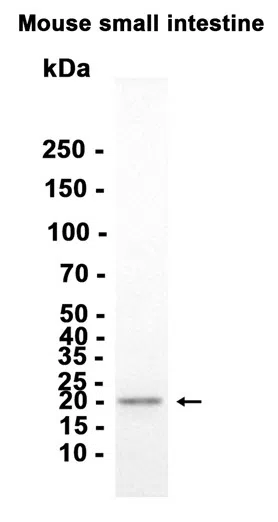
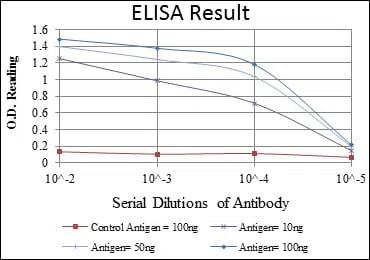
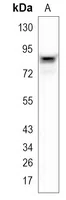
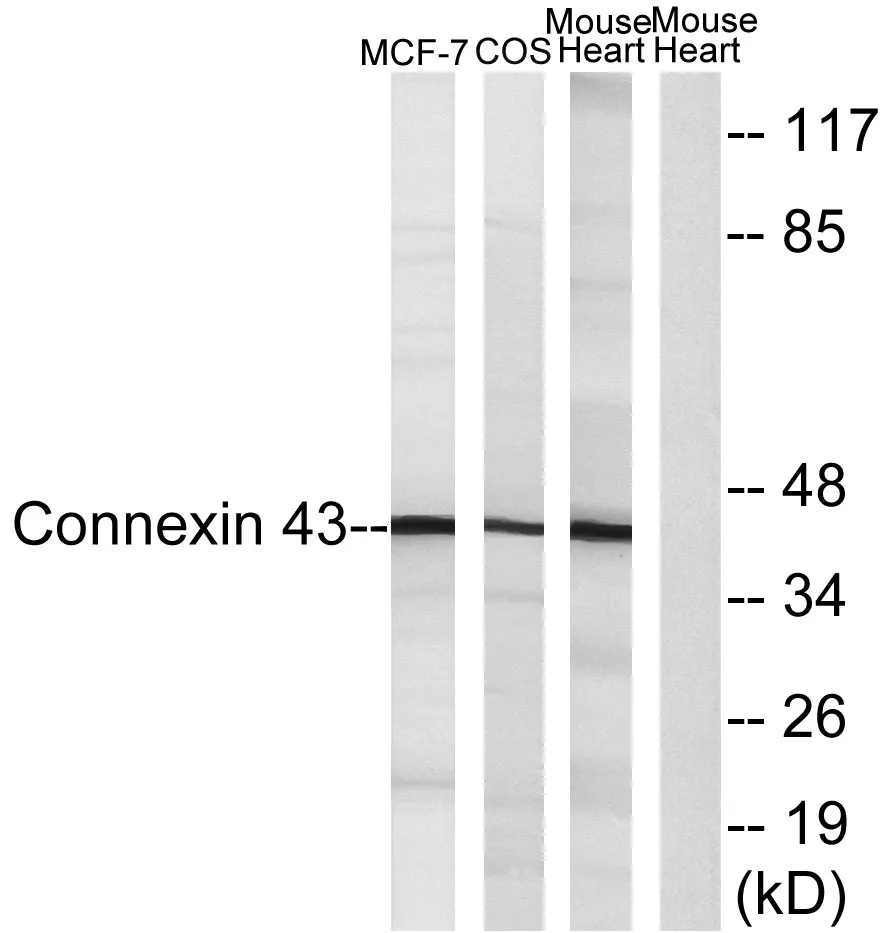
EnkiLife offers the Connexin 43 Rabbit Polyclonal Antibody. This antibody reacts with Human,Mouse,Rat,Monkey species and is suitable for WB,IHC,ICC/IF,ELISA application. Alternative Names of Immunogen: GJA1; GJAL; Gap junction alpha-1 protein; Connexin-43; Cx43; Gap junction 43 kDa heart protein. The product boasts remarkable high specificity, outstanding reproducibility, and exceptional affinity, making it a reliable and superior choice for your needs. Dilution Ratio: WB 1:500-1:2000,IHC 1:100-1:300,ICC/IF 1:50-1:200,ELISA 1:10000-1:20000 Background: This gene is a member of the connexin gene family. The encoded protein is a component of gap junctions, which are composed of arrays of intercellular channels that provide a route for the diffusion of low molecular weight materials from cell to cell. The encoded protein is the major protein of gap junctions in the heart that are thought to have a crucial role in the synchronized contraction of the heart and in embryonic development. A related intronless pseudogene has been mapped to chromosome 5. Mutations in this gene have been associated with oculodentodigital dysplasia, autosomal recessive craniometaphyseal dysplasia and heart malformations. [provided by RefSeq, May 2014],caution:PubMed:11741837 reported 2 mutations (Phe-11 and Ala-24) linked to non-syndromic autosomal recessive deafness (DFNBG). These mutations have subsequently been shown (PubMed:12457340) to involve the pseudogene of connexin-43 located on chromosome 5.,caution:PubMed:7715640 reported a mutation Pro-364 linked to congenital heart diseases. This was later shown (PubMed:8873667) to be an artifact.,disease:Defects in GJA1 are a cause of hypoplastic left heart syndrome (HLHS) [MIM:241550]. HLHS refers to the abnormal development of the left-sided cardiac structures, resulting in obstruction to blood flow from the left ventricular outflow tract. In addition, the syndrome includes underdevelopment of the left ventricle, aorta, and aortic arch, as well as mitral atresia or stenosis.,disease:Defects in GJA1 are the cause of autosomal dominant oculodentodigital dysplasia (ODDD) [MIM:164200]; also known as oculodentoosseous dysplasia. ODDD is a highly penetrant syndrome presenting with craniofacial (ocular, nasal, dental) and limb dysmorphisms, spastic paraplegia, and neurodegeneration. Craniofacial anomalies tipically include a thin nose with hypoplastic alae nasi, small anteverted nares, prominent columnella, and microcephaly. Brittle nails and hair abnormalities of hypotrichosis and slow growth are present. Ocular defects include microphthalmia, microcornea, cataracts, glaucoma, and optic atrophy. Syndactyly type III and conductive deafness can occur in some cases. Cardiac abnormalities are observed in rare instances.,disease:Defects in GJA1 may be the cause of syndactyly type III (SDTY3) [MIM:186100]. Syndactyly is an autosomal dominant trait and is the most common congenital anomaly of the hand or foot. It is marked by persistence of the webbing between adjacent digits, so they are more or less completely attached. In this type there is usually complete and bilateral syndactyly between the fourth and fifth fingers. Usually it is soft tissue syndactyly but occasionally the distal phalanges are fused. The fifth finger is short with absent or rudimentary middle phalanx. The feet are not affected.,function:One gap junction consists of a cluster of closely packed pairs of transmembrane channels, the connexons, through which materials of low MW diffuse from one cell to a neighboring cell.,function:One gap junction consists of a cluster of closely packed pairs of transmembrane channels, the connexons, through which materials of low MW diffuse from one cell to a neighboring cell. May play a critical role in the physiology of hearing by participating in the recycling of potassium to the cochlear endolymph.,similarity:Belongs to the connexin family.,similarity:Belongs to the connexin family. Alpha-type (group II) subfamily.,subunit:A connexon is composed of a hexamer of connexins.,subunit:A connexon is composed of a hexamer of connexins. Interacts with SGSM3. Interacts with KIAA1432/CIP150.,tissue specificity:Expressed in the heart and fetal cochlea., Research Area: Gap junction;Arrhythmogenic right ventricular cardiomyopathy (ARVC);
More from EnkiLife