Cyclin L1 Rabbit Polyclonal Antibody
APRab09604-50μL · 50μL
Verified Partner
Sign in to see pricing and request a quote.
Brand Store Product
No external links. Get your quote directly here.

Description
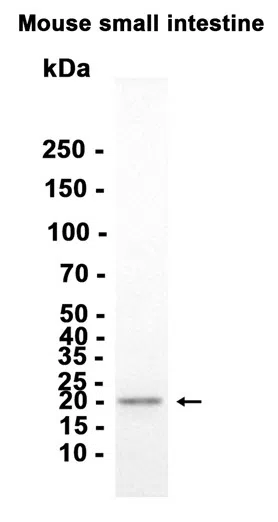
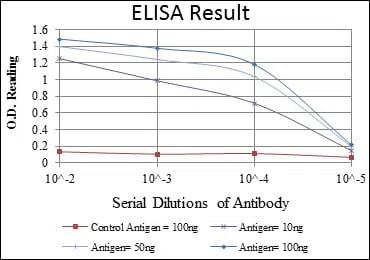
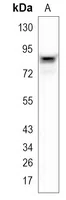
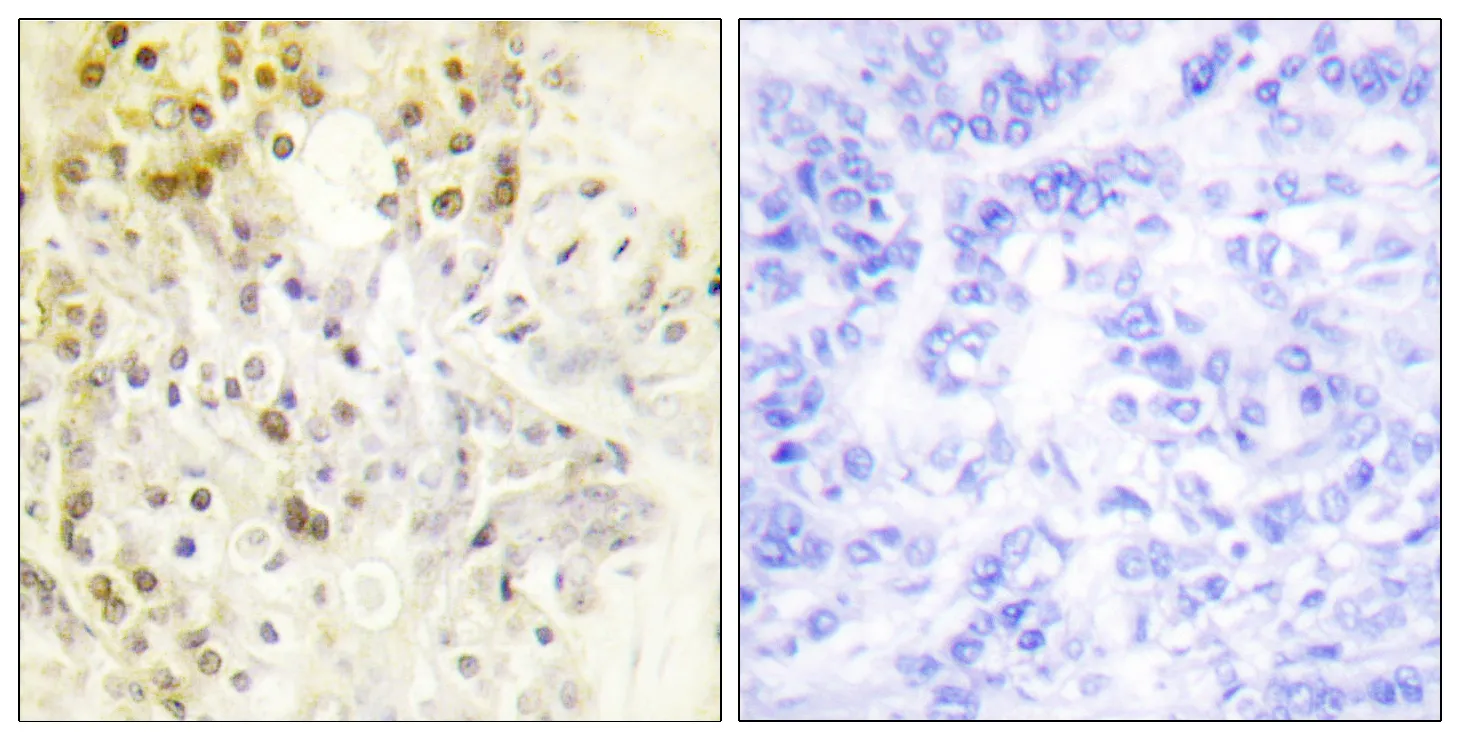
EnkiLife offers the Cyclin L1 Rabbit Polyclonal Antibody. This antibody reacts with Human,Mouse,Rat species and is suitable for WB,IHC,ICC/IF,ELISA application. Alternative Names of Immunogen: CCNL1; BM-001; Cyclin-L1; Cyclin-L. The product boasts remarkable high specificity, outstanding reproducibility, and exceptional affinity, making it a reliable and superior choice for your needs. Dilution Ratio: WB 1:500-1:2000,IHC 1:100-1:300,ICC/IF 1:50-1:200,ELISA 1:5000-1:20000 Background: alternative products:Ccnl1 is an immediate-early gene with independently regulated isoforms,domain:Contains a RS region (arginine-serine dipeptide repeat) within the C-terminal domain which is the hallmark of the SR family of splicing factors. This region probably plays a role in protein-protein interactions. function:Transcriptional regulator which participates in regulating the pre-mRNA splicing process. Seems to be involved in the regulation of RNA polymerase II (pol II). Functions in association with cyclin-dependent kinases (CDKs) and has a role in the second step of splicing. May be a candidate proto-oncogene in head and neck squamous cell carcinomas (HNSCC). Inhibited by the CDK-specific inhibitor p21. miscellaneous:CCNL1 is amplified in several HNSCC. May play a critical role in the formation of loco-regional metastases and an unfavorable clinical outcome of HNSCC. sequence caution:Probable cloning artifact. similarity:Belongs to the cyclin family. Cyclin L subfamily. subcellular location:More specifically found in nuclear intrachromatin granules clusters (IGC), also called nuclear speckles, which are storage compartments for nuclear proteins involved in mRNA processing. subunit:Interacts with POLR2A via its hyperphosphorylated C-terminal domain (CTD) (By similarity). Interacts with CDC2L1 or CDC2L2, and SFRS2. tissue specificity:Ubiquitous with higher level in thymus. Overexpression in primary tumors of head and neck squamous cell carcinomas (HNSCC).
More from EnkiLife