DD3 Rabbit Polyclonal Antibody
APRab09858-20μL · 20μL
Verified Partner
Sign in to see pricing and request a quote.
Brand Store Product
No external links. Get your quote directly here.

Description
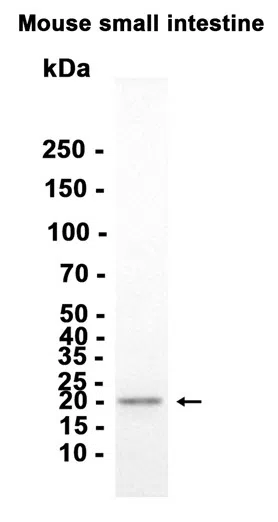
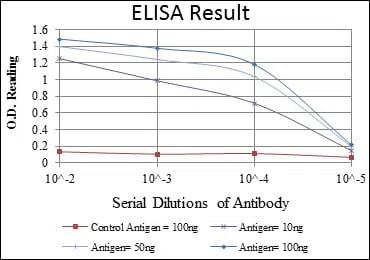
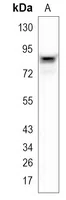
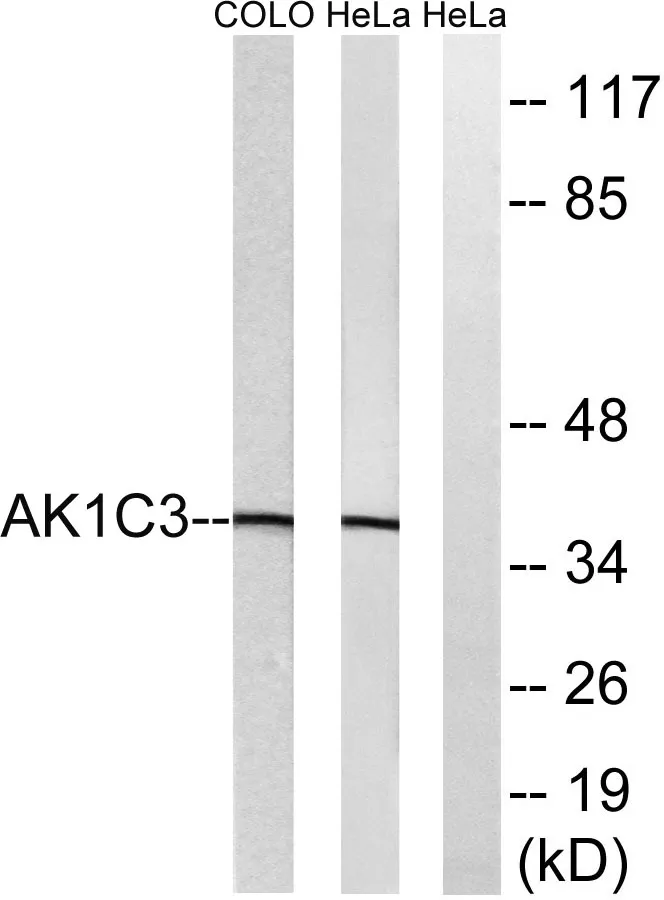
EnkiLife offers the DD3 Rabbit Polyclonal Antibody. This antibody reacts with Human,Rat,Mouse species and is suitable for WB,ELISA application. Alternative Names of Immunogen: AKR1C3; DDH1; HSD17B5; KIAA0119; PGFS; Aldo-keto reductase family 1 member C3; 17-beta-hydroxysteroid dehydrogenase type 5; 17-beta-HSD 5; 3-alpha-HSD type II; brain; 3-alpha-hydroxysteroid dehydrogenase type 2; 3-alpha-HSD type 2; Chlordec. The product boasts remarkable high specificity, outstanding reproducibility, and exceptional affinity, making it a reliable and superior choice for your needs. Dilution Ratio: WB 1:500-1:2000,ELISA 1:10000-1:20000 Background: This gene encodes a member of the aldo/keto reductase superfamily, which consists of more than 40 known enzymes and proteins. These enzymes catalyze the conversion of aldehydes and ketones to their corresponding alcohols by utilizing NADH and/or NADPH as cofactors. The enzymes display overlapping but distinct substrate specificity. This enzyme catalyzes the reduction of prostaglandin (PG) D2, PGH2 and phenanthrenequinone (PQ), and the oxidation of 9alpha,11beta-PGF2 to PGD2. It may play an important role in the pathogenesis of allergic diseases such as asthma, and may also have a role in controlling cell growth and/or differentiation. This gene shares high sequence identity with three other gene members and is clustered with those three genes at chromosome 10p15-p14. Three transcript variants encoding different isoforms have been found for this gene. [provided by RefSeq, Dec 2011],catalytic activity:(5Z,13E)-(15S)-9-alpha,11-alpha,15-trihydroxyprosta-5,13-dienoate + NADP(+) = (5Z,13E)-(15S)-9-alpha,15-dihydroxy-11-oxoprosta-5,13-dienoate + NADPH.,catalytic activity:Androsterone + NAD(P)(+) = 5-alpha-androstane-3,17-dione + NAD(P)H.,catalytic activity:Indan-1-ol + NAD(P)(+) = indanone + NAD(P)H.,catalytic activity:Testosterone + NAD(+) = androst-4-ene-3,17-dione + NADH.,catalytic activity:Testosterone + NADP(+) = androst-4-ene-3,17-dione + NADPH.,catalytic activity:Trans-1,2-dihydrobenzene-1,2-diol + NADP(+) = catechol + NADPH.,enzyme regulation:Strongly inhibited by nonsteroidal anti-inflammatory drugs (NSAID) including flufenamic acid and indomethacin. Also inhibited by the flavinoid, rutin, and by selective serotonin inhibitors (SSRIs).,function:Catalyzes the conversion of aldehydes and ketones to alcohols. Catalyzes the reduction of prostaglandin (PG) D2, PGH2 and phenanthrenequinone (PQ) and the oxidation of 9-alpha,11-beta-PGF2 to PGD2. Functions as a bi-directional 3-alpha-, 17-beta- and 20-alpha HSD. Can interconvert active androgens, estrogens and progestins with their cognate inactive metabolites. Preferentially transforms androstenedione (4-dione) to testosterone.,similarity:Belongs to the aldo/keto reductase family.,tissue specificity:Expressed in many tissues including adrenal gland, brain, kidney, liver, lung, mammary gland, placenta, small intestine, colon, spleen, prostate and testis. The dominant HSD in prostate and mammary gland. In the prostate, higher levels in epithelial cells than in stromal cells. In the brain, expressed in medulla, spinal cord, frontotemporal lobes, thalamus, subthalamic nuclei and amygdala. Weaker expression in the hippocampus, substantia nigra and caudate., Research Area: Steroid hormone biosynthesis;Arachidonic acid metabolism;Metabolism of xenobiotics by cytochrome P450;
More from EnkiLife