Dysferlin Rabbit Polyclonal Antibody
APRab10243-20μL · 20μL
Verified Partner
Sign in to see pricing and request a quote.
Brand Store Product
No external links. Get your quote directly here.

Description
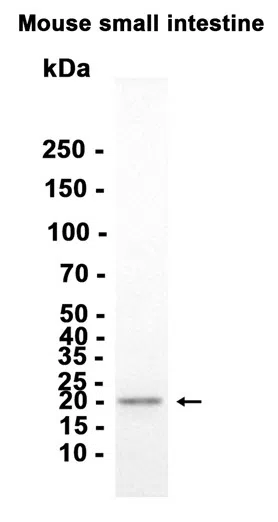
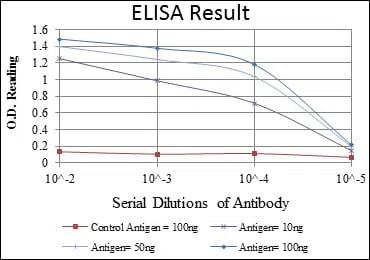
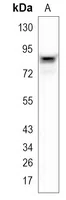
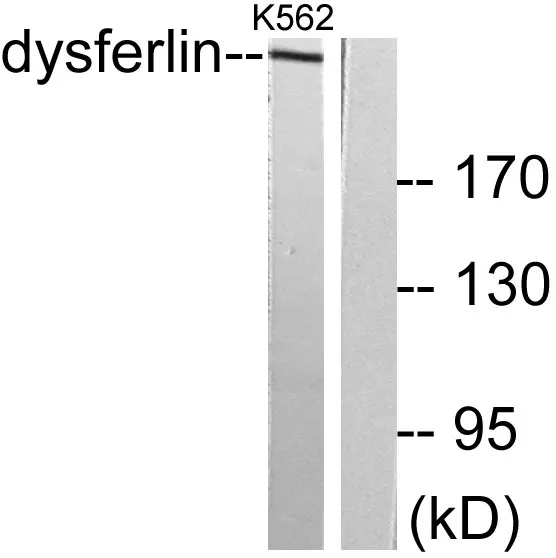
EnkiLife offers the Dysferlin Rabbit Polyclonal Antibody. This antibody reacts with Human,Mouse species and is suitable for WB,ICC/IF,ELISA application. Alternative Names of Immunogen: DYSF; FER1L1; Dysferlin; Dystrophy-associated fer-1-like protein; Fer-1-like protein 1. The product boasts remarkable high specificity, outstanding reproducibility, and exceptional affinity, making it a reliable and superior choice for your needs. Dilution Ratio: WB 1:500-1:2000,ICC/IF 1:200-1:1000,ELISA 1:5000-1:20000 Background: dysferlin(DYSF) Homo sapiens The protein encoded by this gene belongs to the ferlin family and is a skeletal muscle protein found associated with the sarcolemma. It is involved in muscle contraction and contains C2 domains that play a role in calcium-mediated membrane fusion events, suggesting that it may be involved in membrane regeneration and repair. In addition, the protein encoded by this gene binds caveolin-3, a skeletal muscle membrane protein which is important in the formation of caveolae. Specific mutations in this gene have been shown to cause autosomal recessive limb girdle muscular dystrophy type 2B (LGMD2B) as well as Miyoshi myopathy. Alternative splicing results in multiple transcript variants. [provided by RefSeq, Aug 2008],developmental stage:Expression in limb tissue from 5-6 weeks embryos; persists throughout development.,disease:Defects in DYSF are the cause of distal myopathy with anterior tibial onset (DMAT) [MIM:606768]. Onset of the disorder is between 14 and 28 years of age and the anterior tibial muscles are the first muscle group to be involved. Inheritance is autosomal recessive.,disease:Defects in DYSF are the cause of limb-girdle muscular dystrophy type 2B (LGMD2B) [MIM:253601]. LGMD2B is an autosomal recessive degenerative myopathy characterized by weakness and atrophy starting in the proximal pelvifemoral muscles, with onset in the late teens or later, massive elevation of serum creatine kinase levels and slow progression. Scapular muscle involvement is minor and not present at onset. Upper limb girdle involvement follows some years after the onset in lower limbs.,disease:Defects in DYSF are the cause of Miyoshi myopathy (MM) [MIM:254130]. This type of autosomal recessive muscular dystrophy involves the distal lower limb musculature. It is characterized by weakness that initially affects the gastrocnemius muscle during early adulthood. Otherwise the phenotype overlaps with LGMD2B, especially in age at onset and creatine kinase elevation.,domain:The C2 domain 1 associates with lipid membranes in a calcium-dependent manner.,function:Key calcium ion sensor involved in the Ca(2+)-triggered synaptic vesicle-plasma membrane fusion. Plays a role in the sarcolemma repair mechanism of both skeletal muscle and cardiomyocytes that permits rapid resealing of membranes disrupted by mechanical stress.,online information:Dysferlin,online information:Dysferlin entry,sequence caution:Translation N-terminally shortened.,similarity:Belongs to the ferlin family.,similarity:Contains 5 C2 domains.,subcellular location:Colocalizes, during muscle differentiation, with BIN1 in the T-tubule system of myotubules and at the site of contact between two myotubes or a myoblast and a myotube. Wounding of myotubes led to its focal enrichment to the site of injury and to its relocalization in a Ca(2+)-dependent manner toward the plasma membrane. Colocalizes with AHNAK, AHNAK2 and PARVB at the sarcolemma of skeletal muscle. Detected on the apical plasma membrane of the syncytiotrophoblast. Reaches the plasmma membrane through a caveolin-independent mechanism. Retained by caveolin at the plasmma membrane (By similarity). Colocalizes, during muscle differentiation, with CACNA1S in the T-tubule system of myotubules (By similarity). Accumulates and colocalizes with fusion vesicles at the sarcolemma disruption sites.,subunit:Interacts with CACNA1S. Interacts with ANXA1; the interaction is Ca(2+)- and injury state-dependent. Interacts with ANXA2; the interaction is Ca(2+)- and injury state-dependent (By similarity). Interacts with CAV3 and PARVB. Interacts with AHNAK; the interaction is direct and Ca(2+)-independent. Interacts with AHNAK2; the interaction is direct and Ca(2+)-independent.,tissue specificity:Expressed in skeletal muscle, myoblast, myotube and in the syncytiotrophoblast (STB) of the placenta (at protein level). Highly expressed in skeletal muscle. Also found in heart, brain, spleen, intestine, placenta and at lower levels in liver, lung, kidney and pancreas.,
More from EnkiLife