EP3 Rabbit Polyclonal Antibody
APRab10495-50μL · 50μL
Verified Partner
Sign in to see pricing and request a quote.
Brand Store Product
No external links. Get your quote directly here.

Description
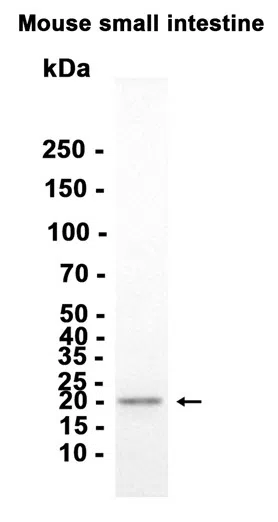
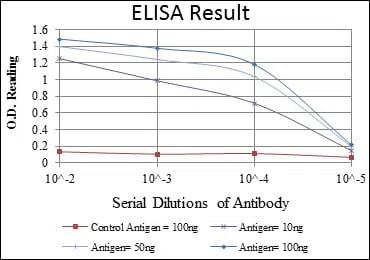
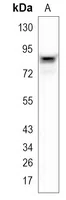
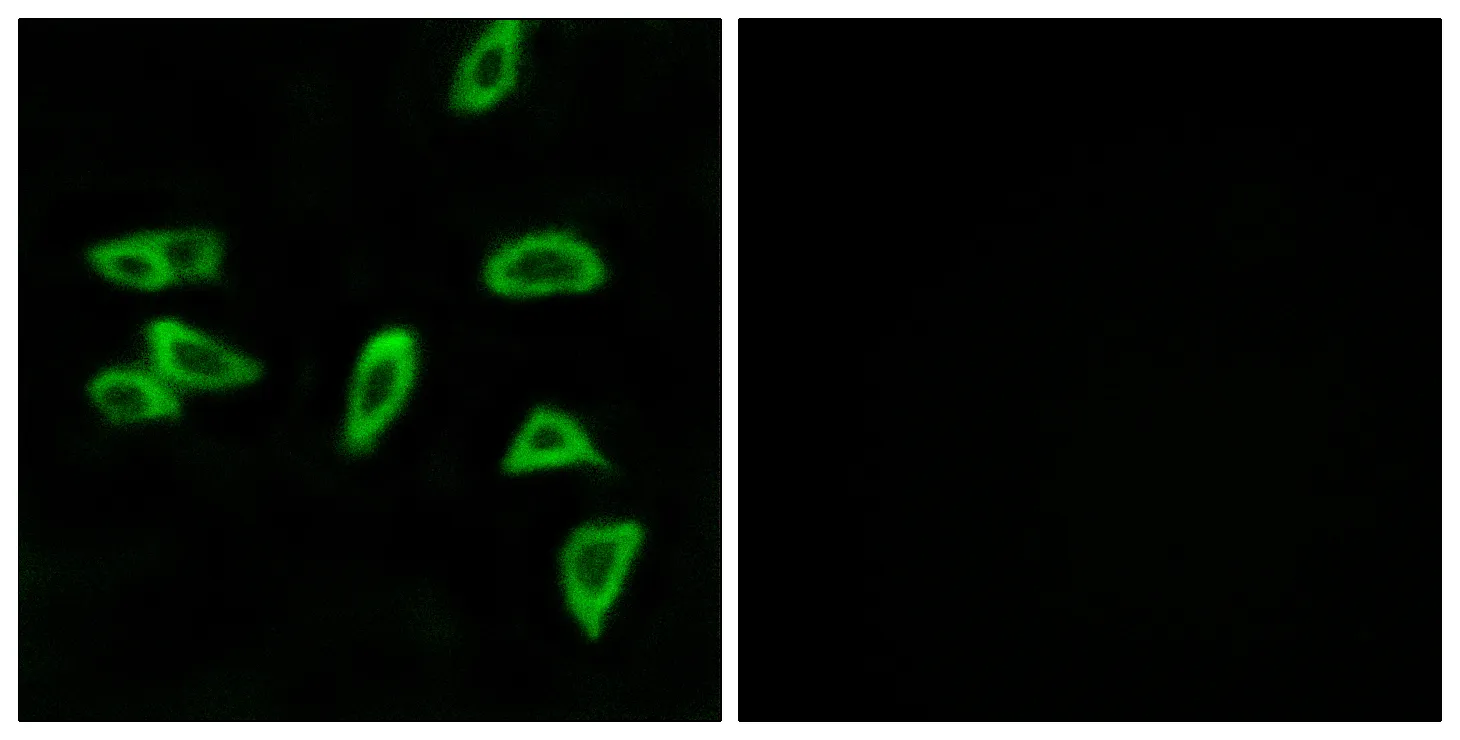
EnkiLife offers the EP3 Rabbit Polyclonal Antibody. This antibody reacts with Human,Rat,Mouse species and is suitable for WB,ICC/IF,ELISA application. Alternative Names of Immunogen: PTGER3; Prostaglandin E2 receptor EP3 subtype; PGE receptor EP3 subtype; PGE2 receptor EP3 subtype; PGE2-R; Prostanoid EP3 receptor. The product boasts remarkable high specificity, outstanding reproducibility, and exceptional affinity, making it a reliable and superior choice for your needs. Dilution Ratio: WB 1:500-1:2000,ICC/IF 1:200-1:1000,ELISA 1:5000-1:20000 Background: The protein encoded by this gene is a member of the G-protein coupled receptor family. This protein is one of four receptors identified for prostaglandin E2 (PGE2). This receptor may have many biological functions, which involve digestion, nervous system, kidney reabsorption, and uterine contraction activities. Studies of the mouse counterpart suggest that this receptor may also mediate adrenocorticotropic hormone response as well as fever generation in response to exogenous and endogenous stimuli. Multiple transcript variants encoding different isoforms have been found for this gene. [provided by RefSeq, Aug 2009],alternative products:Additional isoforms seem to exist,function:Receptor for prostaglandin E2 (PGE2); the EP3 receptor may be involved in inhibition of gastric acid secretion, modulation of neurotransmitter release in central and peripheral neurons, inhibition of sodium and water reabsorption in kidney tubulus and contraction in uterine smooth muscle. The activity of this receptor can couple to both the inhibition of adenylate cyclase mediated by G-I proteins, and to an elevation of intracellular calcium. The various isoforms have identical ligand binding properties but can interact with different second messenger systems.,similarity:Belongs to the G-protein coupled receptor 1 family.,tissue specificity:Expressed in small intestine, heart, pancreas, gastric fundic mucosa, mammary artery and pulmonary vessels., Research Area: Calcium;Neuroactive ligand-receptor interaction;
More from EnkiLife