Ephrin-A5 Rabbit Polyclonal Antibody
APRab10537-20μL · 20μL
Verified Partner
Sign in to see pricing and request a quote.
Brand Store Product
No external links. Get your quote directly here.

Description
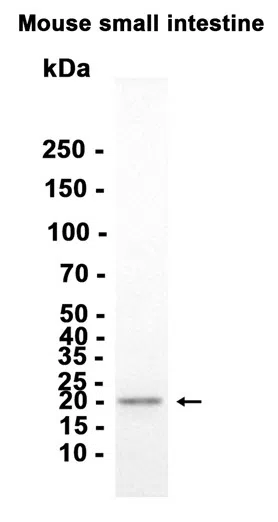
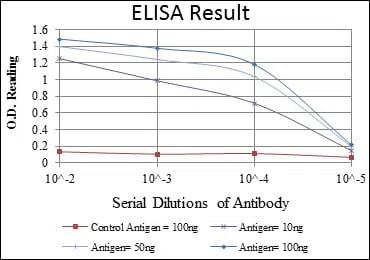
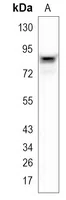
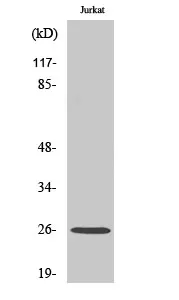
EnkiLife offers the Ephrin-A5 Rabbit Polyclonal Antibody. This antibody reacts with Human,Mouse,Rat species and is suitable for WB,ELISA application. Alternative Names of Immunogen: EFNA5; EPLG7; LERK7; Ephrin-A5; AL-1; EPH-related receptor tyrosine kinase ligand 7; LERK-7. The product boasts remarkable high specificity, outstanding reproducibility, and exceptional affinity, making it a reliable and superior choice for your needs. Dilution Ratio: WB 1:500-1:2000,ELISA 1:20000-1:40000 Background: Ephrin-A5, a member of the ephrin gene family, prevents axon bundling in cocultures of cortical neurons with astrocytes, a model of late stage nervous system development and differentiation. The EPH and EPH-related receptors comprise the largest subfamily of receptor protein-tyrosine kinases and have been implicated in mediating developmental events, particularly in the nervous system. EPH receptors typically have a single kinase domain and an extracellular region containing a Cys-rich domain and 2 fibronectin type III repeats. The ephrin ligands and receptors have been named by the Eph Nomenclature Committee (1997). Based on their structures and sequence relationships, ephrins are divided into the ephrin-A (EFNA) class, which are anchored to the membrane by a glycosylphosphatidylinositol linkage, and the ephrin-B (EFNB) class, which are transmembrane proteins. The Eph family of receptors are similarly divifunction:May function actively to stimulate axon fasciculation. Induces compartmentalized signaling within a caveolae-like membrane microdomain when bound to the extracellular domain of its cognate receptor. This signaling event requires the activity of the Fyn tyrosine kinase.,similarity:Belongs to the ephrin family.,subcellular location:Compartmentalized in discrete caveolae-like membrane microdomains.,subunit:Binds to EPHB2 (By similarity). Binds to the receptor tyrosine kinases EPHA2, EPHA3 and EPHB1., Research Area: Axon guidance;
More from EnkiLife