FBP2 Rabbit Polyclonal Antibody
APRab10860-50μL · 50μL
Verified Partner
Sign in to see pricing and request a quote.
Brand Store Product
No external links. Get your quote directly here.

Description
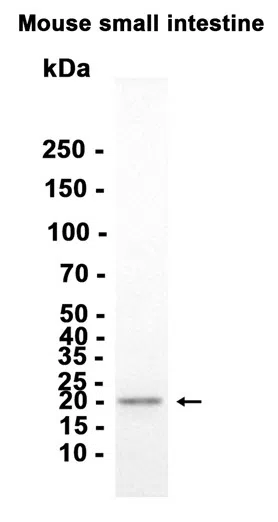
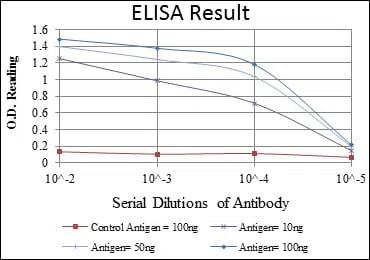
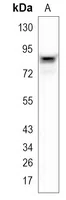
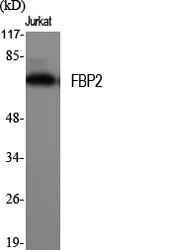
EnkiLife offers the FBP2 Rabbit Polyclonal Antibody. This antibody reacts with Human,Mouse,Rat species and is suitable for WB,ELISA application. Alternative Names of Immunogen: KHSRP; FUBP2; Far upstream element-binding protein 2; FUSE-binding protein 2; KH type-splicing regulatory protein; KSRP; p75. The product boasts remarkable high specificity, outstanding reproducibility, and exceptional affinity, making it a reliable and superior choice for your needs. Dilution Ratio: WB 1:500-1:2000,ELISA 1:5000-1:20000 Background: The KHSRP gene encodes a multifunctional RNA-binding protein implicated in a variety of cellular processes, including transcription, alternative pre-mRNA splicing, and mRNA localization (Min et al., 1997 [PubMed 9136930]; Gherzi et al., 2004 [PubMed 15175153]).[supplied by OMIM, Apr 2010],function:Binds to the dendritic targeting element and may play a role in mRNA trafficking (By similarity). Part of a ternary complex that binds to the downstream control sequence (DCS) of the pre-mRNA. Mediates exon inclusion in transcripts that are subject to tissue-specific alternative splicing. May interact with single-stranded DNA from the far-upstream element (FUSE). May activate gene expression. Also involved in degradation of inherently unstable mRNAs that contain AU-rich elements (AREs) in their 3'-UTR, possibly by recruiting degradation machinery to ARE-containing mRNAs.,PTM:Phosphorylated upon DNA damage, probably by ATM or ATR.,similarity:Belongs to the KHSRP family.,similarity:Contains 4 KH domains.,subcellular location:A small proportion is also found in the cytoplasm of neuronal cell bodies and dendrites.,subunit:Part of a ternary complex containing FUBP2, PTBP1, PTBP2 and HNRPH1. Interacts with PARN. Also interacts with APC which is part of the apolipoprotein B mRNA editing enzyme complex. The interaction is not required for activity of the catalytic component, APOBEC1, but may confer stability on the complex.,tissue specificity:Detected in neural and non-neural cell lines.,
More from EnkiLife