Fibulin-5 Rabbit Polyclonal Antibody
APRab10981-100μL · 100μL
Verified Partner
Sign in to see pricing and request a quote.
Brand Store Product
No external links. Get your quote directly here.

Description
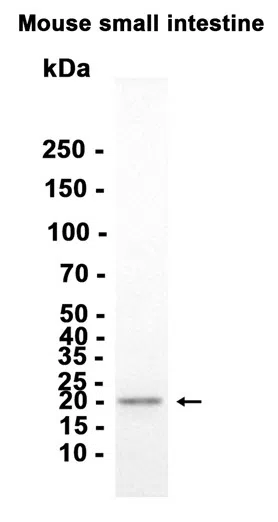
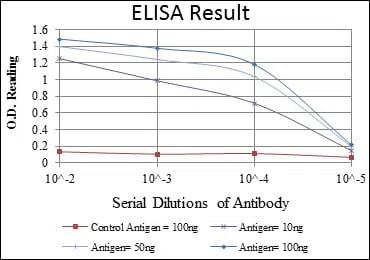
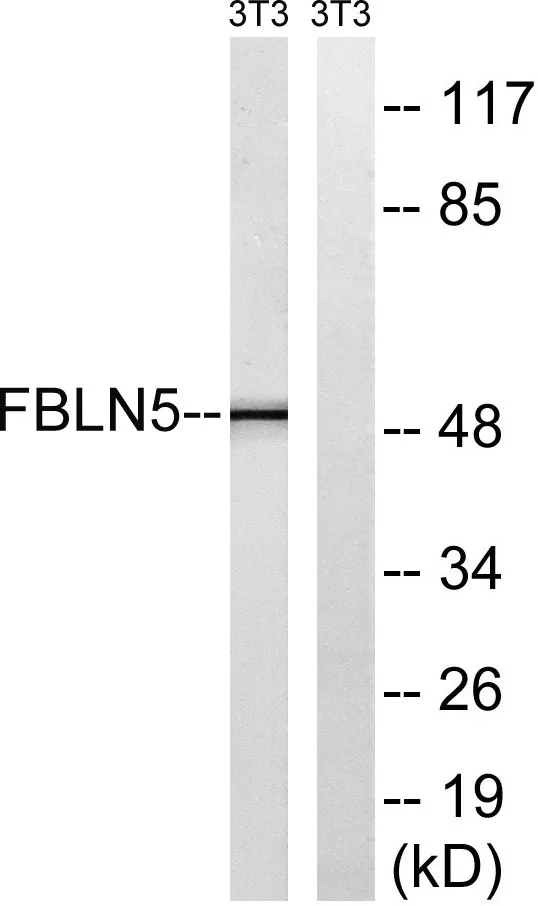
EnkiLife offers the Fibulin-5 Rabbit Polyclonal Antibody. This antibody reacts with Human,Mouse,Rat species and is suitable for WB,ELISA application. Alternative Names of Immunogen: FBLN5; DANCE; Fibulin-5; FIBL-5; Developmental arteries and neural crest EGF-like protein; Dance; Urine p50 protein; UP50. The product boasts remarkable high specificity, outstanding reproducibility, and exceptional affinity, making it a reliable and superior choice for your needs. Dilution Ratio: WB 1:500-1:2000,ELISA 1:5000-1:10000 Background: The protein encoded by this gene is a secreted, extracellular matrix protein containing an Arg-Gly-Asp (RGD) motif and calcium-binding EGF-like domains. It promotes adhesion of endothelial cells through interaction of integrins and the RGD motif. It is prominently expressed in developing arteries but less so in adult vessels. However, its expression is reinduced in balloon-injured vessels and atherosclerotic lesions, notably in intimal vascular smooth muscle cells and endothelial cells. Therefore, the protein encoded by this gene may play a role in vascular development and remodeling. Defects in this gene are a cause of autosomal dominant cutis laxa, autosomal recessive cutis laxa type I (CL type I), and age-related macular degeneration type 3 (ARMD3). [provided by RefSeq, Jul 2008],disease:Defects in FBLN5 are a cause of autosomal dominant cutis laxa [MIM:123700]. Hereditary cutis laxa refers to a heterogeneous group of connective tissue disorders characterized by cutaneous abnormalities and variable systemic manifestations. The most constant clinical feature is loose skin, sagging over the face and trunk. Hereditary cutis laxa is inherited in both autosomal dominant and autosomal recessive modes. Autosomal dominant cutis laxa is a relatively benign inherited and acquired connective tissue disorder.,disease:Defects in FBLN5 are a cause of autosomal recessive cutis laxa type I (CL type I) [MIM:219100]. CL type I shows the most severe phenotype and has the poorest prognosis. In addition to the skin, internal organs enriched in elastic fibers, such as the lung and arteries, are affected.,disease:Defects in FBLN5 are the cause of age-related macular degeneration type 3 (ARMD3) [MIM:608895]. ARMD is a multifactorial disease and the most common cause of irreversible vision loss in the developed world. In most patients, the disease is manifest as ophthalmoscopically visible yellowish accumulations of protein and lipid (known as drusen) that lie beneath the retinal pigment epithelium and within an elastin-containing structure known as Bruch membrane.,function:Promotes adhesion of endothelial cells through interaction of integrins and the RGD motif. Could be a vascular ligand for integrin receptors and may play a role in vascular development and remodeling.,similarity:Belongs to the fibulin family.,similarity:Contains 6 EGF-like domains.,tissue specificity:Expressed predominantly in heart, ovary, and colon but also in kidney, pancreas, testis, lung and placenta. Not detectable in brain, liver, thymus, prostate, or peripheral blood leukocytes.,
More from EnkiLife