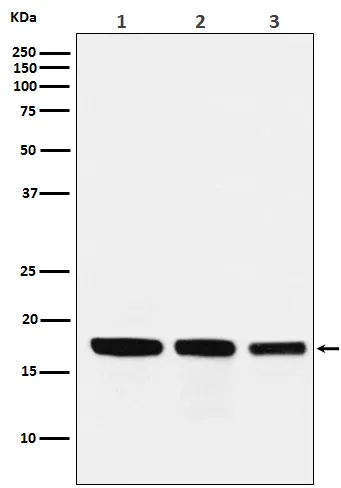
GABARAP (11T4) Rabbit Monoclonal Antibody
AMRe11243-20μL · 20μL
Verified Partner
Sign in to see pricing and request a quote.
Brand Store Product
No external links. Get your quote directly here.

Description
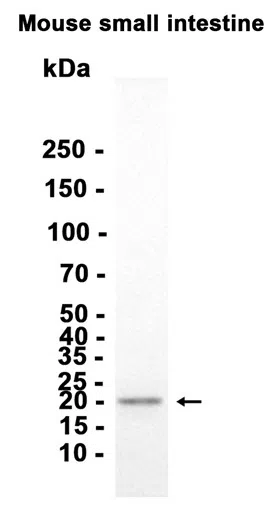
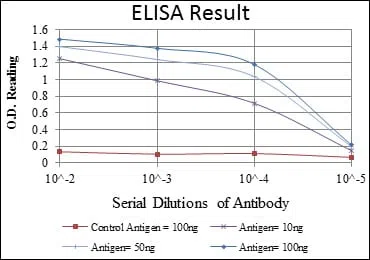
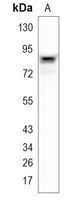
EnkiLife offers the GABARAP (11T4) Rabbit Monoclonal Antibody. This antibody reacts with Human,Rat species and is suitable for WB,IHC application. Alternative Names of Immunogen: GABARAP; GABARAPL1; GABARAPL2;. The product boasts remarkable high specificity, outstanding reproducibility, and exceptional affinity, making it a reliable and superior choice for your needs. Dilution Ratio: WB 1:1000-1:5000,IHC 1:100-1:200 Background: GABARAP is cleaved at its carboxyl terminus, which leads to conjugation by either of the phospholipids phosphatidylethanolamine or phosphatidylserine. This processing converts GABARAP from a type I to a type II membrane bound form involved in autophagosome biogenesis. Processing of GABARAP involves cleavage by Atg4 family members followed by conjugation by the E1 and E2 like enzymes Atg7 and Atg3. Ubiquitin-like modifier that plays a role in intracellular transport of GABA(A) receptors and its interaction with the cytoskeleton (PubMed:9892355). Involved in autophagy: while LC3s are involved in elongation of the phagophore membrane, the GABARAP/GATE-16 subfamily is essential for a later stage in autophagosome maturation (PubMed:15169837, PubMed:20562859, PubMed:22948227). Through its interaction with the reticulophagy receptor TEX264, participates in the remodeling of subdomains of the endoplasmic reticulum into autophagosomes upon nutrient stress, which then fuse with lysosomes for endoplasmic reticulum turnover (PubMed:31006538). Also required for the local activition of the CUL3(KBTBD6/7) E3 ubiquitin ligase complex, regulating ubiquitination and degradation of TIAM1, a guanyl-nucleotide exchange factor (GEF) that activates RAC1 and downstream signal transduction (PubMed:25684205). Thereby, regulates different biological processes including the organization of the cytoskeleton, cell migration and proliferation (PubMed:25684205). Involved in apoptosis (PubMed:15977068).
More from EnkiLife