GK1 Rabbit Polyclonal Antibody
APRab11452-20μL · 20μL
Verified Partner
Sign in to see pricing and request a quote.
Brand Store Product
No external links. Get your quote directly here.

Description
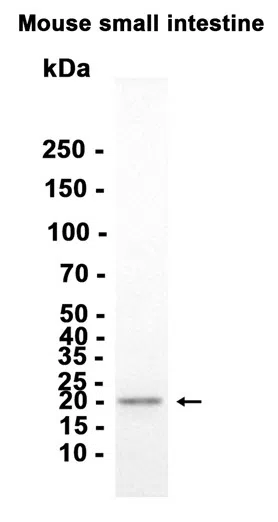
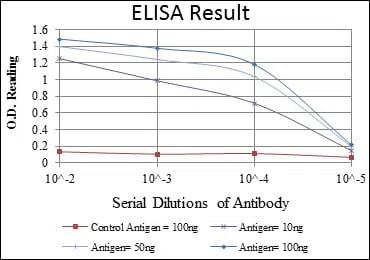
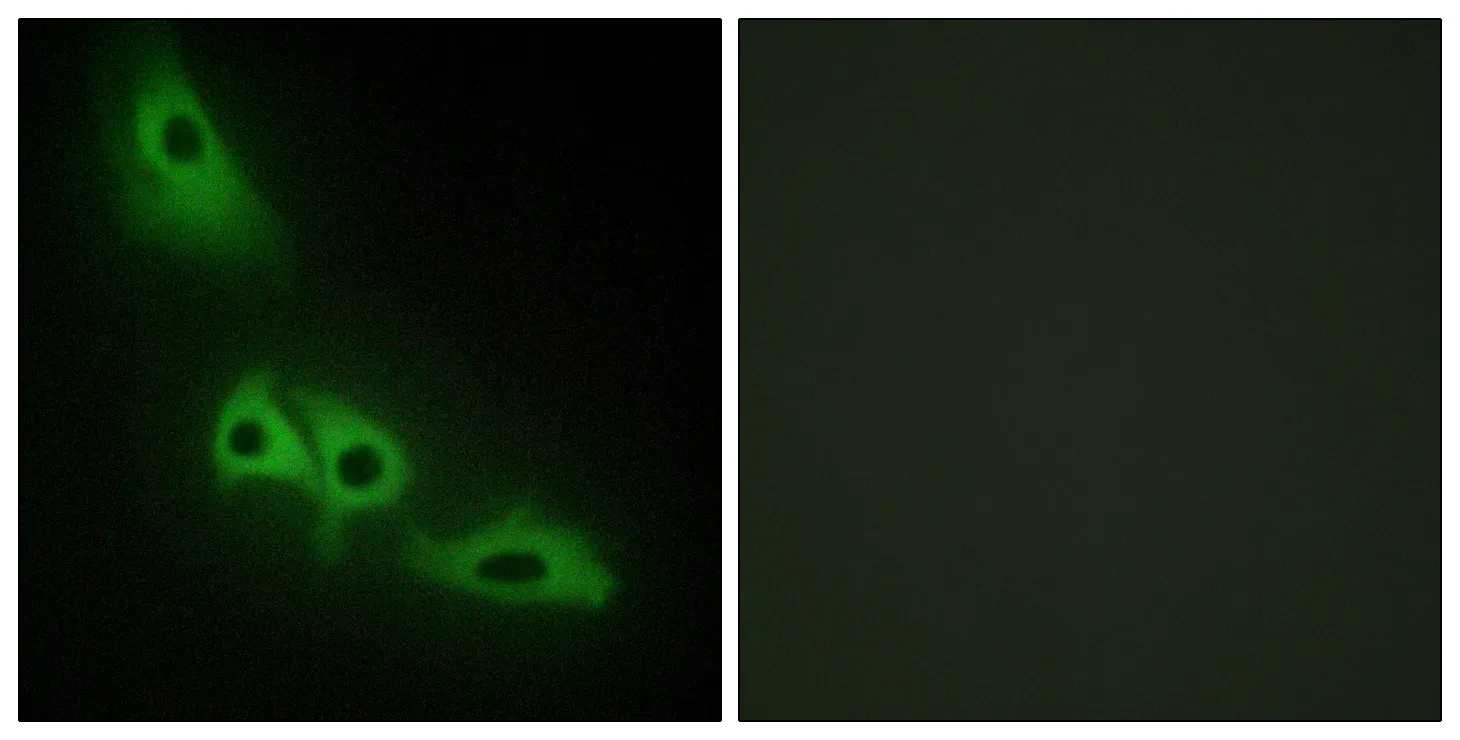
EnkiLife offers the GK1 Rabbit Polyclonal Antibody. This antibody reacts with Human,Mouse,Rat species and is suitable for WB,ICC/IF,ELISA application. Alternative Names of Immunogen: GK; Glycerol kinase; GK; Glycerokinase; ATP:glycerol 3-phosphotransferase. The product boasts remarkable high specificity, outstanding reproducibility, and exceptional affinity, making it a reliable and superior choice for your needs. Dilution Ratio: WB 1:500-1:2000,ICC/IF 1:200-1:1000,ELISA 1:10000-1:20000 Background: The protein encoded by this gene belongs to the FGGY kinase family. This protein is a key enzyme in the regulation of glycerol uptake and metabolism. It catalyzes the phosphorylation of glycerol by ATP, yielding ADP and glycerol-3-phosphate. Mutations in this gene are associated with glycerol kinase deficiency (GKD). Alternatively spliced transcript variants encoding different isoforms have been found for this gene. [provided by RefSeq, Mar 2011],catalytic activity:ATP + glycerol = ADP + sn-glycerol 3-phosphate.,caution:The sequence shown here is derived from an Ensembl automatic analysis pipeline and should be considered as preliminary data.,disease:Defects in GK are the cause of GK deficiency (GKD) [MIM:307030]. This disease can be either symptomatic with episodic metabolic and CNS decompensation or asymptomatic with hyperglycerolemia and hyperglyceroluria only.,function:Key enzyme in the regulation of glycerol uptake and metabolism.,pathway:Polyol metabolism; glycerol degradation via glycerol kinase pathway; sn-glycerol 3-phosphate from glycerol: step 1/1.,similarity:Belongs to the FGGY kinase family.,subcellular location:In sperm and fetal tissues, the majority of the enzyme is bound to mitochondria, but in adult tissues, such as liver found in the cytoplasm.,tissue specificity:Highly expressed in the liver, kidney and testis. Isoforms 2 and 3 are expressed specifically in testis and fetal liver, but not in the adult liver., Research Area: Glycerolipid metabolism;PPAR;
More from EnkiLife