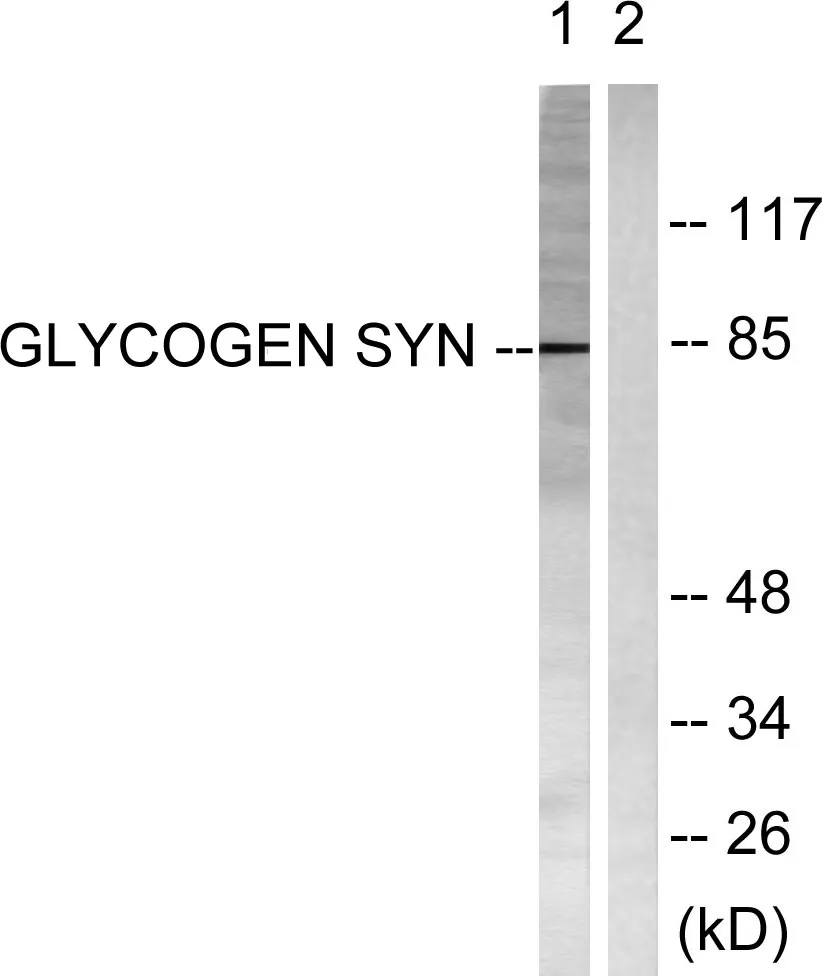
Glycogen Synthase 1 Rabbit Polyclonal Antibody
APRab11513-20μL · 20μL
Verified Partner
Sign in to see pricing and request a quote.
Brand Store Product
No external links. Get your quote directly here.

Description
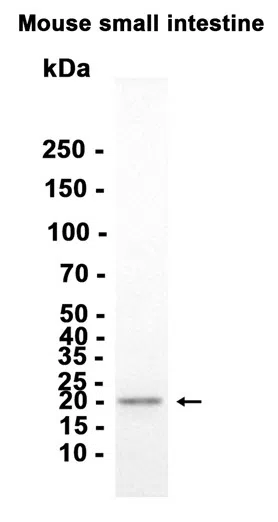
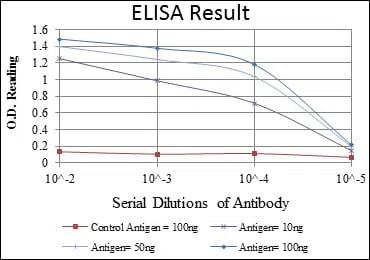
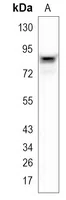
EnkiLife offers the Glycogen Synthase 1 Rabbit Polyclonal Antibody. This antibody reacts with Human,Mouse,Rat species and is suitable for WB,IHC,ICC/IF,ELISA application. Alternative Names of Immunogen: GYS1; GYS; Glycogen [starch] synthase; muscle. The product boasts remarkable high specificity, outstanding reproducibility, and exceptional affinity, making it a reliable and superior choice for your needs. Dilution Ratio: WB 1:500-1:2000,IHC 1:100-1:500,ICC/IF 1:50-1:200,ELISA 1:5000-1:20000 Background: The protein encoded by this gene catalyzes the addition of glucose monomers to the growing glycogen molecule through the formation of alpha-1,4-glycoside linkages. Mutations in this gene are associated with muscle glycogen storage disease. Alternatively spliced transcript variants encoding different isoforms have been found for this gene.[provided by RefSeq, Sep 2009],catalytic activity:UDP-glucose ((1->4)-alpha-D-glucosyl)(n) = UDP + ((1->4)-alpha-D-glucosyl)(n+1).,disease:Defects in GYS1 are the cause of muscle glycogen storage disease type 0 (GSD0b) [MIM:611556]; also called muscle glycogen synthase deficiency. GSD0 is a metabolic disorder characterized by fasting hypoglycemia presenting in infancy or early childhood. The role of muscle glycogen is to provide critical energy during bursts of activity and sustained muscle work.,enzyme regulation:Allosteric activation by glucose-6-phosphate. Phosphorylation reduces the activity towards UDP-glucose. When in the non-phosphorylated state, glycogen synthase does not require glucose-6-phosphate as an allosteric activator; when phosphorylated it does.,function:Transfers the glycosyl residue from UDP-Glc to the non-reducing end of alpha-1,4-glucan.,pathway:Glycan biosynthesis; glycogen biosynthesis.,similarity:Belongs to the glycosyltransferase 3 family., Research Area: Starch and sucrose metabolism;Insulin_Receptor;
More from EnkiLife