GPR132 Rabbit Polyclonal Antibody
APRab11636-20μL · 20μL
Verified Partner
Sign in to see pricing and request a quote.
Brand Store Product
No external links. Get your quote directly here.

Description
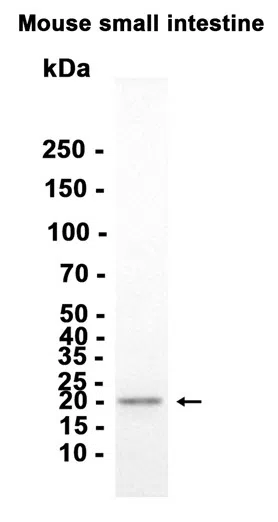
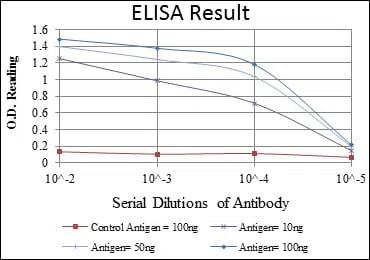
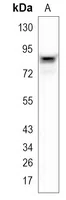
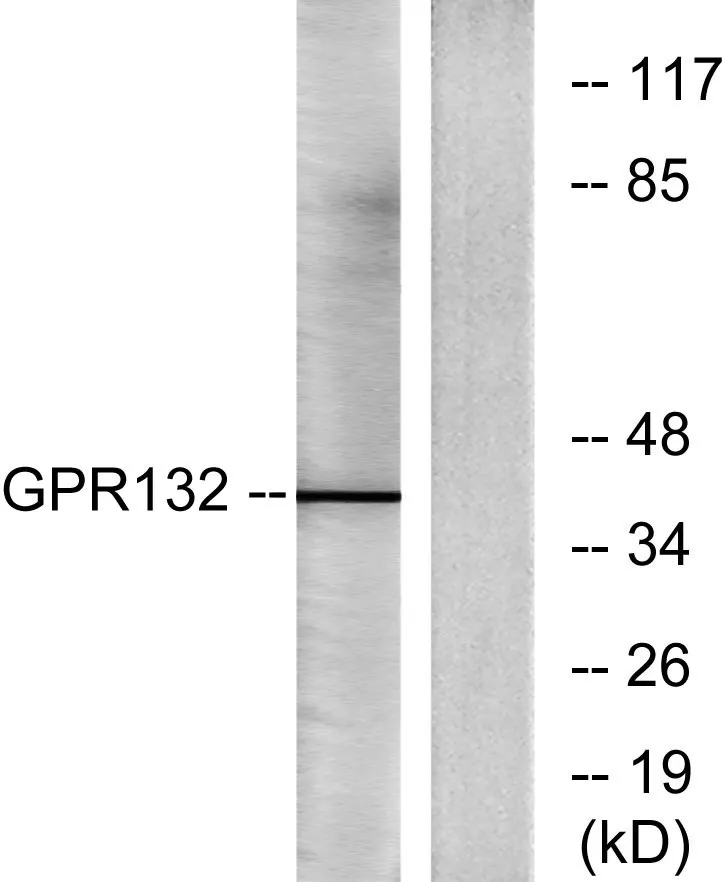
EnkiLife offers the GPR132 Rabbit Polyclonal Antibody. This antibody reacts with Human,Rat,Mouse species and is suitable for WB,IHC,ICC/IF,ELISA application. Alternative Names of Immunogen: GPR132; G2A; Probable G-protein coupled receptor 132; G2 accumulation protein. The product boasts remarkable high specificity, outstanding reproducibility, and exceptional affinity, making it a reliable and superior choice for your needs. Dilution Ratio: WB 1:500-1:2000,IHC 1:100-1:300,ICC/IF 1:200-1:1000,ELISA 1:5000-1:10000 Background: This gene encodes a member of the guanine nucleotide-binding protein (G protein)-coupled receptor (GPCR) superfamily. The receptors are seven-pass transmembrane proteins that respond to extracellular cues and activate intracellular signal transduction pathways. This protein was reported to be a receptor for lysophosphatidylcholine action, but PubMedID: 15653487 retracts this finding and instead suggests this protein to be an effector of lysophosphatidylcholine action. This protein may have proton-sensing activity and may be a receptor for oxidized free fatty acids. Alternative splicing results in multiple transcript variants. [provided by RefSeq, Jul 2013],caution:Was originally (PubMed:11474113) thought to be a receptor for lysophosphatidylcholine (LPC) and sphingosylphosphorylcholine (SPC), However, this work has been retracted.,function:Receptor for an unknown ligand. Activates a G alpha protein, most likely G alpha(q). May be involved in apoptosis. Functions at the G2/M checkpoint to delay mitosis. May serve as a mechanism for T- and B-cells, and other cell types, to slow their proliferation and repair damaged DNA to ensure proper replication.,induction:By stress and DNA-damaging agents.,similarity:Belongs to the G-protein coupled receptor 1 family.,subcellular location:Internalized and accumulated in endosomal compartments. LPC triggers the relocalization from the endosomal compartment to the cell surface.,tissue specificity:Highly expressed in macrophages and hematopoietic tissues rich in lymphocytes, like spleen and thymus. Weakly expressed in heart and lung. In atherosclerotic plaques, expression is observed around the lipid core and at the shoulder region.,
More from EnkiLife