
Hamartin Rabbit Polyclonal Antibody
APRab11891-20μL · 20μL
Verified Partner
Sign in to see pricing and request a quote.
Brand Store Product
No external links. Get your quote directly here.

Description
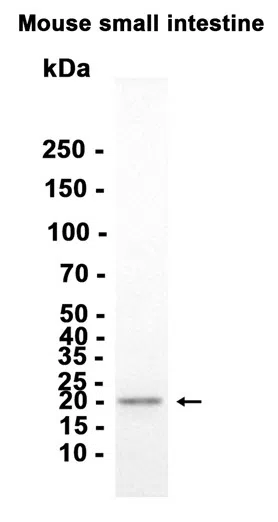
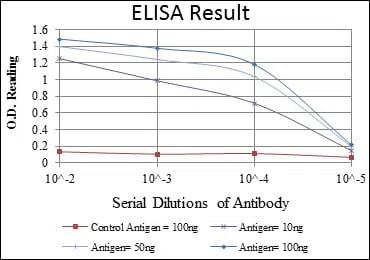
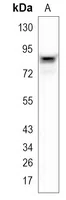
EnkiLife offers the Hamartin Rabbit Polyclonal Antibody. This antibody reacts with Human,Rat,Mouse species and is suitable for WB,ELISA application. Alternative Names of Immunogen: tuberous sclerosis 1. The product boasts remarkable high specificity, outstanding reproducibility, and exceptional affinity, making it a reliable and superior choice for your needs. Dilution Ratio: WB 1:500-1:2000,ELISA 1:10000-1:20000 Background: This gene encodes a growth inhibitory protein thought to play a role in the stabilization of tuberin. Mutations in this gene have been associated with tuberous sclerosis. Alternative splicing results in multiple transcript variants. [provided by RefSeq, Jun 2009],disease:Defects in TSC1 are the cause of tuberous sclerosis complex (TSC) [MIM:191100]. The molecular basis of TSC is a functional impairement of the hamartin-tuberin complex. TSC is an autosomal dominant multi-system disorder that affects especially the brain, kidneys, heart, and skin. TSC is characterized by hamartomas (benign overgrowths predominantly of a cell or tissue type that occurs normally in the organ) and hamartias (developmental abnormalities of tissue combination). Clinical symptoms can range from benign hypopigmented macules of the skin to profound mental retardation with intractable seizures to premature death from a variety of disease-associated causes.,disease:Defects in TSC1 may be a cause of focal cortical dysplasia of Taylor balloon cell type (FCDBC) [MIM:607341]. FCDBC is a subtype of cortical displasias linked to chronic intractable epilepsy. Cortical dysplasias display a broad spectrum of structural changes, which appear to result from changes in proliferation, migration, differentiation, and apoptosis of neuronal precursors and neurons during cortical development.,domain:The C-terminal putative coiled-coil domain is necessary for interaction with TSC2.,function:Implicated as a tumor suppressor. May have a function in vesicular transport. Interaction between TSC1 and TSC2 may facilitate vesicular docking.,PTM:Phosphorylated upon DNA damage, probably by ATM or ATR.,PTM:Phosphorylation at Ser-505 does not affect interaction with TSC2.,subcellular location:At steady state found in association with membranes.,subunit:Interacts with TSC2, leading to stabilize TSC2. In the absence of TSC2, TSC1 self-aggregates. Interacts with DOCK7.,tissue specificity:Highly expressed in skeletal muscle, followed by heart, brain, placenta, pancreas, lung, liver and kidney. Also expressed in embryonic kidney cells., Research Area: mTOR;Insulin_Receptor;
More from EnkiLife