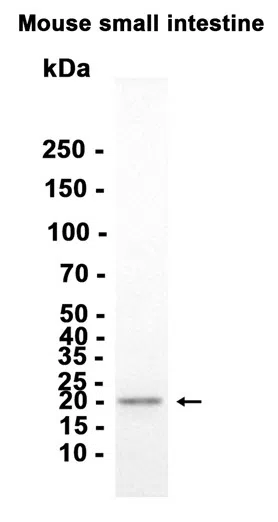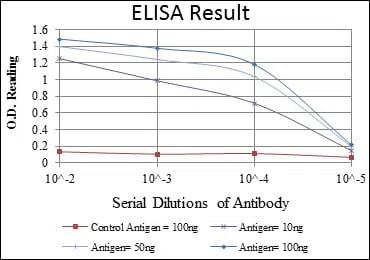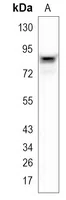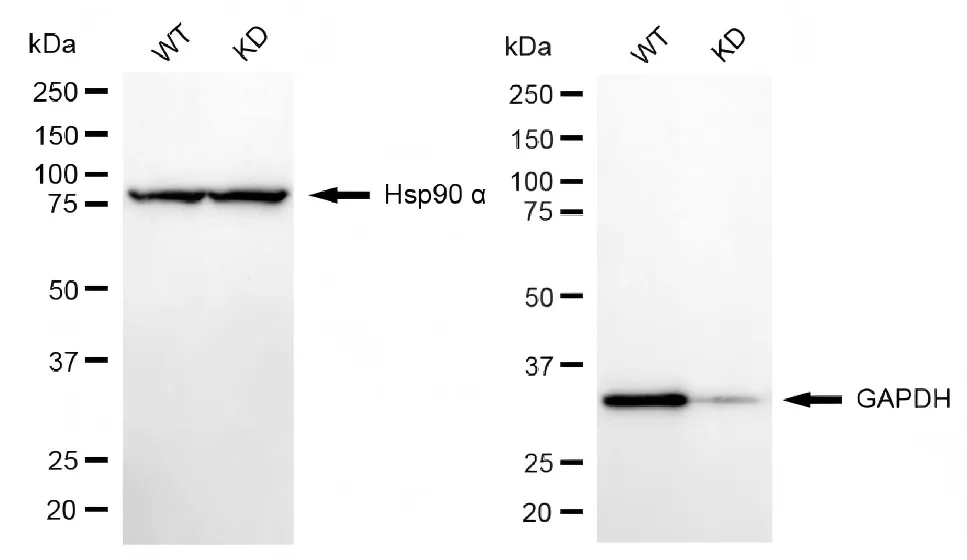
HCCS Rabbit Polyclonal Antibody
APRab11925-100μL · 100μL
Verified Partner
Sign in to see pricing and request a quote.
Brand Store Product
No external links. Get your quote directly here.
Description
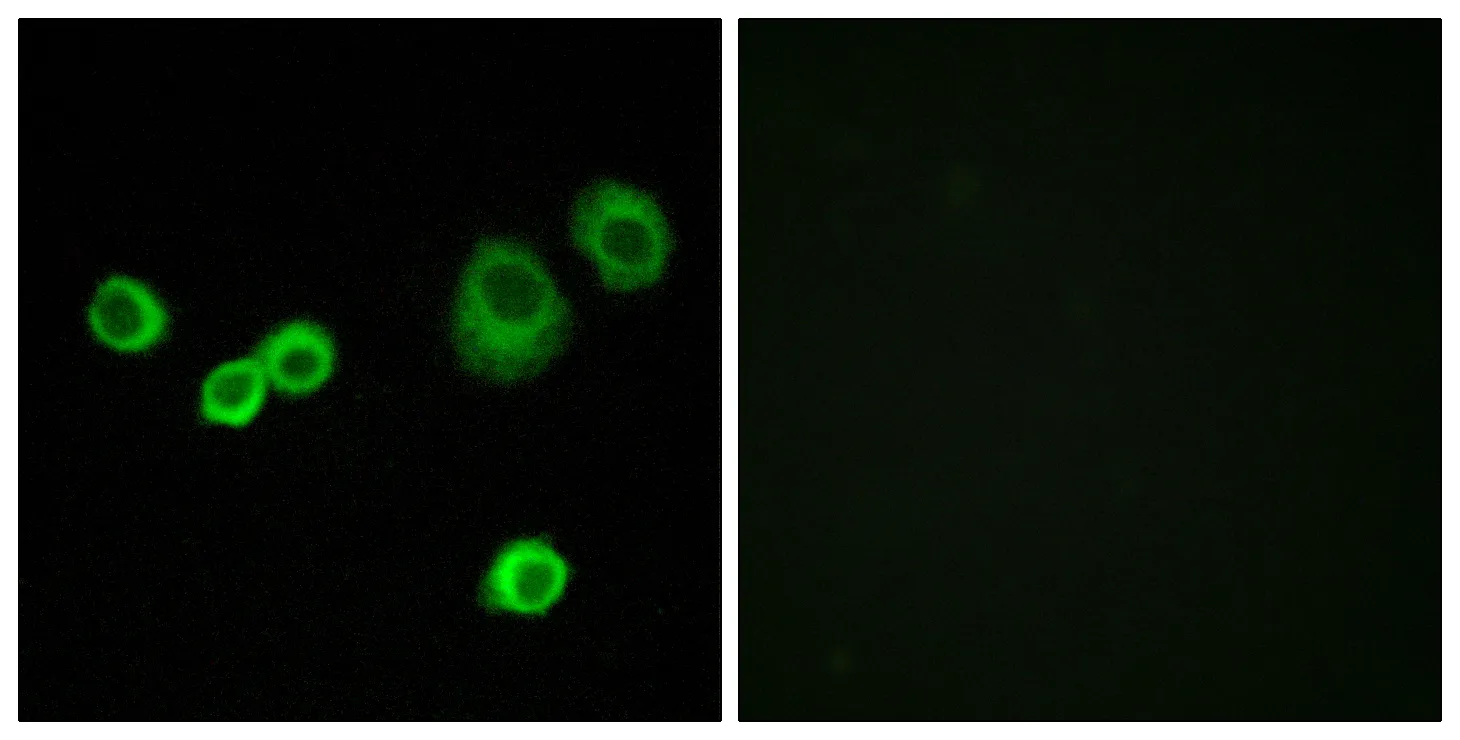
EnkiLife offers the HCCS Rabbit Polyclonal Antibody. This antibody reacts with Human,Mouse,Monkey species and is suitable for WB,IHC,ICC/IF,ELISA application. Alternative Names of Immunogen: HCCS; CCHL; Cytochrome c-type heme lyase; CCHL; Holocytochrome c-type synthase. The product boasts remarkable high specificity, outstanding reproducibility, and exceptional affinity, making it a reliable and superior choice for your needs. Dilution Ratio: WB 1:500-1:2000,IHC 1:100-1:300,ICC/IF 1:200-1:1000,ELISA 1:10000-1:20000 Background: holocytochrome c synthase(HCCS) Homo sapiens The protein encoded by this gene is an enzyme that covalently links a heme group to the apoprotein of cytochrome c. Defects in this gene are a cause of microphthalmia syndromic type 7 (MCOPS7). Three transcript variants encoding the same protein have been found for this gene. [provided by RefSeq, Jan 2010],catalytic activity:Holocytochrome c = apocytochrome c + heme.,disease:Defects in HCCS are a cause of microphthalmia syndromic type 7 (MCOPS7) [MIM:309801]; also known as microphthalmia with linear skin defects (MLS) or MIDAS syndrome. Microphthalmia is a clinically heterogeneous disorder of eye formation, ranging from small size of a single eye TO complete bilateral absence of ocular tissues (anophthalmia). In many cases, microphthalmia/anophthalmia occurs in association with syndromes that include non-ocular abnormalities. MCOPS7 is a disorder characterized by unilateral or bilateral microphthalmia, linear skin defects in affected females, and in utero lethality for males. Skin defects are limited to the face and neck, consisting of areas of aplastic skin that heal with age to form hyperpigmented areas. Additional features in female patients include agenesis of the corpus callosum, sclerocornea, chorioretinal abnormalities, infantile seizures, congenital heart defect, mental retardation, and diaphragmatic hernia.,function:Links covalently the heme group to the apoprotein of cytochrome c.,similarity:Belongs to the cytochrome c-type heme lyase family.,similarity:Contains 2 HRM (heme regulatory motif) repeats., Research Area: Porphyrin and chlorophyll metabolism;
More from EnkiLife