JAB1 (7S6) Rabbit Monoclonal Antibody
AMRe12808-20μL · 20μL
Verified Partner
Sign in to see pricing and request a quote.
Brand Store Product
No external links. Get your quote directly here.

Description
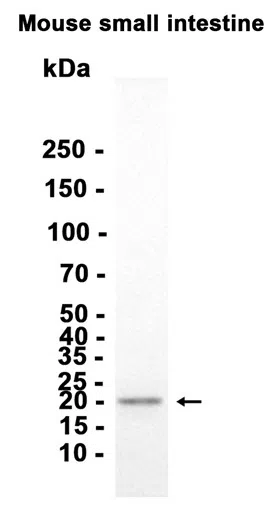
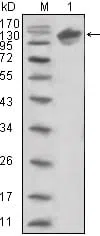
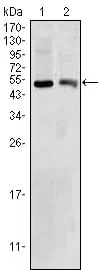
EnkiLife offers the JAB1 (7S6) Rabbit Monoclonal Antibody. This antibody reacts with Human,Mouse,Rat species and is suitable for WB application. Alternative Names of Immunogen: cops5; CSN 5; CSN5; JAB 1; MGC3149; MOV34; SGN5;. The product boasts remarkable high specificity, outstanding reproducibility, and exceptional affinity, making it a reliable and superior choice for your needs. Dilution Ratio: WB 1:1000-1:5000 Background: Probable protease subunit of the COP9 signalosome complex (CSN), a complex involved in various cellular and developmental processes. The CSN complex is an essential regulator of the ubiquitin (Ubl) conjugation pathway by mediating the deneddylation of the cullin subunits of the SCF-type E3 ligase complexes, leading to decrease the Ubl ligase activity of SCF-type complexes such as SCF, CSA or DDB2. Probable protease subunit of the COP9 signalosome complex (CSN), a complex involved in various cellular and developmental processes. The CSN complex is an essential regulator of the ubiquitin (Ubl) conjugation pathway by mediating the deneddylation of the cullin subunits of the SCF-type E3 ligase complexes, leading to decrease the Ubl ligase activity of SCF-type complexes such as SCF, CSA or DDB2. The complex is also involved in phosphorylation of p53/TP53, c-jun/JUN, IkappaBalpha/NFKBIA, ITPK1 and IRF8, possibly via its association with CK2 and PKD kinases. CSN-dependent phosphorylation of TP53 and JUN promotes and protects degradation by the Ubl system, respectively. In the complex, it probably acts as the catalytic center that mediates the cleavage of Nedd8 from cullins. It however has no metalloprotease activity by itself and requires the other subunits of the CSN complex. Interacts directly with a large number of proteins that are regulated by the CSN complex, confirming a key role in the complex. Promotes the proteasomal degradation of BRSK2.
More from EnkiLife