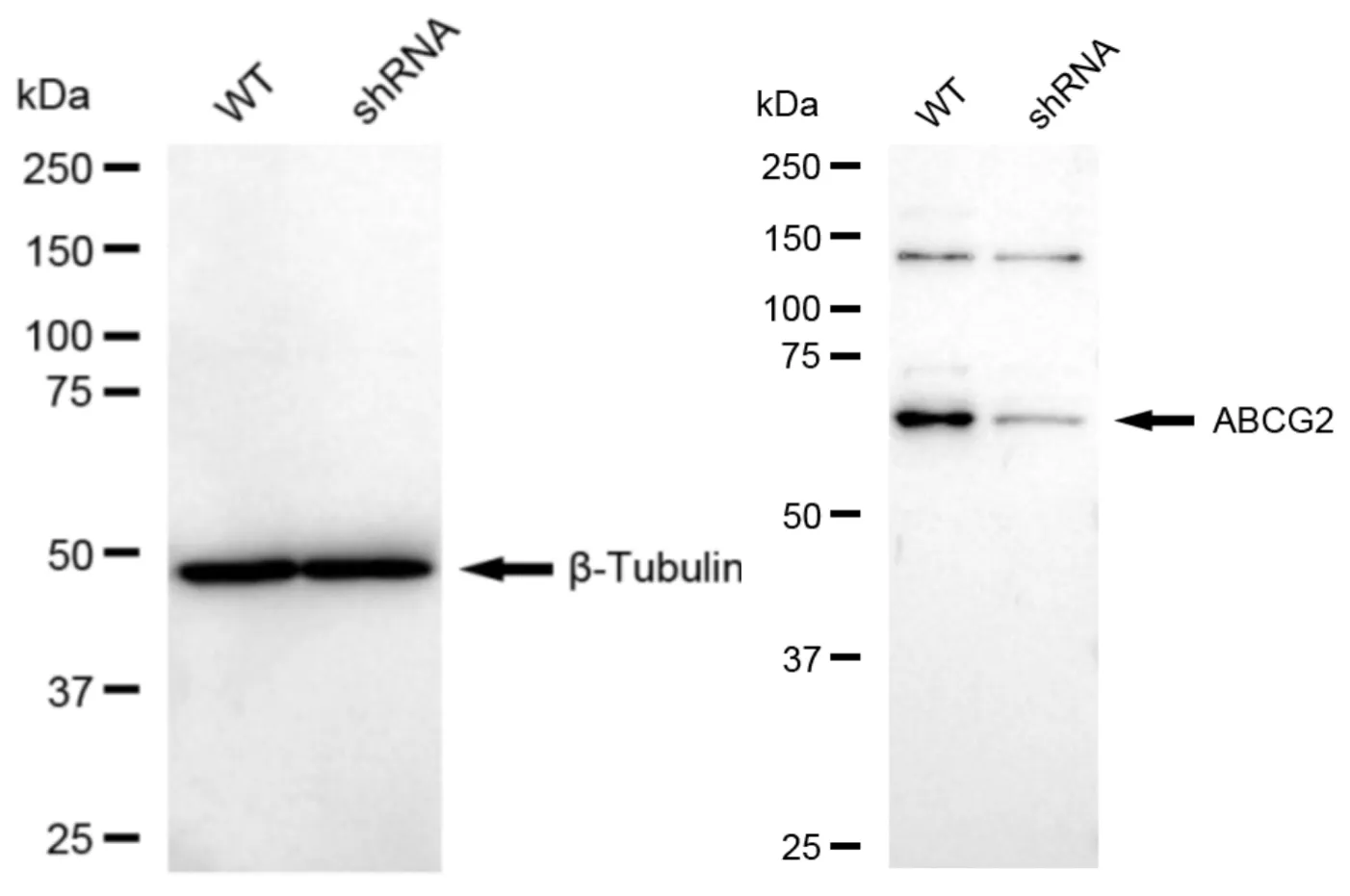
KD-Validated ABCG2 Recombinant Rabbit Monoclonal Antibody
KVAb01595-100ul · 100ul
Verified Partner
Sign in to see pricing and request a quote.
Brand Store Product
No external links. Get your quote directly here.
Description
EnkiLife offers the KD-Validated ABCG2 Recombinant Rabbit Monoclonal Antibody. This antibody reacts with Human and is suitable for WB,FCM application. The product boasts remarkable high specificity, outstanding reproducibility, and exceptional affinity, making it a reliable and superior choice for your needs. Dilution Ratio: WB 1:1,000-1:5,000; FC 1:200-1:2,000 Alternative Names of Immunogen:ABCG2; ATP Binding Cassette Subfamily G Member 2 (Junior Blood Group); BCRP; ABCP; MXR; EST157481; CD338; ATP-Binding Cassette, Sub-Family G (WHITE), Member 2 (Junior Blood Group); Broad Substrate Specificity ATP-Binding Cassette Transporter ABCG2; Placenta-Specific ATP-Binding Cassette Transporter; Mitoxantrone Resistance-Associated Protein; Breast Cancer Resistance Protein; Urate Exporter; CDw338; BCRP1; Broad Substrate Specificity ATP-Binding Cassette Transporter ABCG2 Isoform 1 (Junior Blood Group); Multi Drug Resistance Efflux Transport ATP-Binding Cassette Sub-Family G (WHITE) Member 2; ATP-Binding Cassette, Sub-Family G (WHITE), Member 2; ATP-Binding Cassette Sub-Family G Member02; ATPbinding Cassette Transporter ABCG2; ATP-Binding Cassette Transporter G2; Placenta Specific MDR Protein 2; ABC Transporter; CD338 Antigen; EC 7.6.2.2; CDw38; UAQTL1; ABC15; GOUT1; MXR-1; BMDP; MXR1; MRX Background: The membrane-associated protein encoded by this gene is included in the superfamily of ATP-binding cassette (ABC) transporters. ABC proteins transport various molecules across extra- and intra-cellular membranes. ABC genes are divided into seven distinct subfamilies (ABC1, MDR/TAP, MRP, ALD, OABP, GCN20, White). This protein is a member of the White subfamily. Alternatively referred to as a breast cancer resistance protein, this protein functions as a xenobiotic transporter which may play a major role in multi-drug resistance. It likely serves as a cellular defense mechanism in response to mitoxantrone and anthracycline exposure. Significant expression of this protein has been observed in the placenta, which may suggest a potential role for this molecule in placenta tissue. Multiple transcript variants encoding different isoforms have been found for this gene. [provided by RefSeq, Apr 2012] Research Area: Tags & Cell Markers,Signal Transduction,Stem Cells,Cancer,Metabolism,Neuroscience
More from EnkiLife