
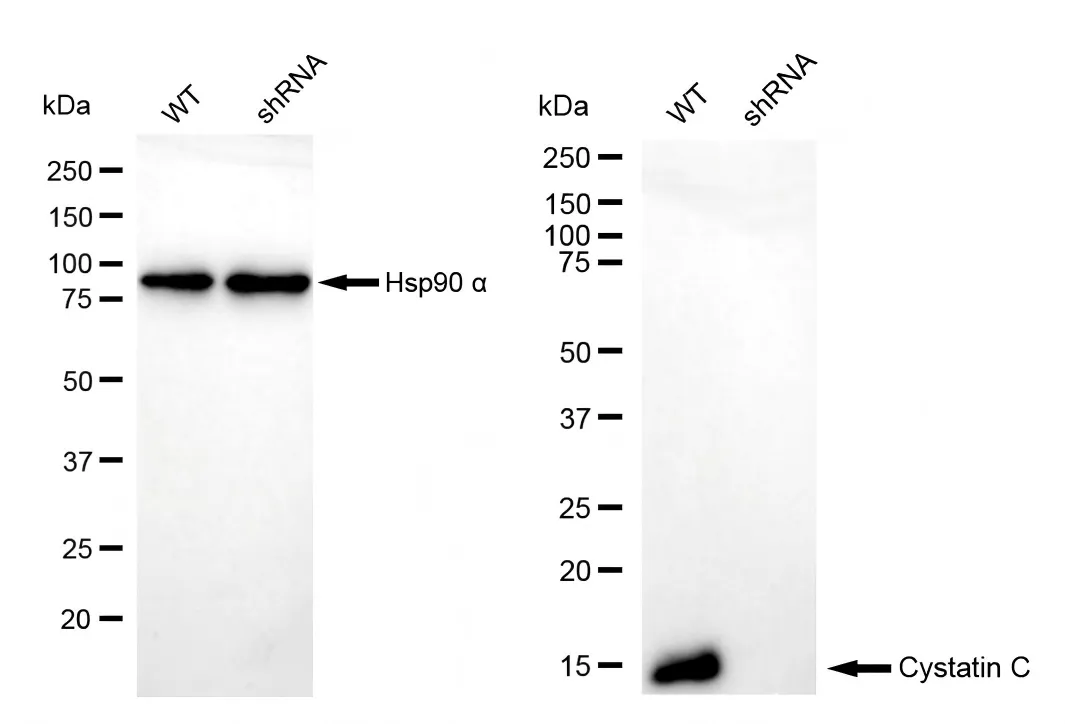
KD-Validated Cystatin C Recombinant Rabbit Monoclonal Antibody
KVAb01243-100ul · 100ul
Verified Partner
Sign in to see pricing and request a quote.
Brand Store Product
No external links. Get your quote directly here.
Description
EnkiLife offers the KD-Validated Cystatin C Recombinant Rabbit Monoclonal Antibody. This antibody reacts with Human,M and is suitable for WB,FCM,ICC application. The product boasts remarkable high specificity, outstanding reproducibility, and exceptional affinity, making it a reliable and superior choice for your needs. Dilution Ratio: WB 1:1,000-1:5,000; FC 1:200-1:2,000; ICC 1:100-1:1,000 Alternative Names of Immunogen:CST3; Cystatin C; Neuroendocrine Basic Polypeptide; Post-Gamma-Globulin; Gamma-Trace; Cystatin-C; Cystatin C (Amyloid Angiopathy And Cerebral Hemorrhage); Epididymis Secretory Protein Li; BA218C14.4 (Cystatin C); Cystatin 3; Cystatin-3; HEL-S-2 3; ARMD11 Background: The cystatin superfamily encompasses proteins that contain multiple cystatin-like sequences. Some of the members are active cysteine protease inhibitors, while others have lost or perhaps never acquired this inhibitory activity. There are three inhibitory families in the superfamily, including the type 1 cystatins (stefins), type 2 cystatins and the kininogens. The type 2 cystatin proteins are a class of cysteine proteinase inhibitors found in a variety of human fluids and secretions, where they appear to provide protective functions. The cystatin locus on chromosome 20 contains the majority of the type 2 cystatin genes and pseudogenes. This gene is located in the cystatin locus and encodes the most abundant extracellular inhibitor of cysteine proteases, which is found in high concentrations in biological fluids and is expressed in virtually all organs of the body. A mutation in this gene has been associated with amyloid angiopathy. Expression of this protein in vascular wall smooth muscle cells is severely reduced in both atherosclerotic and aneurysmal aortic lesions, establishing its role in vascular disease. In addition, this protein has been shown to have an antimicrobial function, inhibiting the replication of herpes simplex virus. Alternative splicing results in multiple transcript variants encoding a single protein. [provided by RefSeq, Nov 2014] Research Area: Tags & Cell Markers,Cell Biology,Stem Cells,Cardiovascular,Neuroscience
More from EnkiLife







