
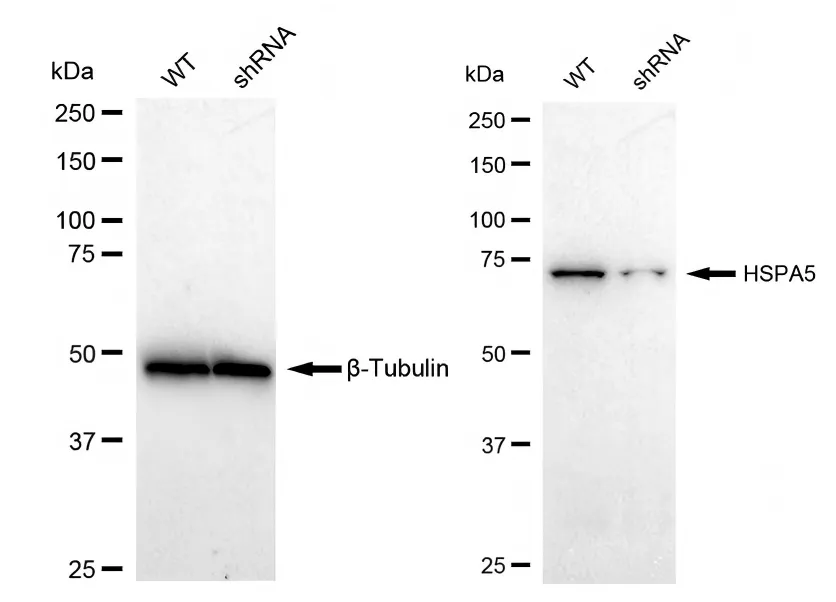
KD-Validated HSPA5 Recombinant Rabbit Monoclonal Antibody
KVAb01519-100ul · 100ul
Verified Partner
Sign in to see pricing and request a quote.
Brand Store Product
No external links. Get your quote directly here.

Description
EnkiLife offers the KD-Validated HSPA5 Recombinant Rabbit Monoclonal Antibody. This antibody reacts with Human,Mouse,Rat and is suitable for WB,FCM,ICC,IHC-P application. The product boasts remarkable high specificity, outstanding reproducibility, and exceptional affinity, making it a reliable and superior choice for your needs. Dilution Ratio: WB 1:1,000-1:5,000; FC 1:200-1:2,000; ICC 1:100-1:1,000; IHC-P 1:100-1:200 Alternative Names of Immunogen:HSPA5; Heat Shock Protein Family A (Hsp70) Member 5; GRP78; Heat Shock 70kDa Protein 5 (Glucose-Regulated Protein, 78kDa); Immunoglobulin Heavy Chain-Binding Protein; Heat Shock Protein 70 Family Protein 5; Heat Shock Protein Family A Member 5; Endoplasmic Reticulum Chaperone BiP; Glucose-Regulated Protein, 78kDa; 78 KDa Glucose-Regulated Protein; Binding-Immunoglobulin Protein; HSP70 Family Protein 5; BiP; BIP; Heat Shock 70kD Protein 5 (Glucose-Regulated Protein, 78kD); Endoplasmic Reticulum Lumenal Ca(2+)-Binding; Protein Grp78; Epididymis Secretory Sperm Binding Protein Li 89n; EC 3.6.4.10; HEL-S-89n; GRP-78 Background: The protein encoded by this gene is a member of the heat shock protein 70 (HSP70) family. This protein localizes to the lumen of the endoplasmic reticulum (ER) where it operates as a typical HSP70 chaperone involved in the folding and assembly of proteins in the ER and is a master regulator of ER homeostasis. During cellular stress, as during viral infection or tumorogenesis, this protein interacts with the transmembrane stress sensor proteins PERK (protein kinase R-like endoplasmic reticulum kinase), IRE1 (inositol-requiring kinase 1), and ATF6 (activating transcription factor 6) where it acts as a repressor of the unfolded protein response (UPR) and also plays a role in cellular apoptosis and senescence. Elevated expression and atypical translocation of this protein to the cell surface has been reported in viral infections and some types of cancer cells. At the cell surface this protein may facilitate viral attachment and entry to host cells. This gene is a therapeutic target for the treatment of coronavirus diseases and chemoresistant cancers. [provided by RefSeq, Jul 2020] Research Area: Tags & Cell Markers
More from EnkiLife







