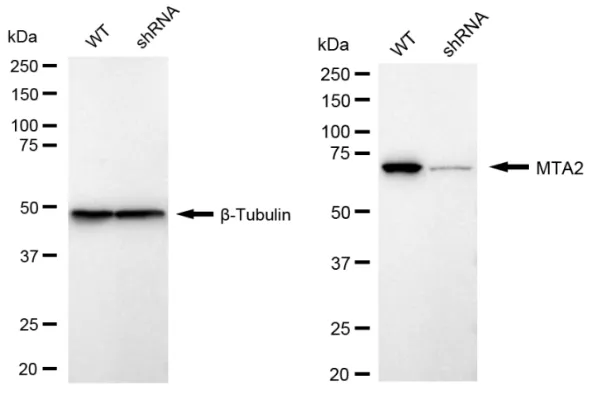
KD-Validated Metastasis Associated 1 Family Member 2 Recombinant Rabbit Monoclonal Antibody
KVAb00996-20ul · 20ul
Verified Partner
Sign in to see pricing and request a quote.
Brand Store Product
No external links. Get your quote directly here.
Description
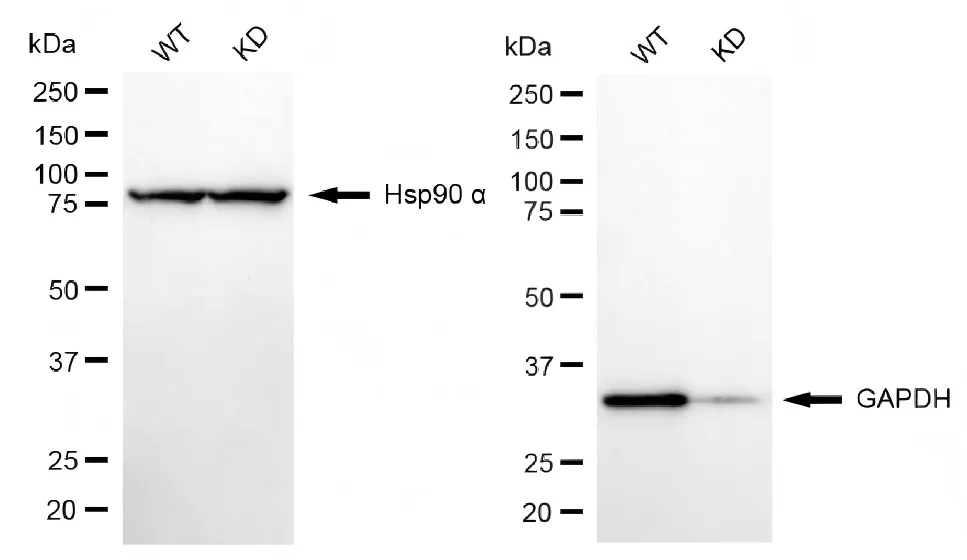
EnkiLife offers the KD-Validated Metastasis Associated 1 Family Member 2 Recombinant Rabbit Monoclonal Antibody. This antibody reacts with Human and is suitable for WB,FCM,ICC application. The product boasts remarkable high specificity, outstanding reproducibility, and exceptional affinity, making it a reliable and superior choice for your needs. Dilution Ratio: WB 1:1,000-1:5,000; FC 1:200-1:2,000; ICC 1:100-1:1,000 Alternative Names of Immunogen:MTA2; Metastasis Associated 1 Family Member 2; MTA1L1; Metastasis Associated Gene Family, Member 2; P53 Target Protein In Deacetylase Complex; Metastasis-Associated Protein MTA2; Metastasis-Associated 1-Like 1; MTA1-L1 Protein; MTA1-L1; PID; Metastasis -Associated Gene 1-Like 1; Metastasis-Associated Protein 2 Background: This gene encodes a protein that has been identified as a component of NuRD, a nucleosome remodeling deacetylase complex identified in the nucleus of human cells. It shows a very broad expression pattern and is strongly expressed in many tissues. It may represent one member of a small gene family that encode different but related proteins involved either directly or indirectly in transcriptional regulation. Their indirect effects on transcriptional regulation may include chromatin remodeling. It is closely related to another member of this family, a protein that has been correlated with the metastatic potential of certain carcinomas. These two proteins are so closely related that they share the same types of domains. These domains include two DNA binding domains, a dimerization domain, and a domain commonly found in proteins that methylate DNA. One of the proteins known to be a target protein for this gene product is p53. Deacetylation of p53 is correlated with a loss of growth inhibition in transformed cells supporting a connection between these gene family members and metastasis. [provided by RefSeq, May 2011] Research Area: Epigenetics and Nuclear Signaling
More from EnkiLife