KD-Validated Prolyl 4-Hydroxylase Subunit Beta Mouse Monoclonal Antibody
KVAb00821-100ul · 100ul
Verified Partner
Sign in to see pricing and request a quote.
Brand Store Product
No external links. Get your quote directly here.

Description
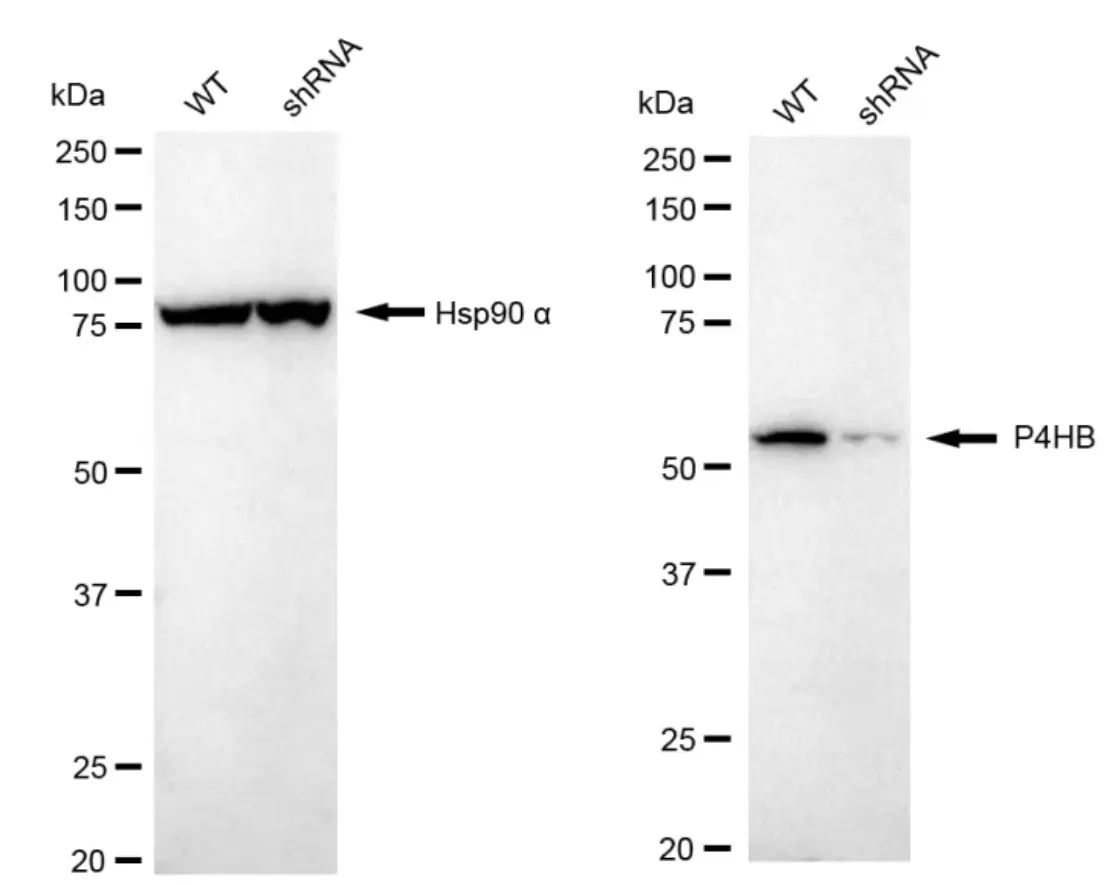
EnkiLife offers the KD-Validated Prolyl 4-Hydroxylase Subunit Beta Mouse Monoclonal Antibody. This antibody reacts with Human and is suitable for WB,FCM,ICC application. The product boasts remarkable high specificity, outstanding reproducibility, and exceptional affinity, making it a reliable and superior choice for your needs. Dilution Ratio: WB 1:2,500-1:5,000; FC 1:200-1:2,000; ICC 1:100-1:1,000 Alternative Names of Immunogen:P4HB; Prolyl 4-Hydroxylase Subunit Beta; PDIA1; PDI; P4Hbeta; ERBA2L; PROHB; PO4HB; PO4DB; DSI; GIT; Procollagen-Proline, 2-Oxoglutarate 4-Dioxygenase (Proline 4-Hydroxylase), Beta Polypeptide; Protein Disulfide Isomerase Family A, Member 1; Protein Disulfide Isomerase-Associated 1; Cellular Thyroid Hormone-Binding Protein; Prolyl 4-Hydroxylase, Beta Polypeptide; Collagen Prolyl 4-Hydroxylase Beta; Protein Disulfide-Isomerase; EC 5.3.4.1; P55; Procollagen-Proline, 2-Oxoglutarate 4-Dioxygenase (Proline 4-Hydroxylase), Beta Polypeptide (Protein Disulfide Isomerase; Thyroid Hormone Binding Protein P55) ; Procollagen-Proline, 2-Oxoglutarate 4-Dioxygenase (Proline 4-Hydroxylase), Beta Polypeptide (Protein Disulfide Isomerase-Associated 1); Protein Disulfide Isomerase/Oxidoreductase; Glutathione-Insulin Transhydrogenase; Thyroid Hormone-Binding Protein P55; Testicular Secretory Protein Li 32; Protocollagen Hydroxylase; CLCRP1; PHDB Background: This gene encodes the beta subunit of prolyl 4-hydroxylase, a highly abundant multifunctional enzyme that belongs to the protein disulfide isomerase family. When present as a tetramer consisting of two alpha and two beta subunits, this enzyme is involved in hydroxylation of prolyl residues in preprocollagen. This enzyme is also a disulfide isomerase containing two thioredoxin domains that catalyze the formation, breakage and rearrangement of disulfide bonds. Other known functions include its ability to act as a chaperone that inhibits aggregation of misfolded proteins in a concentration-dependent manner, its ability to bind thyroid hormone, its role in both the influx and efflux of S-nitrosothiol-bound nitric oxide, and its function as a subunit of the microsomal triglyceride transfer protein complex. [provided by RefSeq, Jul 2008] Research Area: Signal Transduction,Cancer,Metabolism
More from EnkiLife