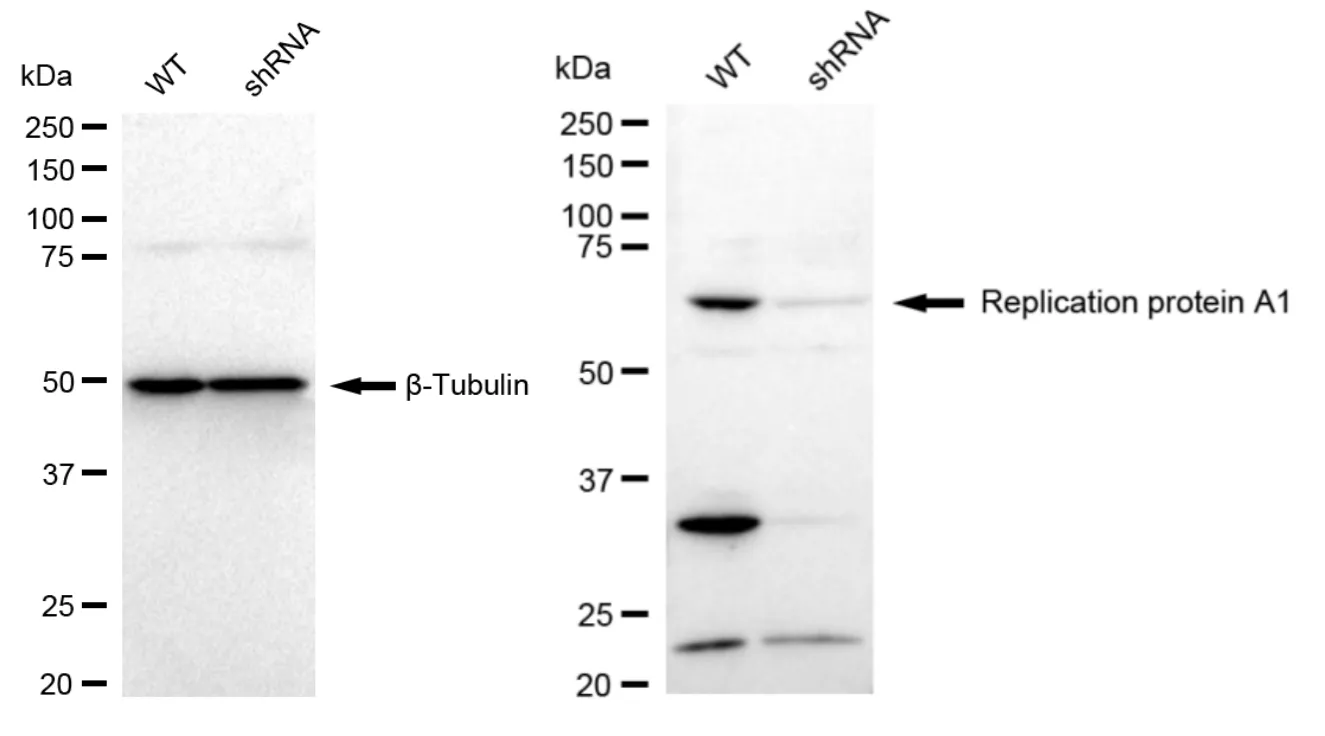
KD-Validated Replication Protein A1 Recombinant Rabbit Monoclonal Antibody
KVAb01165-100ul · 100ul
Verified Partner
Sign in to see pricing and request a quote.
Brand Store Product
No external links. Get your quote directly here.
Description
EnkiLife offers the KD-Validated Replication Protein A1 Recombinant Rabbit Monoclonal Antibody. This antibody reacts with Human,Rat and is suitable for WB,FCM,ICC,IHC-P application. The product boasts remarkable high specificity, outstanding reproducibility, and exceptional affinity, making it a reliable and superior choice for your needs. Dilution Ratio: WB 1:1,000-1:5,000; FC 1:200-1:2,000; ICC 1:100-1:1,000; IHC-P 1:100-1:200 Alternative Names of Immunogen:RPA1; Replication Protein A1; REPA1; RPA70; HSSB; RF-A; RP-A; Replication Protein A 70 KDa DNA-Binding Subunit; Single-Stranded DNA-Binding Protein; Replication Factor A Protein 1; Replication Protein A1, 70kDa; RF-A Protein 1; RP-A P70; Replication Protein A1 (70kD); PFBMFT6; MSTP075; MST075 Background: This gene encodes the largest subunit of the heterotrimeric Replication Protein A (RPA) complex, which binds to single-stranded DNA (ssDNA), forming a nucleoprotein complex that plays an important role in DNA metabolism, being involved in DNA replication, repair, recombination, telomere maintenance, and co-ordinating the cellular response to DNA damage through activation of the ataxia telangiectasia and Rad3-related protein (ATR) kinase. The nucleoprotein complex protects the single-stranded DNA from nucleases, prevents formation of secondary structures that would interfere with repair, and co-ordinates the recruitment and departure of different genome maintenance factors. This subunit contains four oligonucleotide/oligosaccharide-binding (OB) domains, though the majority of ssDNA binding occurs in two of these domains. The heterotrimeric complex has two different modes of ssDNA binding, a low-affinity and high-affinity mode, determined by which ssDNA binding domains are utilized. The different binding modes differ in the length of DNA bound and in the proteins with which it interacts, thereby playing a role in regulating different genomic maintenance pathways. [provided by RefSeq, Sep 2017] Research Area: Epigenetics and Nuclear Signaling
More from EnkiLife