KD-Validated SCARB2 Recombinant Rabbit Monoclonal Antibody
KVAb00913-100ul · 100ul
Verified Partner
Sign in to see pricing and request a quote.
Brand Store Product
No external links. Get your quote directly here.

Description
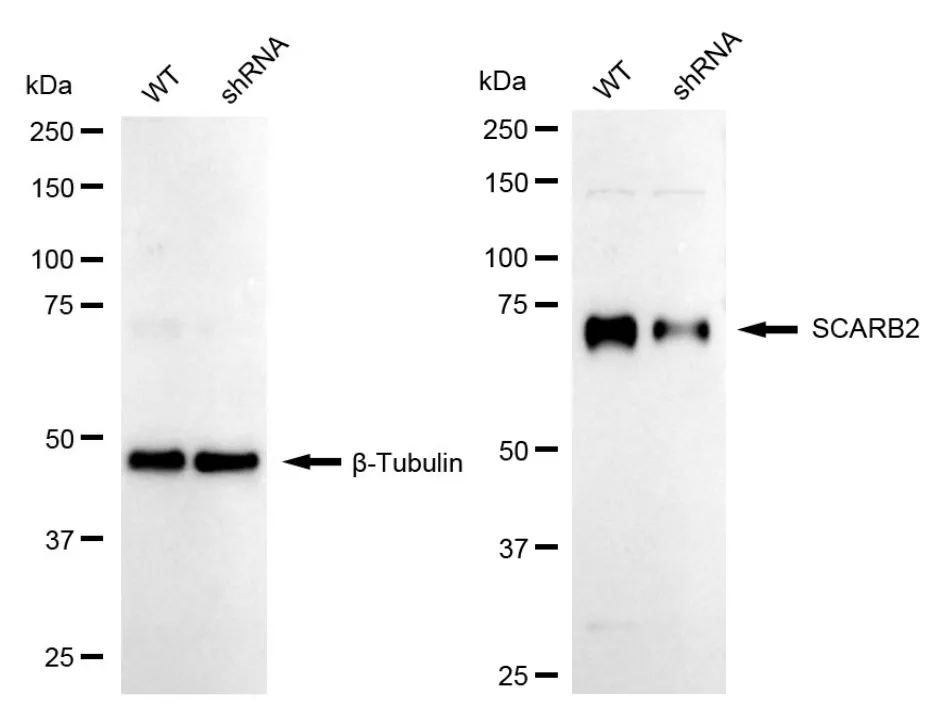
EnkiLife offers the KD-Validated SCARB2 Recombinant Rabbit Monoclonal Antibody. This antibody reacts with Human,Mouse,Rat and is suitable for WB,FCM application. The product boasts remarkable high specificity, outstanding reproducibility, and exceptional affinity, making it a reliable and superior choice for your needs. Dilution Ratio: WB 1:1,000-1:5,000; FC 1:200-1:2,000 Alternative Names of Immunogen:Scavenger Receptor Class B Member 2; LIMPII; Lysosome Membrane Protein 2; HLGP85; SR-BII; LIMP-2; CD36L2; CD36 Antigen (Collagen Type I Receptor, Thrombospondin Receptor)-Like 2 (Lysosomal Integral Membrane Protein II); 85 KDa Lysosomal Membrane Sialoglycoprotein; Lysosome Membrane Protein II; CD36 Antigen-Like 2; LIMP II; LGP85; 85 KDa Lysosomal Sialoglycoprotein Scavenger Receptor Class B, Member 2;Lysosomal Integral Membrane Protein II; CD36 Antigen; LIMP2; AMRF; EPM4 Background: The protein encoded by this gene is a type III glycoprotein that is located primarily in limiting membranes of lysosomes and endosomes. Earlier studies in mice and rat suggested that this protein may participate in membrane transportation and the reorganization of endosomal/lysosomal compartment. The protein deficiency in mice was reported to impair cell membrane transport processes and cause pelvic junction obstruction, deafness, and peripheral neuropathy. Further studies in human showed that this protein is a ubiquitously expressed protein and that it is involved in the pathogenesis of HFMD (hand, foot, and mouth disease) caused by enterovirus-71 and possibly by coxsackievirus A16. Mutations in this gene caused an autosomal recessive progressive myoclonic epilepsy-4 (EPM4), also known as action myoclonus-renal failure syndrome (AMRF). Alternatively spliced transcript variants encoding different isoforms have been found for this gene.[provided by RefSeq, Feb 2011] Research Area: Cardiovascular,Signal Transduction,Metabolism,Neuroscience
More from EnkiLife