Keratin-pan Rabbit Polyclonal Antibody
APRab12984-20μL · 20μL
Verified Partner
Sign in to see pricing and request a quote.
Brand Store Product
No external links. Get your quote directly here.
Description
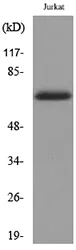
EnkiLife offers the Keratin-pan Rabbit Polyclonal Antibody. This antibody reacts with Human,Mouse,Rat species and is suitable for WB,IHC,ICC/IF,ELISA application. Alternative Names of Immunogen: KRT2; KRT76; KRT3; KRT5; KRT6A; KRT6B; KRT6C; KRT71; KRT72; KRT73; KRT74; KRT75; KRT79; KRT8; KRT84; Keratin, type II cytoskeletal 2 epidermal; Keratin, type II cytoskeletal 2 oral; Keratin, type II cytoskeletal 3; Keratin, type II cytoskeletal 5;Keratin, type II cytoskeletal 6A; Keratin, type II cytoskeletal 6B; Keratin, type II cytoskeletal 6C; Keratin, type II cytoskeletal 71; Keratin, type II cytoskeletal 72; Keratin, type II cytoskeletal 73; Keratin, type II cytoskeletal 74;. The product boasts remarkable high specificity, outstanding reproducibility, and exceptional affinity, making it a reliable and superior choice for your needs. Dilution Ratio: WB 1:500-1:2000,IHC 1:100-1:300,ICC/IF 1:50-1:200,ELISA 1:10000-1:20000 Background: keratin 2(KRT2) Homo sapiens The protein encoded by this gene is a member of the keratin gene family. The type II cytokeratins consist of basic or neutral proteins which are arranged in pairs of heterotypic keratin chains coexpressed during differentiation of simple and stratified epithelial tissues. This type II cytokeratin is expressed largely in the upper spinous layer of epidermal keratinocytes and mutations in this gene have been associated with bullous congenital ichthyosiform erythroderma. The type II cytokeratins are clustered in a region of chromosome 12q12-q13. [provided by RefSeq, Jul 2008],developmental stage:Synthesized during maturation of epidermal keratinocytes and localized in the upper intermediate cells of fetal skin. Earliest expression is at 10 weeks in the developing embryo in the presumptive nail bed of developing digits, shifting to the proximal nail fold by 13.5 weeks. At 12.5 weeks, detected in scattered cells of the intermediate layer of trunk skin. At 19.3 weeks, regional expression patterns were observed in upper intermediate keratinocytes of cheek, trunk, dorsal and ventral knee, elbow and dorsal hand. Distal areas around the periumbilical region showed increased number of positive cells and by 15 weeks is expressed in small groups of cells in the fetal hair follicles.,disease:Defects in KRT2 are a cause of ichthyosis bullosa of Siemens (IBS) [MIM:146800]. IBS is a rare autosomal dominant skin disorder displaying a type of epidermolytic hyperkeratosis characterized by generalized erythema and extensive blistering from birth. Large, dark gray hyperkeratoses are observed in later weeks. The skin of IBS patients is unusually fragile and has a tendency to shed the outer layers of the epidermis, producing localized denuded areas (molting effect). IBS usually improves with age so that in most middle-aged patients the hyperkeratosis and keratotic lichenification is limited to the flexural folds of the major joints.,function:Probably contributes to terminal cornification. Associated with keratinocyte activation, proliferation and keratinization.,miscellaneous:There are two types of cytoskeletal and microfibrillar keratin: I (acidic; 40-55 kDa) and II (neutral to basic; 56-70 kDa).,online information:Keratin-2A entry,similarity:Belongs to the intermediate filament family.,subunit:Heterotetramer of two type I and two type II keratins. Associates with KRT10.,tissue specificity:Expressed in the upper spinous and granular suprabasal layers of normal adult epidermal tissues from most body sites including thigh, breast nipple, foot sole, penile shaft and axilla. Not present in foreskin, squamous metaplasias and carcinomas. Expression in hypertrophic and keloid scars begins in the deepest suprabasal layer. Weakly expressed in normal gingiva and tongue, however expression is induced in benign keratoses of lingual mucosa and in mild-to-moderate oral dysplasia with orthokeratinization.,
More from EnkiLife