KIR2.3 Rabbit Polyclonal Antibody
APRab13027-100μL · 100μL
Verified Partner
Sign in to see pricing and request a quote.
Brand Store Product
No external links. Get your quote directly here.

Description
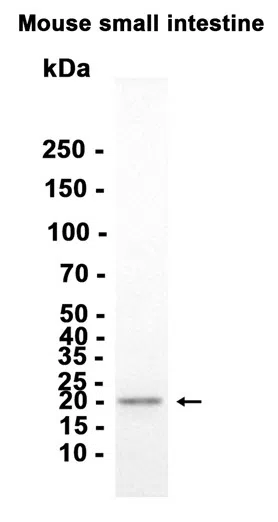
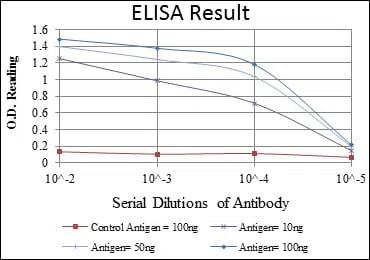
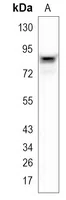
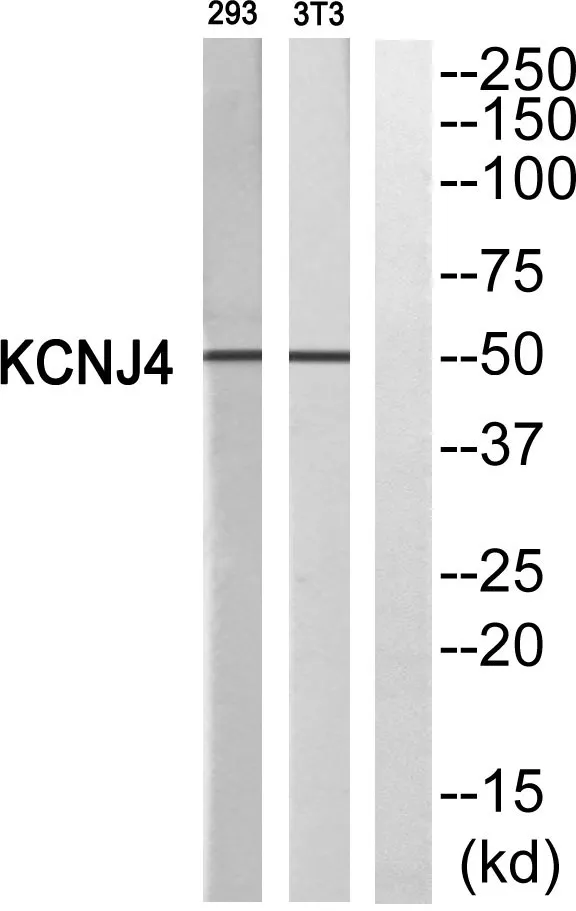
EnkiLife offers the KIR2.3 Rabbit Polyclonal Antibody. This antibody reacts with Human,Mouse,Rat species and is suitable for WB,IHC,ELISA application. Alternative Names of Immunogen: KCNJ4; IRK3; Inward rectifier potassium channel 4; HIRK2; HRK1; Hippocampal inward rectifier; HIR; Inward rectifier K(+) channel Kir2.3; IRK-3; Potassium channel; inwardly rectifying subfamily J member 4. The product boasts remarkable high specificity, outstanding reproducibility, and exceptional affinity, making it a reliable and superior choice for your needs. Dilution Ratio: WB 1:500-1:2000,IHC 1:50-1:300,ELISA 1:2000-1:20000 Background: Several different potassium channels are known to be involved with electrical signaling in the nervous system. One class is activated by depolarization whereas a second class is not. The latter are referred to as inwardly rectifying K+ channels, and they have a greater tendency to allow potassium to flow into the cell rather than out of it. This asymmetry in potassium ion conductance plays a key role in the excitability of muscle cells and neurons. The protein encoded by this gene is an integral membrane protein and member of the inward rectifier potassium channel family. The encoded protein has a small unitary conductance compared to other members of this protein family. Two transcript variants encoding the same protein have been found for this gene. [provided by RefSeq, Jul 2008],domain:The Val/Gly/Ala/Pro stretch may have a functional role in the conductance or permeation properties.,function:This receptor is controlled by G proteins. Inward rectifier potassium channels are characterized by a greater tendency to allow potassium to flow into the cell rather than out of it. Their voltage dependence is regulated by the concentration of extracellular potassium; as external potassium is raised, the voltage range of the channel opening shifts to more positive voltages. The inward rectification is mainly due to the blockage of outward current by internal magnesium. Can be blocked by extracellular barium and cesium.,similarity:Belongs to the inward rectifier-type potassium channel family.,subunit:Homomultimeric and heteromultimeric association with Kir2.1, resulting in an enhanced G-protein-induced current. Association, via its PDZ-recognition domain, with LIN7A, LIN7B, LIN7C, DLG1, CASK and APBA1 plays a key role in its localization and trafficking.,tissue specificity:Heart, skeletal muscle, and several different brain regions including the hippocampus.,
More from EnkiLife