MerTK Rabbit Polyclonal Antibody
APRab13825-20μL · 20μL
Verified Partner
Sign in to see pricing and request a quote.
Brand Store Product
No external links. Get your quote directly here.

Description
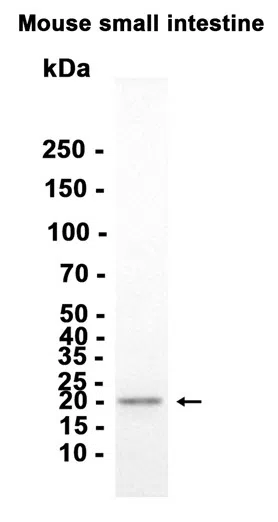
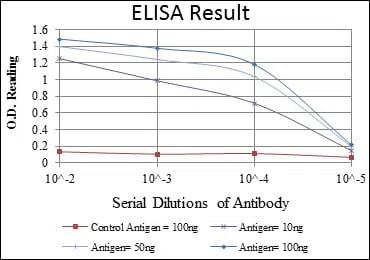
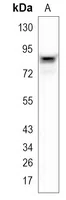
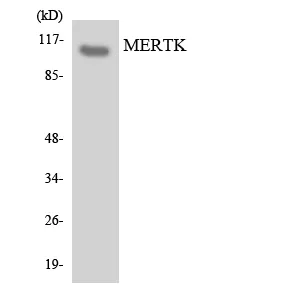
EnkiLife offers the MerTK Rabbit Polyclonal Antibody. This antibody reacts with Human,Rat,Mouse species and is suitable for WB,IHC,ELISA application. Alternative Names of Immunogen: MERTK; MER; Tyrosine-protein kinase Mer; Proto-oncogene c-Mer; Receptor tyrosine kinase MerTK. The product boasts remarkable high specificity, outstanding reproducibility, and exceptional affinity, making it a reliable and superior choice for your needs. Dilution Ratio: WB 1:500-1:2000,IHC 1:50-1:300,ELISA 1:2000-1:20000 Background: This gene is a member of the MER/AXL/TYRO3 receptor kinase family and encodes a transmembrane protein with two fibronectin type-III domains, two Ig-like C2-type (immunoglobulin-like) domains, and one tyrosine kinase domain. Mutations in this gene have been associated with disruption of the retinal pigment epithelium (RPE) phagocytosis pathway and onset of autosomal recessive retinitis pigmentosa (RP). [provided by RefSeq, Jul 2008],catalytic activity:ATP + a [protein]-L-tyrosine = ADP + a [protein]-L-tyrosine phosphate.,disease:Defects in MERTK are a cause of retinitis pigmentosa (RP) [MIM:268000]. RP that leads to degeneration of retinal photoreceptor cells. Patients typically have night vision blindness and loss of midperipheral visual field. As their condition progresses, they lose their far peripheral visual field and eventually central vision as well.,function:In case of filovirus infection, seems to function as a cell entry factor.,online information:Retina International's Scientific Newsletter,similarity:Belongs to the protein kinase superfamily. Tyr protein kinase family.,similarity:Belongs to the protein kinase superfamily. Tyr protein kinase family. AXL/UFO subfamily.,similarity:Contains 1 protein kinase domain.,similarity:Contains 2 fibronectin type-III domains.,similarity:Contains 2 Ig-like C2-type (immunoglobulin-like) domains.,tissue specificity:Not expressed in normal B- and T-lymphocytes but is expressed in numerous neoplastic B- and T-cell lines.,
More from EnkiLife