NF2 Rabbit Polyclonal Antibody
APRab14632-100μL · 100μL
Verified Partner
Sign in to see pricing and request a quote.
Brand Store Product
No external links. Get your quote directly here.

Description
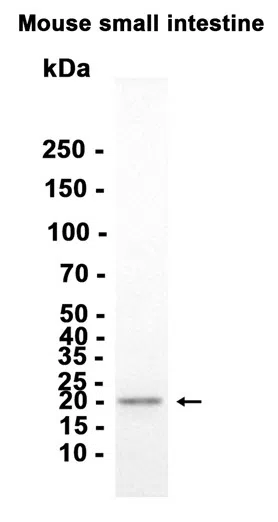
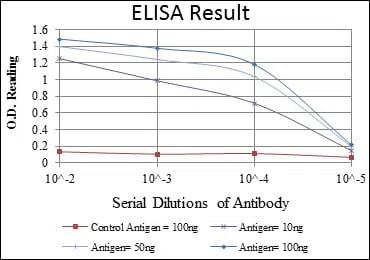
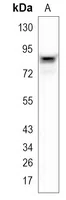
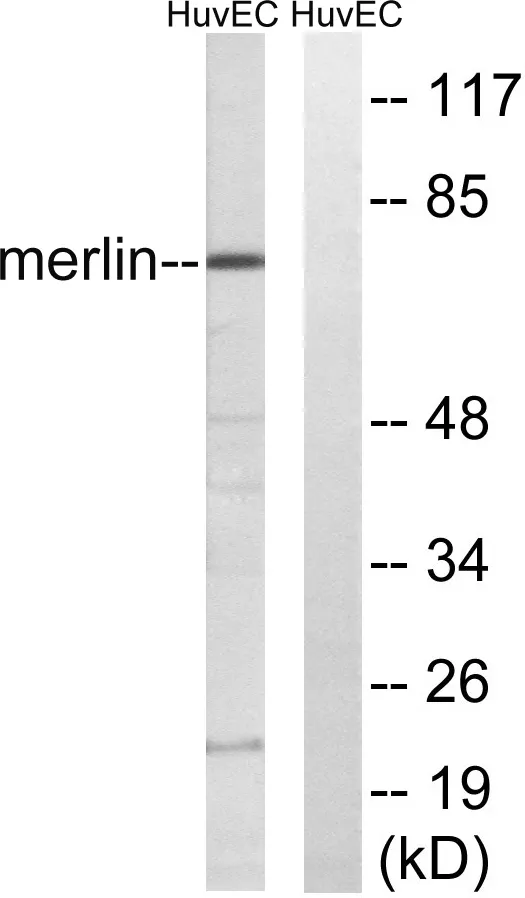
EnkiLife offers the NF2 Rabbit Polyclonal Antibody. This antibody reacts with Human,Mouse,Rat species and is suitable for WB,IHC,ICC/IF,ELISA application. Alternative Names of Immunogen: NF2; SCH; Merlin; Moesin-ezrin-radixin-like protein; Neurofibromin-2; Schwannomerlin; Schwannomin. The product boasts remarkable high specificity, outstanding reproducibility, and exceptional affinity, making it a reliable and superior choice for your needs. Dilution Ratio: WB 1:500-1:2000,IHC 1:100-1:300,ICC/IF 1:200-1:1000,ELISA 1:10000-1:20000 Background: This gene encodes a protein that is similar to some members of the ERM (ezrin, radixin, moesin) family of proteins that are thought to link cytoskeletal components with proteins in the cell membrane. This gene product has been shown to interact with cell-surface proteins, proteins involved in cytoskeletal dynamics and proteins involved in regulating ion transport. This gene is expressed at high levels during embryonic development; in adults, significant expression is found in Schwann cells, meningeal cells, lens and nerve. Mutations in this gene are associated with neurofibromatosis type II which is characterized by nervous system and skin tumors and ocular abnormalities. Two predominant isoforms and a number of minor isoforms are produced by alternatively spliced transcripts. [provided by RefSeq, Jul 2008],disease:Defects in NF2 are a cause of schwannomatosis [MIM:162091]; also called congenital cutaneous neurilemmomatosis. Schwannomas are benign tumors of the peripheral nerve sheath that usually occur singly in otherwise normal individuals. Multiple schwannomas in the same individual suggest an underlying tumor-predisposition syndrome. The most common such syndrome is NF2. The hallmark of NF2 is the development of bilateral vestibular-nerve schwannomas; but two-thirds or more of all NF2-affected individuals develop schwannomas in other locations, and dermal schwannomas may precede vestibular tumors in NF2-affected children. There have been several reports of individuals with multiple schwannomas who do not show evidence of vestibular schwannoma. Clinical report suggests that schwannomatosis is a clinical entity distinct from other forms of neurofibromatosis.,disease:Defects in NF2 are the cause of neurofibromatosis 2 (NF2) [MIM:101000]; also known as central neurofibromatosis. NF2 is a genetic disorder characterized by bilateral vestibular schwannomas (formerly called acoustic neuromas), schwannomas of other cranial and peripheral nerves, meningiomas, and ependymomas. It is inherited in an autosomal dominant fashion with full penetrance. Affected individuals generally develop symptoms of eighth-nerve dysfunction in early adulthood, including deafness and balance disorder. Although the tumors of NF2 are histologically benign, their anatomic location makes management difficult, and patients suffer great morbidity and mortality.,function:Probably acts as a membrane stabilizing protein. May inhibit PI3 kinase by binding to AGAP2 and impairing its stimulating activity.,similarity:Contains 1 FERM domain.,subcellular location:In a fibroblastic cell line, isoform 1 is found homogeneously distributed over the entire cell, with a particularly strong staining in ruffling membranes and filopodia.,subcellular location:In a fibroblastic cell line, isoform 10 is found homogeneously distributed over the entire cell, with a particularly strong staining in ruffling membranes and filopodia.,subcellular location:Observed in cytoplasmic granules concentrated in a perinuclear location. Isoform 7 is absent from ruffling membranes and filopodia.,subcellular location:Observed in cytoplasmic granules concentrated in a perinuclear location. Isoform 9 is absent from ruffling membranes and filopodia.,subunit:Interacts with SLC9A3R1, HGS and AGAP2. Interacts with LAYN (By similarity). Interacts with SGSM3.,tissue specificity:Widely expressed. Isoforms 1 and 3 are predominant, isoforms 4, 5 and 6 are expressed moderately, isoform 8 is found at low frequency. Isoforms 7, 9 and 10 are not expressed in adult tissues, with the exception of adult retina expressing isoform 10. Isoform 9 is faintly expressed in fetal brain, heart, lung, skeletal muscle and spleen. Fetal thymus expresses isoforms 1, 7, 9 and 10 at similar levels.,
More from EnkiLife