Noggin Rabbit Polyclonal Antibody
APRab14783-20μL · 20μL
Verified Partner
Sign in to see pricing and request a quote.
Brand Store Product
No external links. Get your quote directly here.
Description
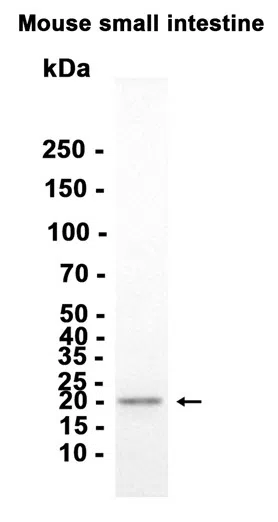
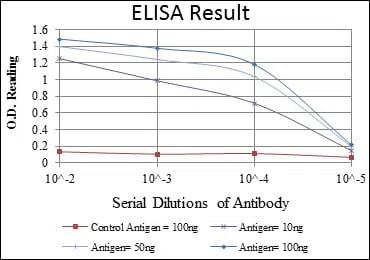
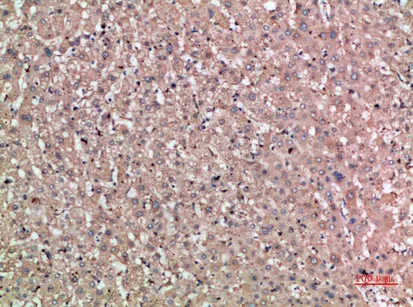
EnkiLife offers the Noggin Rabbit Polyclonal Antibody. This antibody reacts with Human,Mouse,Rat species and is suitable for IHC,ICC/IF,ELISA application. Alternative Names of Immunogen: Noggin. The product boasts remarkable high specificity, outstanding reproducibility, and exceptional affinity, making it a reliable and superior choice for your needs. Dilution Ratio: IHC 1:50-1:200,ICC/IF 1:50-1:200,ELISA 1:10000-1:20000 Background: The secreted polypeptide, encoded by this gene, binds and inactivates members of the transforming growth factor-beta (TGF-beta) superfamily signaling proteins, such as bone morphogenetic protein-4 (BMP4). By diffusing through extracellular matrices more efficiently than members of the TGF-beta superfamily, this protein may have a principal role in creating morphogenic gradients. The protein appears to have pleiotropic effect, both early in development as well as in later stages. It was originally isolated from Xenopus based on its ability to restore normal dorsal-ventral body axis in embryos that had been artificially ventralized by UV treatment. The results of the mouse knockout of the ortholog suggest that it is involved in numerous developmental processes, such as neural tube fusion and joint formation. Recently, several dominant human NOG mutations in unrelated families with proximal symphalangism (SYM1) and mudisease:Defects in NOG are a cause of stapes ankylosis with broad thumb and toes [MIM:184460]. Stapes ankylosis with broad thumb and toes is a congenital autosomal dominant disorder that includes hyperopia, a hemicylindrical nose, broad thumbs, great toes, and other minor skeletal anomalies but lacked carpal and tarsal fusion and symphalangism.,disease:Defects in NOG are a cause of symphalangism proximal syndrome (SYM1) [MIM:185800]. SYM1 is characterized by the hereditary absence of the proximal interphalangeal (PIP) joints (Cushing symphalangism). Severity of PIP joint involvement diminishes towards the radial side. Distal interphalangeal joints are less frequently involved and metacarpophalangeal joints are rarely affected whereas carpal bone malformation and fusion are common. In the lower extremities, tarsal bone coalition is common. Conducive hearing loss is seen and is due to fusion of the stapes to the petrous part of the temporal bone.,disease:Defects in NOG are the cause of brachydactyly type B2 (BDB2) [MIM:611377]. BDB2 is a subtype of brachydactyly characterized by hypoplasia/aplasia of distal phalanges in combination with distal symphalangism, fusion of carpal/tarsal bones, and partial cutaneous syndactyly.,disease:Defects in NOG are the cause of multiple synostoses syndrome 1 (SYNS1) [MIM:186500]; also known as synostoses, multiple, with brachydactyly/symphalangism-brachydactyly syndrome. SYNS1 is characterized by tubular-shaped (hemicylindrical) nose with lack of alar flare, otosclerotic deafness, and multiple progressive joint fusions commencing in the hand. The joint fusions are progressive, commencing in the fifth proximal interphalangeal joint in early childhood (or at birth in some individuals) and progressing in an ulnar-to-radial and proximal-to-distal direction. With increasing age, ankylosis of other joints, including the cervical vertebrae, hips, and humeroradial joints, develop.,disease:Defects in NOG are the cause of tarsal-carpal coalition syndrome (TCC) [MIM:186570]. TCC is an autosomal dominant disorder characterized by fusion of the carpals, tarsals and phalanges, short first metacarpals causing brachydactyly, and humeroradial fusion. TCC is allelic to SYM1, and different mutations in NOG can result in either TCC or SYM1 in different families.,function:Essential for cartilage morphogenesis and joint formation. Inhibitor of bone morphogenetic proteins (BMP) signaling which is required for growth and patterning of the neural tube and somite.,similarity:Belongs to the noggin family.,subunit:Homodimer; disulfide-linked., Research Area: TGF-beta;
More from EnkiLife