Peroxin 19 Rabbit Polyclonal Antibody
APRab15985-100μL · 100μL
Verified Partner
Sign in to see pricing and request a quote.
Brand Store Product
No external links. Get your quote directly here.
Description
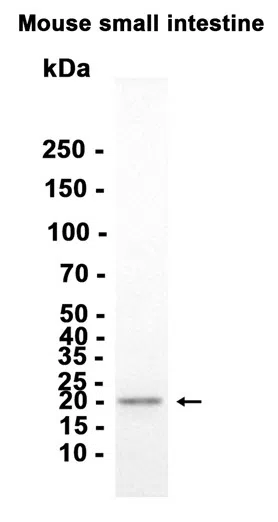
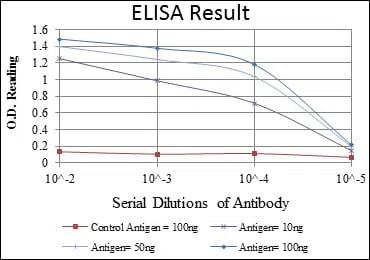
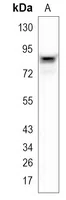
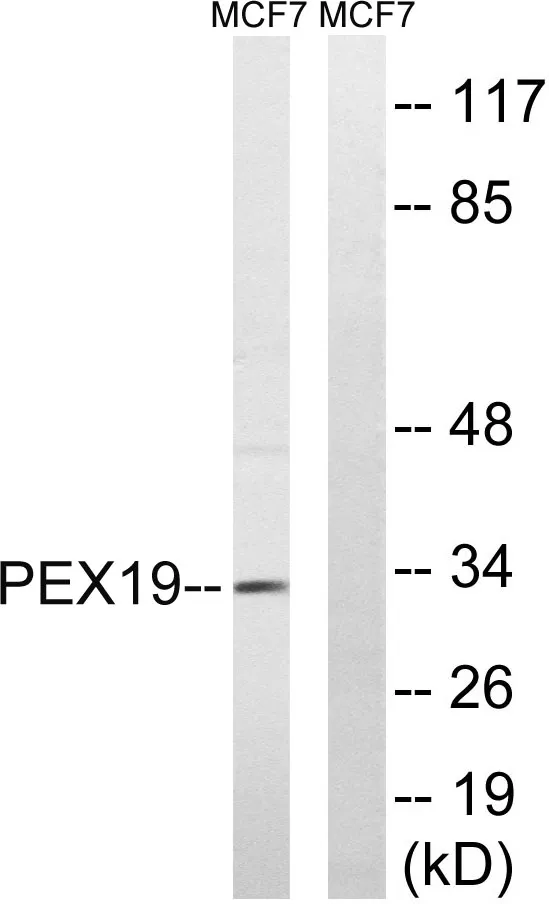
EnkiLife offers the Peroxin 19 Rabbit Polyclonal Antibody. This antibody reacts with Human,Rat,Mouse species and is suitable for WB,IHC,ICC/IF,ELISA application. Alternative Names of Immunogen: PEX19; HK33; PXF; OK/SW-cl.22; Peroxisomal biogenesis factor 19; 33 kDa housekeeping protein; Peroxin-19; Peroxisomal farnesylated protein. The product boasts remarkable high specificity, outstanding reproducibility, and exceptional affinity, making it a reliable and superior choice for your needs. Dilution Ratio: WB 1:500-1:2000,IHC 1:100-1:300,ICC/IF 1:50-1:200,ELISA 1:5000-1:10000 Background: peroxisomal biogenesis factor 19(PEX19) Homo sapiens This gene is necessary for early peroxisomal biogenesis. It acts both as a cytosolic chaperone and as an import receptor for peroxisomal membrane proteins (PMPs). Peroxins (PEXs) are proteins that are essential for the assembly of functional peroxisomes. The peroxisome biogenesis disorders (PBDs) are a group of genetically heterogeneous autosomal recessive, lethal diseases characterized by multiple defects in peroxisome function. These disorders have at least 14 complementation groups, with more than one phenotype being observed for some complementation groups. Although the clinical features of PBD patients vary, cells from all PBD patients exhibit a defect in the import of one or more classes of peroxisomal matrix proteins into the organelle. Defects in this gene are a cause of Zellweger syndrome (ZWS), as well as peroxisome biogenesis disorder complementation group 14 (PBD-CG14), which isalternative products:Experimental confirmation may be lacking for some isoforms,disease:Defects in PEX19 are a cause of Zellweger syndrome (ZWS) [MIM:214100]. ZWS is a fatal peroxisome biogenesis disorder characterized by dysmorphic facial features, hepatomegaly, ocular abnormalities, renal cysts, hearing impairment, profound psychomotor retardation, severe hypotonia and neonatal seizures. Death occurs within the first year of life.,disease:Defects in PEX19 are the cause of peroxisome biogenesis disorder complementation group 14 (PBD-CG14) [MIM:600279]; also known as PBD-CGJ. PBD refers to a group of peroxisomal disorders arising from a failure of protein import into the peroxisomal membrane or matrix. The PBD group is comprised of four disorders: Zellweger syndrome (ZWS), neonatal adrenoleukodystrophy (NALD), infantile Refsum disease (IRD), and classical rhizomelic chondrodysplasia punctata (RCDP). ZWS, NALD and IRD are distinct from RCDP and constitute a clinical continuum of overlapping phenotypes known as the Zellweger spectrum. The PBD group is genetically heterogeneous with at least 14 distinct genetic groups as concluded from complementation studies.,function:Necessary for early peroxisomal biogenesis. Acts both as a cytosolic chaperone and as an import receptor for peroxisomal membrane proteins (PMPs). Binds and stabilizes newly synthesized PMPs in the cytoplasm by interacting with their hydrophobic membrane-spanning domains, and targets them to the peroxisome membrane by binding to the integral membrane protein PEX3. Excludes CDKN2A from the nucleus and prevents its interaction with MDM2, which results in active degradation of TP53.,similarity:Belongs to the peroxin-19 family.,subcellular location:Mainly cytoplasmic. Some fraction membrane-associated to the outer surface of peroxisomes.,subunit:Interacts with a broad range of peroxisomal membrane proteins, including PEX3, PEX10, PEX11A, PEX11B, PEX12, PEX13, PEX14 and PEX16, PXMP2/PMP22, PXMP4/PMP24, SLC25A17/PMP34, ABCD1/ALDP, ABCD2/ALDRP, and ABCD3/PMP70. Also interacts with the tumor suppressor CDKN2A/p19ARF.,tissue specificity:Ubiquitously expressed. Isoform 1 is strongly predominant in all tissues except in utero where isoform 2 is the main form.,
More from EnkiLife