Phospho-Ataxin-1 (Ser776) Rabbit Polyclonal Antibody
APRab04271-20μL · 20μL
Verified Partner
Sign in to see pricing and request a quote.
Brand Store Product
No external links. Get your quote directly here.

Description
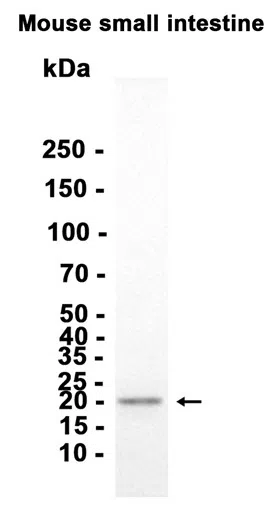
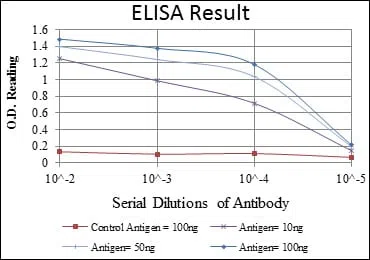
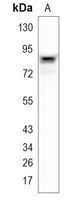
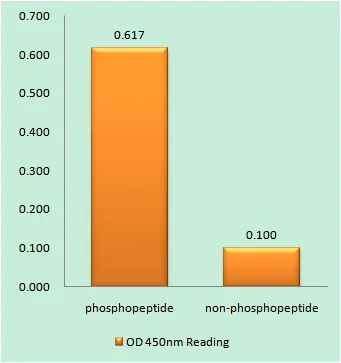
EnkiLife offers the Phospho-Ataxin-1 (Ser776) Rabbit Polyclonal Antibody. This antibody reacts with Human,Mouse species and is suitable for WB,IHC,ICC/IF,ELISA application. Alternative Names of Immunogen: ATXN1; ATX1; SCA1; Ataxin-1; Spinocerebellar ataxia type 1 protein. The product boasts remarkable high specificity, outstanding reproducibility, and exceptional affinity, making it a reliable and superior choice for your needs. Dilution Ratio: WB 1:500-1:2000,IHC 1:100-1:300,ICC/IF 1:200-1:1000,ELISA 1:5000-1:20000 Background: ataxin 1(ATXN1) Homo sapiens The autosomal dominant cerebellar ataxias (ADCA) are a heterogeneous group of neurodegenerative disorders characterized by progressive degeneration of the cerebellum, brain stem and spinal cord. Clinically, ADCA has been divided into three groups: ADCA types I-III. ADCAI is genetically heterogeneous, with five genetic loci, designated spinocerebellar ataxia (SCA) 1, 2, 3, 4 and 6, being assigned to five different chromosomes. ADCAII, which always presents with retinal degeneration (SCA7), and ADCAIII often referred to as the `pure' cerebellar syndrome (SCA5), are most likely homogeneous disorders. Several SCA genes have been cloned and shown to contain CAG repeats in their coding regions. ADCA is caused by the expansion of the CAG repeats, producing an elongated polyglutamine tract in the corresponding protein. The expanded repeats are variable in size and unstable, usually increasing in size when transmittedalternative products:At least 2 isoforms are produced,disease:Defects in ATXN1 are the cause of spinocerebellar ataxia type 1 (SCA1) [MIM:164400]; also known as olivopontocerebellar atrophy I (OPCA I or OPCA1). Spinocerebellar ataxia is a clinically and genetically heterogeneous group of cerebellar disorders. Patients show progressive incoordination of gait and often poor coordination of hands, speech and eye movements, due to cerebellum degeneration with variable involvement of the brainstem and spinal cord. SCA1 belongs to the autosomal dominant cerebellar ataxias type I (ADCA I) which are characterized by cerebellar ataxia in combination with additional clinical features like optic atrophy, ophthalmoplegia, bulbar and extrapyramidal signs, peripheral neuropathy and dementia. SCA1 is caused by expansion of a CAG repeat in the coding region of ATXN1. Longer expansions result in earlier onset and more severe clinical manifestations of the disease.,domain:The AXH domain is required for interaction with CIC.,function:Binds RNA in vitro. May be involved in RNA metabolism. The expansion of the polyglutamine tract may alter this function.,miscellaneous:The self-association seems to be necessary to form nuclear aggregates.,online information:Ataxin-1 entry,polymorphism:The poly-Gln region of ATXN1 is highly polymorphic (4 to 39 repeats) in the normal population and is expanded to about 40-83 repeats in spinocerebellar ataxia 1 (SCA1) patients.,similarity:Belongs to the ATXN1 family.,similarity:Contains 1 AXH domain.,subcellular location:Colocalizes with USP7 in the nucleus.,subunit:Interacts with CIC (By similarity). Interacts with ANP32A, PQBP1, UBIN, ATXN1L, USP7 and ZNF804A.,tissue specificity:Widely expressed throughout the body.,
More from EnkiLife