
Phospho-Claudin-3 (Tyr219) Rabbit Polyclonal Antibody
APRab04471-50μL · 50μL
Verified Partner
Sign in to see pricing and request a quote.
Brand Store Product
No external links. Get your quote directly here.

Description
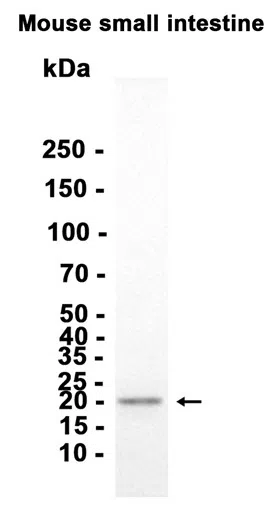
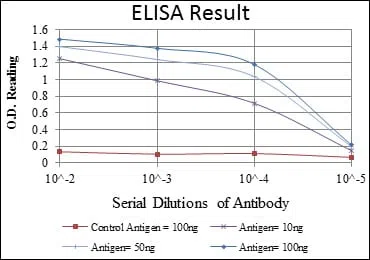
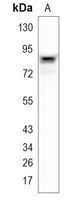
EnkiLife offers the Phospho-Claudin-3 (Tyr219) Rabbit Polyclonal Antibody. This antibody reacts with Human,Rat,Mouse species and is suitable for WB,IHC,ICC/IF,ELISA application. Alternative Names of Immunogen: CLDN3; C7orf1; CPETR2; Claudin-3; Clostridium perfringens enterotoxin receptor 2; CPE-R 2; CPE-receptor 2; Rat ventral prostate.1 protein homolog; hRVP1. The product boasts remarkable high specificity, outstanding reproducibility, and exceptional affinity, making it a reliable and superior choice for your needs. Dilution Ratio: WB 1:500-1:2000,IHC 1:100-1:300,ICC/IF 1:50-1:200,ELISA 1:5000-1:10000 Background: Tight junctions represent one mode of cell-to-cell adhesion in epithelial or endothelial cell sheets, forming continuous seals around cells and serving as a physical barrier to prevent solutes and water from passing freely through the paracellular space. These junctions are comprised of sets of continuous networking strands in the outwardly facing cytoplasmic leaflet, with complementary grooves in the inwardly facing extracytoplasmic leaflet. The protein encoded by this intronless gene, a member of the claudin family, is an integral membrane protein and a component of tight junction strands. It is also a low-affinity receptor for Clostridium perfringens enterotoxin, and shares aa sequence similarity with a putative apoptosis-related protein found in rat. [provided by RefSeq, Jul 2008],disease:Haploinsufficiency of CLDN3 may be the cause of certain cardiovascular and musculo-skeletal abnormalities observed in Williams-Beuren syndrome (WBS), a rare developmental disorder. It is a contiguous gene deletion syndrome involving genes from chromosome band 7q11.23.,function:Plays a major role in tight junction-specific obliteration of the intercellular space, through calcium-independent cell-adhesion activity.,similarity:Belongs to the claudin family.,subunit:Can form homo- and heteropolymers with other CLDN. Homopolymers interact with CLDN1 and CLDN2 homopolymers. Directly interacts with TJP1/ZO-1, TJP2/ZO-2 and TJP3/ZO-3., Research Area: Cell adhesion molecules (CAMs);Tight junction;Leukocyte transendothelial migration;
More from EnkiLife