Phospho-Dok-1 (Tyr362) Rabbit Polyclonal Antibody
APRab04556-20μL · 20μL
Verified Partner
Sign in to see pricing and request a quote.
Brand Store Product
No external links. Get your quote directly here.

Description
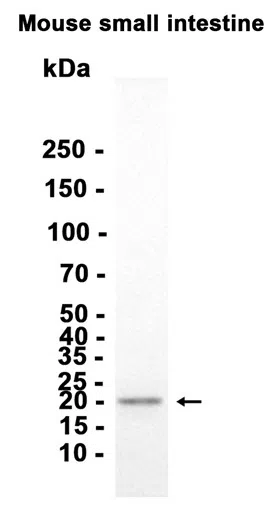
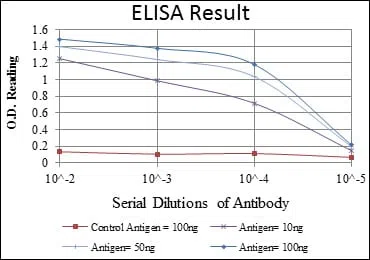
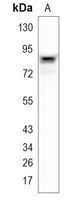
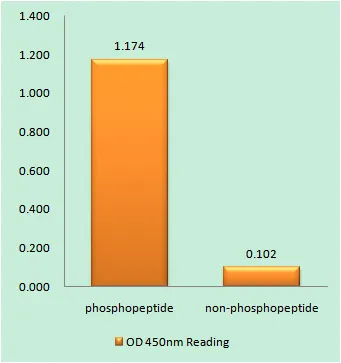
EnkiLife offers the Phospho-Dok-1 (Tyr362) Rabbit Polyclonal Antibody. This antibody reacts with Human,Mouse,Rat species and is suitable for WB,ICC/IF,ELISA application. Alternative Names of Immunogen: DOK1; Docking protein 1; Downstream of tyrosine kinase 1; p62(dok); pp62. The product boasts remarkable high specificity, outstanding reproducibility, and exceptional affinity, making it a reliable and superior choice for your needs. Dilution Ratio: WB 1:500-1:2000,ICC/IF 1:200-1:1000,ELISA 1:5000-1:20000 Background: docking protein 1(DOK1) Homo sapiens The protein encoded by this gene is part of a signal transduction pathway downstream of receptor tyrosine kinases. The encoded protein is a scaffold protein that helps form a platform for the assembly of multiprotein signaling complexes. Several transcript variants encoding different isoforms have been found for this gene. [provided by RefSeq, Jan 2016],domain:The PTB domain mediates receptor interaction.,function:DOK proteins are enzymatically inert adaptor or scaffolding proteins. They provide a docking platform for the assembly of multimolecular signaling complexes. DOK1 appears to be a negative regulator of the insulin signaling pathway. Modulates integrin activation by competing with talin for the same binding site on ITGB3.,PTM:Constitutively tyrosine-phosphorylated.,PTM:Phosphorylated on tyrosine residues by the insulin receptor kinase. Results in the negative regulation of the insulin signaling pathway.,similarity:Belongs to the DOK family. Type A subfamily.,similarity:Contains 1 IRS-type PTB domain.,similarity:Contains 1 PH domain.,subunit:Interacts with ABL (By similarity). Interacts with RasGAP and INPP5D/SHIP1. Interacts directly with phosphorylated ITGB3.,tissue specificity:Expressed in pancreas, heart, leukocyte and spleen. Expressed in both resting and activated peripheral blood T-cells., Research Area: B_Cell_Antigen
More from EnkiLife