
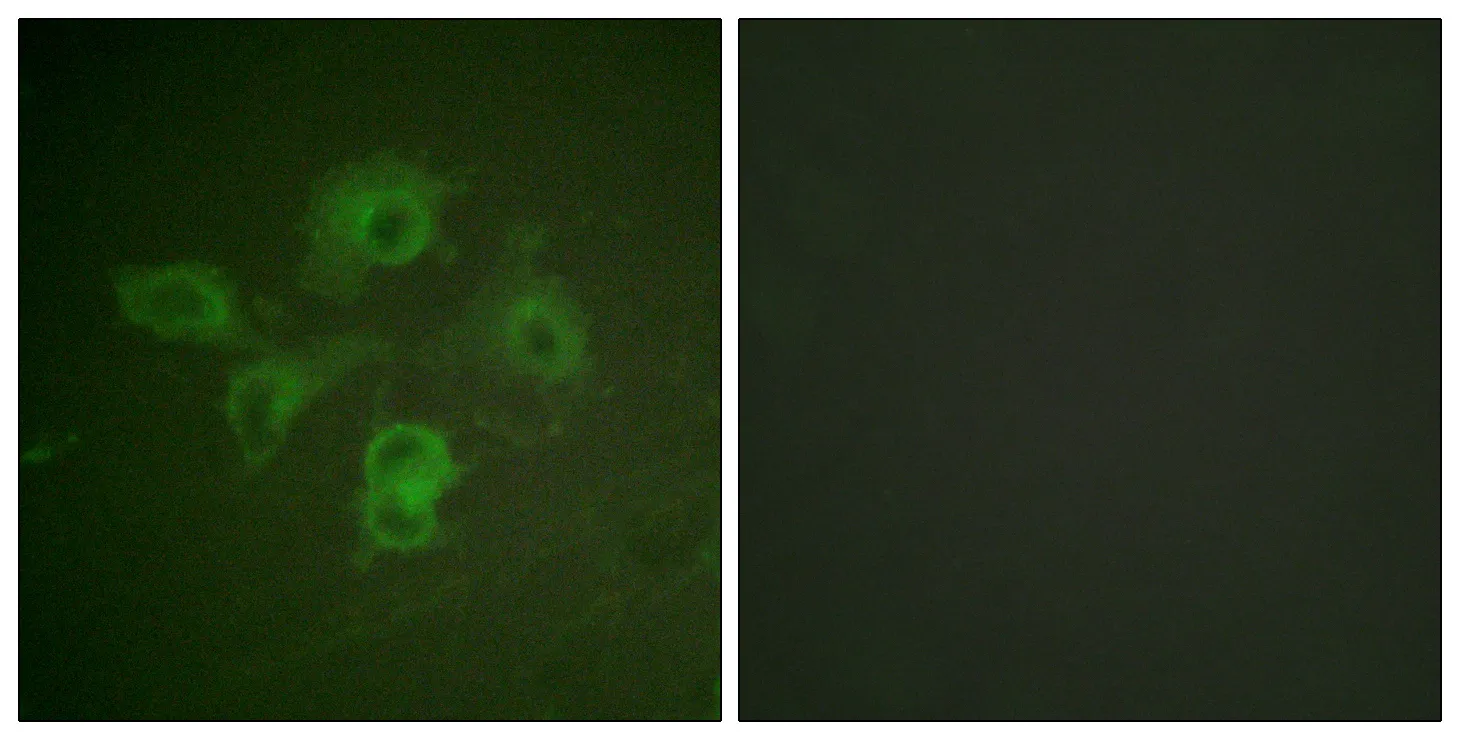
Phospho-EphB1/2 (Tyr594/604) Rabbit Polyclonal Antibody
APRab04616-20μL · 20μL
Verified Partner
Sign in to see pricing and request a quote.
Brand Store Product
No external links. Get your quote directly here.
Description
EnkiLife offers the Phospho-EphB1/2 (Tyr594/604) Rabbit Polyclonal Antibody. This antibody reacts with Human,Mouse,Rat species and is suitable for WB,ICC/IF,ELISA application. Alternative Names of Immunogen: EPHB1; ELK; EPHT2; HEK6; NET; Ephrin type-B receptor 1; ELK; EPH tyrosine kinase 2; EPH-like kinase 6; EK6; hEK6; Neuronally-expressed EPH-related tyrosine kinase; NET; Tyrosine-protein kinase receptor EPH-2; EPHB2; DRT; EPHT3; EPTH3; ERK;. The product boasts remarkable high specificity, outstanding reproducibility, and exceptional affinity, making it a reliable and superior choice for your needs. Dilution Ratio: WB 1:500-1:2000,ICC/IF 1:200-1:1000,ELISA 1:5000-1:10000 Background: Ephrin receptors and their ligands, the ephrins, mediate numerous developmental processes, particularly in the nervous system. Based on their structures and sequence relationships, ephrins are divided into the ephrin-A (EFNA) class, which are anchored to the membrane by a glycosylphosphatidylinositol linkage, and the ephrin-B (EFNB) class, which are transmembrane proteins. The Eph family of receptors are divided into 2 groups based on the similarity of their extracellular domain sequences and their affinities for binding ephrin-A and ephrin-B ligands. Ephrin receptors make up the largest subgroup of the receptor tyrosine kinase (RTK) family. The protein encoded by this gene is a receptor for ephrin-B family members. [provided by RefSeq, Jul 2008],catalytic activity:ATP + a [protein]-L-tyrosine = ADP + a [protein]-L-tyrosine phosphate.,function:Receptor for members of the ephrin-B family. Binds to ephrin-B1, -B2 and -B3. May be involved in cell-cell interactions in the nervous system.,similarity:Belongs to the protein kinase superfamily. Tyr protein kinase family. Ephrin receptor subfamily.,similarity:Contains 1 protein kinase domain.,similarity:Contains 1 SAM (sterile alpha motif) domain.,similarity:Contains 2 fibronectin type-III domains.,subunit:The ligand-activated form interacts with GRB2, GRB10 and NCK through their respective SH2 domains. The GRB10 SH2 domain binds EPHB1 through Tyr-928, while GRB2 binds residues within the catalytic domain. Interacts with EPHB6. The NCK SH2 domain binds EPHB1 through Tyr-594. Interacts with PRKCABP.,tissue specificity:Preferentially expressed in brain., Research Area: Axon guidance;
More from EnkiLife







