
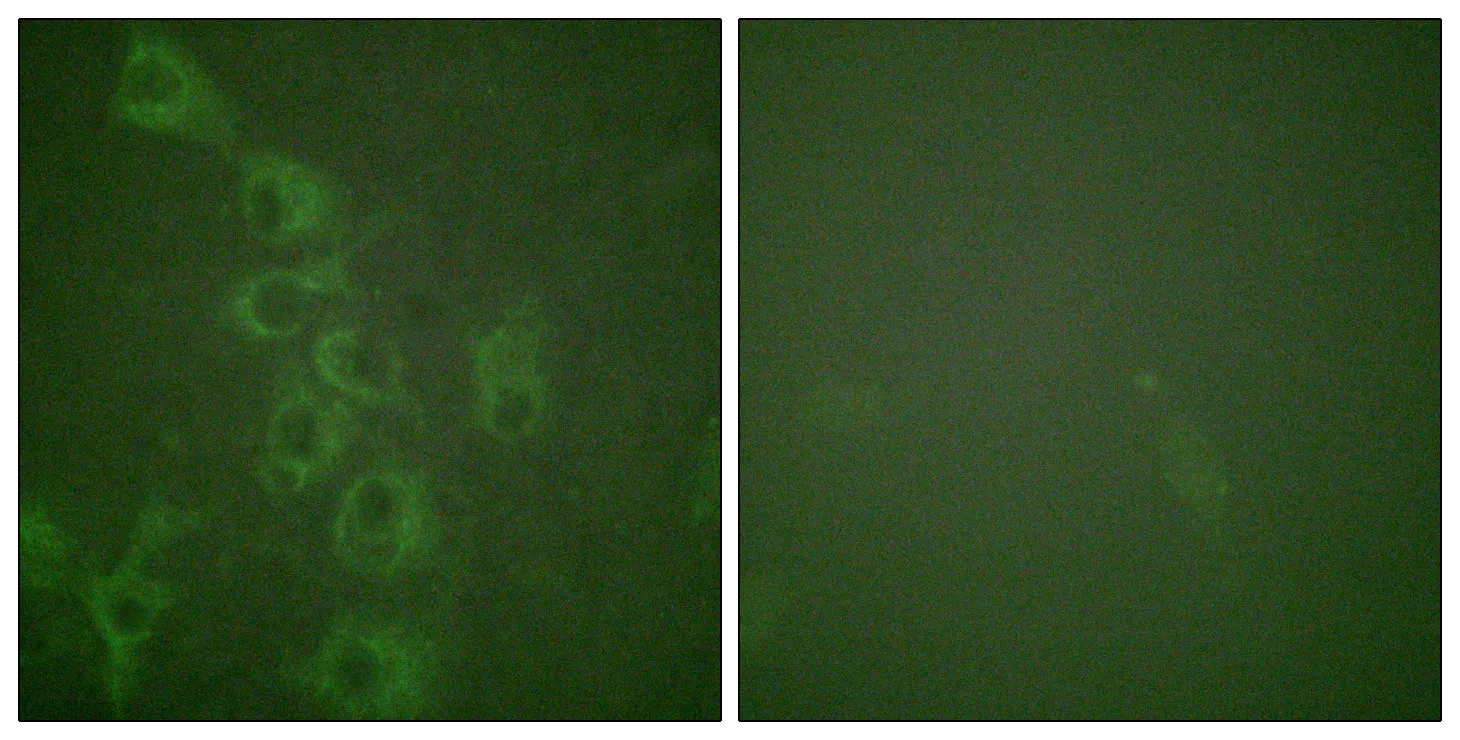
Phospho-Histamine H1 Receptor (Ser398) Rabbit Polyclonal Antibody
APRab04772-100μL · 100μL
Verified Partner
Sign in to see pricing and request a quote.
Brand Store Product
No external links. Get your quote directly here.
Description
EnkiLife offers the Phospho-Histamine H1 Receptor (Ser398) Rabbit Polyclonal Antibody. This antibody reacts with Human,Mouse,Rat species and is suitable for ICC/IF,ELISA application. Alternative Names of Immunogen: HRH1; Histamine H1 receptor; H1R; HH1R. The product boasts remarkable high specificity, outstanding reproducibility, and exceptional affinity, making it a reliable and superior choice for your needs. Dilution Ratio: ICC/IF 1:200-1:1000,ELISA 1:5000-1:20000 Background: Histamine is a ubiquitous messenger molecule released from mast cells, enterochromaffin-like cells, and neurons. Its various actions are mediated by histamine receptors H1, H2, H3 and H4. The protein encoded by this gene is an integral membrane protein and belongs to the G protein-coupled receptor superfamily. It mediates the contraction of smooth muscles, the increase in capillary permeability due to contraction of terminal venules, the release of catecholamine from adrenal medulla, and neurotransmission in the central nervous system. It has been associated with multiple processes, including memory and learning, circadian rhythm, and thermoregulation. It is also known to contribute to the pathophysiology of allergic diseases such as atopic dermatitis, asthma, anaphylaxis and allergic rhinitis. Multiple alternatively spliced variants, encoding the same protein, have been identified. [provided by Reffunction:In peripheral tissues, the H1 subclass of histamine receptors mediates the contraction of smooth muscles, increase in capillary permeability due to contraction of terminal venules, and catecholamine release from adrenal medulla, as well as mediating neurotransmission in the central nervous system.,PTM:Potential sites of phosphorylation in the third cytoplasmic loop may play an important role in regulating signal transduction through the receptor molecule.,similarity:Belongs to the G-protein coupled receptor 1 family., Research Area: Calcium;Neuroactive ligand-receptor interaction;
More from EnkiLife







