Phospho-PKA IIβ reg (Ser113) Rabbit Polyclonal Antibody
APRab05251-20μL · 20μL
Verified Partner
Sign in to see pricing and request a quote.
Brand Store Product
No external links. Get your quote directly here.

Description
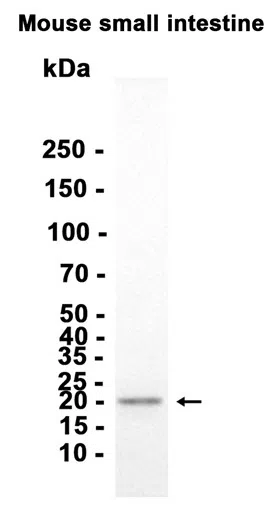
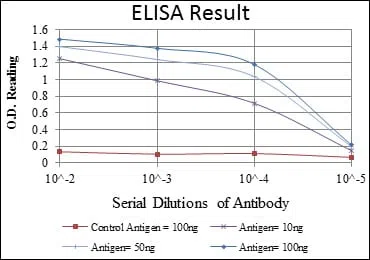
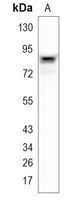
EnkiLife offers the Phospho-PKA IIβ reg (Ser113) Rabbit Polyclonal Antibody. This antibody reacts with Human,Mouse,Rat,Monkey species and is suitable for WB,IHC,ICC/IF,ELISA application. Alternative Names of Immunogen: PRKAR2B; cAMP-dependent protein kinase type II-beta regulatory subunit. The product boasts remarkable high specificity, outstanding reproducibility, and exceptional affinity, making it a reliable and superior choice for your needs. Dilution Ratio: WB 1:500-1:2000,IHC 1:100-1:300,ICC/IF 1:50-1:200,ELISA 1:5000-1:20000 Background: cAMP is a signaling molecule important for a variety of cellular functions. cAMP exerts its effects by activating the cAMP-dependent protein kinase, which transduces the signal through phosphorylation of different target proteins. The inactive kinase holoenzyme is a tetramer composed of two regulatory and two catalytic subunits. cAMP causes the dissociation of the inactive holoenzyme into a dimer of regulatory subunits bound to four cAMP and two free monomeric catalytic subunits. Four different regulatory subunits and three catalytic subunits have been identified in humans. The protein encoded by this gene is one of the regulatory subunits. This subunit can be phosphorylated by the activated catalytic subunit. This subunit has been shown to interact with and suppress the transcriptional activity of the cAMP responsive element binding protein 1 (CREB1) in activfunction:Type II regulatory chains mediate membrane association by binding to anchoring proteins, including the MAP2 kinase.,PTM:Phosphorylated by the activated catalytic chain.,similarity:Belongs to the cAMP-dependent kinase regulatory chain family.,similarity:Contains 2 cyclic nucleotide-binding domains.,subunit:The inactive form of the enzyme is composed of two regulatory chains and two catalytic chains. Activation by cAMP produces two active catalytic monomers and a regulatory dimer that binds four cAMP molecules.,tissue specificity:Four types of regulatory chains are found: I-alpha, I-beta, II-alpha, and II-beta. Their expression varies among tissues and is in some cases constitutive and in others inducible., Research Area: Apoptosis_Inhibition;Apoptosis_Mitochondrial;Apoptosis_Overview;Insulin_Receptor;
More from EnkiLife