Phospho-RyR-2 (Ser2808) Rabbit Polyclonal Antibody
APRab05399-20μL · 20μL
Verified Partner
Sign in to see pricing and request a quote.
Brand Store Product
No external links. Get your quote directly here.

Description
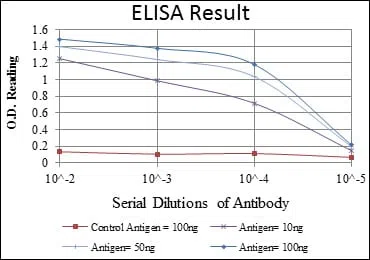
EnkiLife offers the Phospho-RyR-2 (Ser2808) Rabbit Polyclonal Antibody. This antibody reacts with Human,Mouse,Rat species and is suitable for IHC,ICC/IF,ELISA application. Alternative Names of Immunogen: RYR2; Ryanodine receptor 2; RYR-2; RyR2; hRYR-2; Cardiac muscle ryanodine receptor; Cardiac muscle ryanodine receptor-calcium release channel; Type 2 ryanodine receptor. The product boasts remarkable high specificity, outstanding reproducibility, and exceptional affinity, making it a reliable and superior choice for your needs. Dilution Ratio: IHC 1:100-1:300,ICC/IF 1:50-1:200,ELISA 1:5000-1:20000 Background: This gene encodes a ryanodine receptor found in cardiac muscle sarcoplasmic reticulum. The encoded protein is one of the components of a calcium channel, composed of a tetramer of the ryanodine receptor proteins and a tetramer of FK506 binding protein 1B proteins, that supplies calcium to cardiac muscle. Mutations in this gene are associated with stress-induced polymorphic ventricular tachycardia and arrhythmogenic right ventricular dysplasia. [provided by RefSeq, Jul 2008],developmental stage:Expressed in myometrium during pregnancy.,disease:Defects in RYR2 are the cause of catecholaminergic polymorphic ventricular tachycardia type 1 (CPVT1) [MIM:604772]; also known as stress-induced polymorphic ventricular tachycardia (VTSIP). CPVT1 is an autosomal dominant form of arrhythmogenic disorder characterized by stress-induced, bidirectional ventricular tachycardia that may degenerate into cardiac arrest and cause sudden death.,disease:Defects in RYR2 are the cause of familial arrhythmogenic right ventricular dysplasia 2 (ARVD2) [MIM:600996]; also known as arrhythmogenic right ventricular cardiomyopathy 2 (ARVC2). ARVD is an autosomal dominant disease characterized by partial degeneration of the myocardium of the right ventricle, electrical instability, and sudden death. It is clinically defined by electrocardiographic and angiographic criteria; pathologic findings, replacement of ventricular myocardium with fatty and fibrous elements, preferentially involve the right ventricular free wall.,function:Communication between transverse-tubules and sarcoplasmic reticulum. Contraction of cardiac muscle is triggered by release of calcium ions from SR following depolarization of T-tubules.,induction:By TGF-beta.,miscellaneous:Ryanodine is an alkaloid that binds to the Ca-release channel in junctional SR and modulates its activity.,miscellaneous:The calcium release channel activity resides in the C-terminal region while the remaining part of the protein constitutes the 'foot' structure spanning the junctional gap between the SR and the T-tubule. It is possible that the foot structure interacts with the cytoplasmic region of the dihydropyridine receptor.,miscellaneous:The calcium release channel is modulated by calcium ions, magnesium ions, ATP and calmodulin.,online information:Ryanodine receptor entry,online information:RYR2 entry,similarity:Belongs to the ryanodine receptor family.,similarity:Contains 2 EF-hand domains.,similarity:Contains 3 B30.2/SPRY domains.,similarity:Contains 5 MIR domains.,subunit:Homotetramer .,tissue specificity:Heart muscle, brain (cerebellum and hippocampus) and placenta., Research Area: Calcium;Cardiac muscle contraction;Hypertrophic cardiomyopathy (HCM);Arrhythmogenic right ventricular cardiomyopathy (ARVC);Dilated cardiomyopathy;
More from EnkiLife