
Phospho-Synaptotagmin 1/2 (Ser309/306) Rabbit Polyclonal Antibody
APRab05505-100μL · 100μL
Verified Partner
Sign in to see pricing and request a quote.
Brand Store Product
No external links. Get your quote directly here.
Description
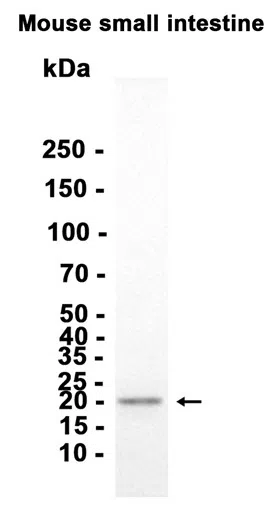
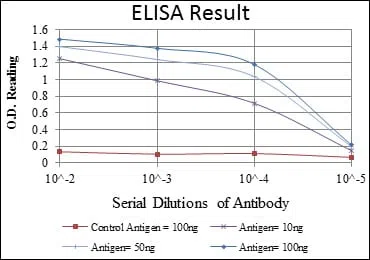
EnkiLife offers the Phospho-Synaptotagmin 1/2 (Ser309/306) Rabbit Polyclonal Antibody. This antibody reacts with Human,Mouse,Rat species and is suitable for WB,IHC,ICC/IF,ELISA application. Alternative Names of Immunogen: SYT1; SVP65; SYT; Synaptotagmin-1; Synaptotagmin I; SytI; p65; SYT2; Synaptotagmin-2; Synaptotagmin II; SytII. The product boasts remarkable high specificity, outstanding reproducibility, and exceptional affinity, making it a reliable and superior choice for your needs. Dilution Ratio: WB 1:500-1:2000,IHC 1:100-1:300,ICC/IF 1:50-1:200,ELISA 1:5000-1:20000 Background: The synaptotagmins are integral membrane proteins of synaptic vesicles thought to serve as Ca(2+) sensors in the process of vesicular trafficking and exocytosis. Calcium binding to synaptotagmin-1 participates in triggering neurotransmitter release at the synapse (Fernandez-Chacon et al., 2001 [PubMed 11242035]).[supplied by OMIM, Jul 2010],cofactor:Binds 3 calcium ions per subunit. The ions are bound to the C2 domains.,domain:The first C2 domain mediates Ca(2+)-dependent phospholipid binding.,domain:The second C2 domain mediates interaction with SV2A and STN2.,function:May have a regulatory role in the membrane interactions during trafficking of synaptic vesicles at the active zone of the synapse. It binds acidic phospholipids with a specificity that requires the presence of both an acidic head group and a diacyl backbone. A Ca(2+)-dependent interaction between synaptotagmin and putative receptors for activated protein kinase C has also been reported. It can bind to at least three additional proteins in a Ca(2+)-independent manner; these are neurexins, syntaxin and AP2.,similarity:Belongs to the synaptotagmin family.,similarity:Contains 2 C2 domains.,subcellular location:Synaptic vesicles and chromaffin granules.,subunit:Homotetramer (Probable). Interacts with SCAMP5, STN2, SV2A, SV2B, SV2C and RIMS1. Forms a complex with SV2B, syntaxin 1 and SNAP25.,
More from EnkiLife