Phospho-VHL (Ser68) Rabbit Polyclonal Antibody
APRab05622-20μL · 20μL
Verified Partner
Sign in to see pricing and request a quote.
Brand Store Product
No external links. Get your quote directly here.

Description
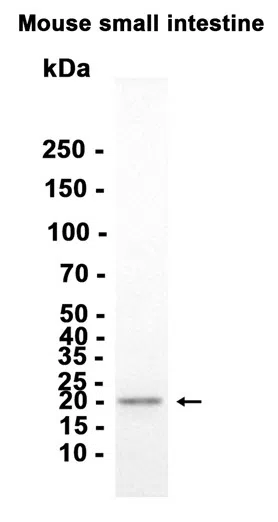
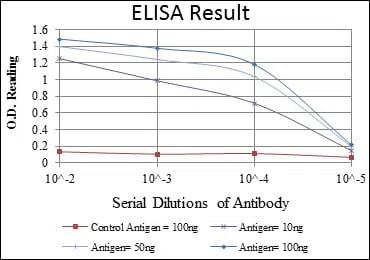
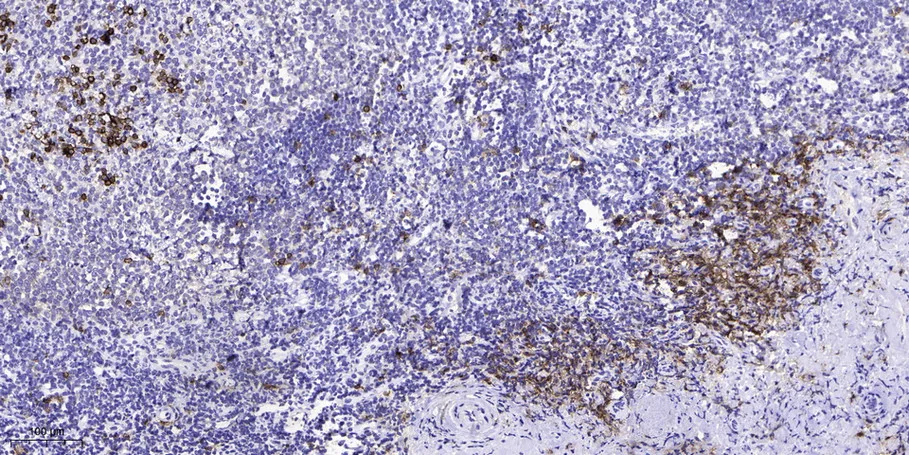
EnkiLife offers the Phospho-VHL (Ser68) Rabbit Polyclonal Antibody. This antibody reacts with Human,Mouse,Rat species and is suitable for IHC,ICC/IF,ELISA application. Alternative Names of Immunogen: VHL; Von Hippel-Lindau disease tumor suppressor; Protein G7; pVHL. The product boasts remarkable high specificity, outstanding reproducibility, and exceptional affinity, making it a reliable and superior choice for your needs. Dilution Ratio: IHC 1:100-1:300,ICC/IF 1:50-1:200,ELISA 1:5000-1:10000 Background: von Hippel-Lindau tumor suppressor(VHL) Homo sapiens Von Hippel-Lindau syndrome (VHL) is a dominantly inherited familial cancer syndrome predisposing to a variety of malignant and benign tumors. A germline mutation of this gene is the basis of familial inheritance of VHL syndrome. The protein encoded by this gene is a component of the protein complex that includes elongin B, elongin C, and cullin-2, and possesses ubiquitin ligase E3 activity. This protein is involved in the ubiquitination and degradation of hypoxia-inducible-factor (HIF), which is a transcription factor that plays a central role in the regulation of gene expression by oxygen. RNA polymerase II subunit POLR2G/RPB7 is also reported to be a target of this protein. Alternatively spliced transcript variants encoding distinct isoforms have been observed. [provided by RefSeq, Jul 2008],disease:Defects in VHL are a cause of pheochromocytoma [MIM:171300]. The pheochromocytomas are catecholamine-producing, chromaffin tumors that arise in the adrenal medulla in 90% of cases. In the remaining 10% of cases, they develop in extra-adrenal sympathetic ganglia and may be referred to as "paraganglioma." Pheochromocytoma usually presents with hypertension. Approximately 10% of pheochromocytoma is hereditary. The genetic basis for most cases of non-syndromic familial pheochromocytoma is unknown.,disease:Defects in VHL are a cause of renal cell carcinoma type 1 (RCC1) [MIM:144700]; also called hypernephroma or adenocarcinoma of kidney. Familial renal cell carcinoma syndromes form a group of diseases characterized by a predisposition to development of renal cell carcinomas (RCCs) with various histological subtypes.,disease:Defects in VHL are the cause of erythrocytosis familial type 2 (ECYT2) [MIM:263400]; also called VHL-dependent polycythemia or Chuvash type polycythemia. ECYT2 is an autosomal recessive disorder characterized by an increase in serum red blood cell mass, hypersensitivity of erythroid progenitors to erythropoietin, increased erythropoietin serum levels, and normal oxygen affinity. Patients with ECYT2 carry a high risk for peripheral thrombosis and cerebrovascular events.,disease:Defects in VHL are the cause of von Hippel-Lindau disease (VHLD) [MIM:193300]. VHLD is a dominantly inherited familial cancer syndrome characterized by the development of retinal angiomatosis, cerebellar and spinal hemangioblastoma, renal cell carcinoma (RCC), phaeochromocytoma and pancreatic tumors. VHL type 1 is without pheochromocytoma, type 2 is with pheochromocytoma. VHL type 2 is further subdivided into types 2A (pheochromocytoma, retinal angioma, and hemangioblastomas without renal cell carcinoma and pancreatic cyst) and 2B (pheochromocytoma, retinal angioma, and hemangioblastomas with renal cell carcinoma and pancreatic cyst). VHL type 2C refers to patients with isolated pheochromocytoma without hemangioblastoma or renal cell carcinoma. The estimated incidence is 3/100000 births per year and penetrance is 97% by age 60 years.,domain:The elongin BC complex binding domain is also known as BC-box with the consensus [APST]-L-x(3)-C-x(3)-[AILV].,function:Involved in the ubiquitination and subsequent proteasomal degradation via the von Hippel-Lindau ubiquitination complex. Seems to act as target recruitment subunit in the E3 ubiquitin ligase complex and recruits hydroxylated hypoxia-inducible factor (HIF) under normoxic conditions. Involved in transcriptional repression through interaction with HIF1A, HIF1AN and histone deacetylases.,pathway:Protein modification; protein ubiquitination.,subcellular location:Equally distributed between the nucleus and the cytoplasm but not membrane-associated.,subcellular location:Found predominantly in the cytoplasm and with less amounts nuclear or membrane-associated.,subunit:Component of the VCB (VHL-Elongin BC-CUL2) complex; this complex acts as a ubiquitin-ligase E3 and directs proteosome-dependent degradation of targeted proteins. Interacts with CUL2; this interaction is dependent on the integrity of the trimeric VBC complex. Interacts (via the beta domain) with HIF1A (via the NTAD domain); this interaction mediates degradation of HIF1A in normoxia and, in hypoxia, prevents ubiqitination and degradation of HIF1A by mediating hypoxia-induced translocation to the nucleus, a process which requires a hypoxia-dependent regulatory signal. Interacts with RNF139 and UBP33. Interacts with PHF17.,tissue specificity:Expressed in the adult and fetal brain and kidney., Research Area: Ubiquitin mediated proteolysis;Pathways in cancer;Renal cell carcinoma;
More from EnkiLife