Plasminogen Rabbit Polyclonal Antibody
APRab16241-100μL · 100μL
Verified Partner
Sign in to see pricing and request a quote.
Brand Store Product
No external links. Get your quote directly here.

Description
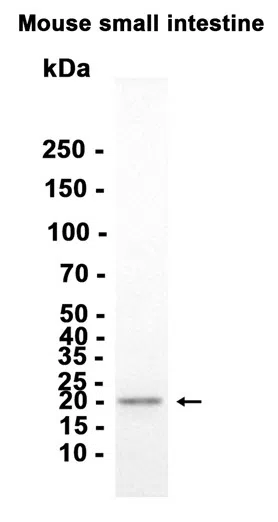
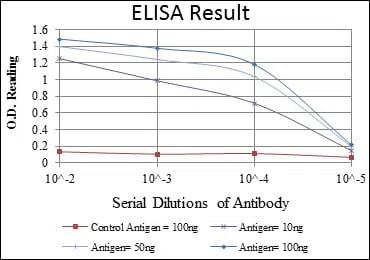
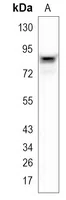
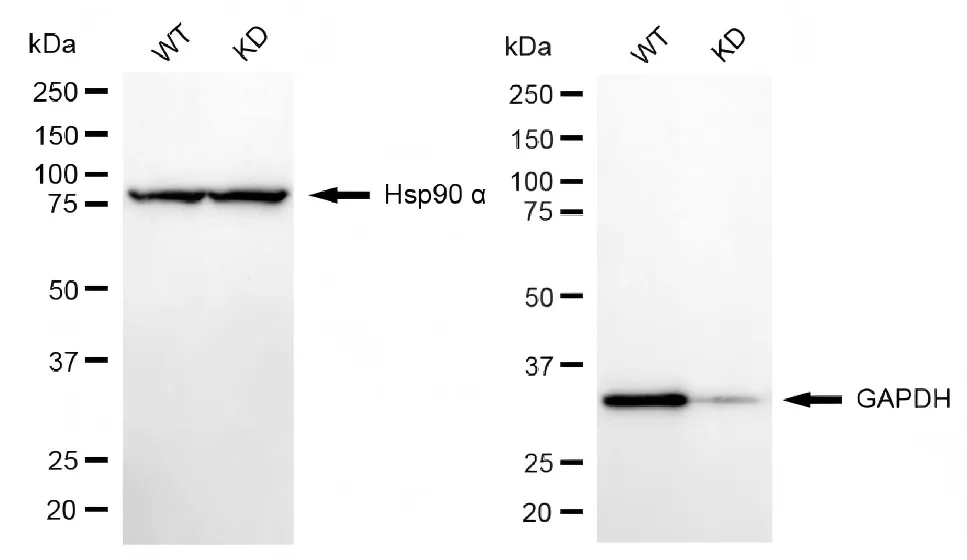
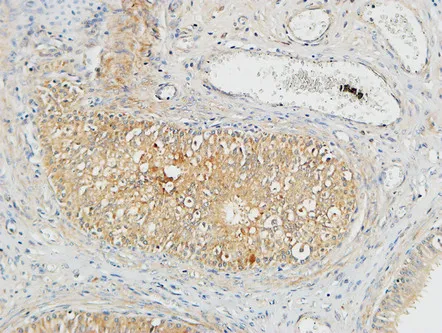
EnkiLife offers the Plasminogen Rabbit Polyclonal Antibody. This antibody reacts with Human,Rat,Mouse species and is suitable for WB,IHC,ICC/IF,ELISA application. Alternative Names of Immunogen: PLG; Plasminogen. The product boasts remarkable high specificity, outstanding reproducibility, and exceptional affinity, making it a reliable and superior choice for your needs. Dilution Ratio: WB 1:500-1:2000,IHC 1:100-1:300,ICC/IF 1:50-1:200,ELISA 1:20000-1:40000 Background: The protein encoded by this gene is a secreted blood zymogen that is activated by proteolysis and converted to plasmin and angiostatin. Plasmin dissolves fibrin in blood clots and is an important protease in many other cellular processes while angiostatin inhibits angiogenesis. Defects in this gene are likely a cause of thrombophilia and ligneous conjunctivitis. Two transcript variants encoding different isoforms have been found for this gene.[provided by RefSeq, Dec 2009],catalytic activity:Preferential cleavage: Lys-|-Xaa > Arg-|-Xaa; higher selectivity than trypsin. Converts fibrin into soluble products.,disease:Defects in PLG are a cause of thrombophilia [MIM:188050]; a form of recurrent thrombosis.,disease:Defects in PLG may be associated with ligneous conjunctivitis [MIM:217090]. Ligneous conjunctivitis is an unusual and rare form of chronic conjunctivitis, characterized by chronic tearing and redness of the conjunctivae. Initially, pseudomembranes form on the palpebral surfaces which then progress to thick nodular masses that replace the normal mucosa. Because the pseudomembranes have a woodlike consistency, the disease is termed "ligneous" conjunctivitis. The disease may be associated with pseudomembranous lesions of other mucous membranes in the mouth, nasopharynx, trachea, and female genital tract.,domain:Kringle domains mediate interaction with CSPG4.,enzyme regulation:Converted into plasmin by plasminogen activators, both plasminogen and its activator being bound to fibrin. Activated with catalytic amounts of streptokinase.,function:Angiostatin is an angiogenesis inhibitor that blocks neovascularization and growth of experimental primary and metastatic tumors in vivo.,function:Plasmin dissolves the fibrin of blood clots and acts as a proteolytic factor in a variety of other processes including embryonic development, tissue remodeling, tumor invasion, and inflammation; in ovulation it weakens the walls of the Graafian follicle. It activates the urokinase-type plasminogen activator, collagenases and several complement zymogens, such as C1 and C5. It cleaves fibrin, fibronectin, thrombospondin, laminin and von Willebrand factor. Its role in tissue remodeling and tumor invasion may be modulated by CSPG4.,miscellaneous:Plasmin is inactivated by alpha-2-antiplasmin immediately after dissociation from the clot.,online information:Plasmin entry,PTM:In the presence of the inhibitor, the activation involves only cleavage after Arg-580, yielding two chains held together by two disulfide bonds. In the absence of the inhibitor, the activation involves additionally the removal of the activation peptide.,PTM:N-linked glycan contains N-acetyllactosamine and sialic acid. O-linked glycans consist of Gal-GalNAc disaccharide modified with up to 2 sialic acid residues (microheterogeneity).,similarity:Belongs to the peptidase S1 family.,similarity:Belongs to the peptidase S1 family. Plasminogen subfamily.,similarity:Contains 1 PAN domain.,similarity:Contains 1 peptidase S1 domain.,similarity:Contains 5 kringle domains.,subunit:Interacts with AMOT and CSPG4 (also true for angiostatin).,tissue specificity:Present in plasma and many other extracellular fluids. It is synthesized in the liver., Research Area: Neuroactive ligand-receptor interaction;Complement and coagulation cascades;
More from EnkiLife