Recombinant Human CD32a (H167,C-6His)
PHH0629-500ug · 500ug
Verified Partner
Sign in to see pricing and request a quote.
Brand Store Product
No external links. Get your quote directly here.

Description
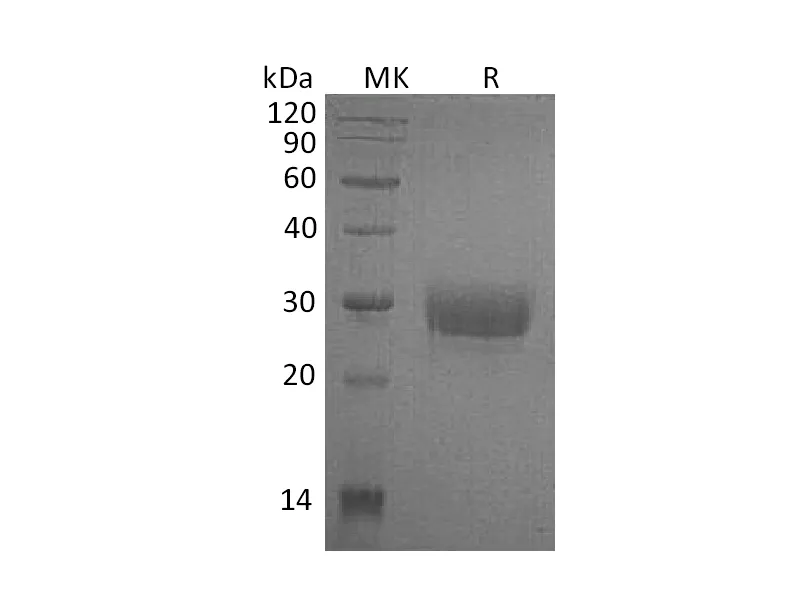
EnkiLife provides the Recombinant Human CD32a (H167,C-6His) protein,aslo know as Low affinity immunoglobulin gamma Fc region receptor II-a,IgG Fc receptor II-a,CDw32,Fc-gamma RII-a,Fc-gamma-RIIa,FcRII-a,CD32,FCGR2A,FCG2,FCGR2A1,IGFR2, which features high purity, high activity, and high stability. It can be applied in scientific research, biopharmaceuticals, and other fields.Purity:Greater than 95% as determined by reducing SDS-PAGE;Endotoxin Level:<1 EU/µg as determined by LAL test.;Construction:Recombinant Human Low Affinity Immunoglobulin Gamma Fc Region Receptor II-A(H167) is produced by our Mammalian expression system and the target gene encoding Ala36-Ile218 is expressed with a 6His tag at the C-terminus. It is identical to FCGR2A131H/R in the reference.Accession:P12318. Expression Host:Human Cells.Species:Human.Predicted Molecular Mass:21.1 KDa. Background:Human FcγRs are divided into three classes designated FcγRI (CD64), FcγRII (CD32), and FcγRIII (CD16), which generate multiple isoforms, are recognized. The activating/xad type receptor either has or associates non/xadcovalently with an accessory subunit that has an immunoreceptor tyrosine/xadbased activation motif (ITAM) in its cytoplasmic domain. FcγRI binds IgG with high affinity and functions during early immune responses, whereas FcγRII and RIII are low affinity receptors that recognize IgG as aggregates surrounding multivalent antigens during late immune responses.Human CD32, also known as Low affinity immunoglobulin γ Fc region receptor II-a (IgG Fc receptor II-a), FcγRII A or FCGR2A Protein, is expressed on cells of both myeloid and lymphoid lineages as well as on cells of non-hematopoietic origin. Associated with an ITAM-bearing adapter subunit, FcRγ, CD32a (FcγRII A) delivers an activating signal upon ligand binding, and results in the initiation of inflammatory responses including cytolysis, phagocytosis, degranulation, and cytokine production. The responses can be modulated by signals from the co-expressed inhibitory receptors such as Fcγ RII B, and the strength of the signal is dependent on the ratio of expression of the activating and inhibitory receptors.
More from EnkiLife