Recombinant Human EpCAM (C-6His)
PHH0575-10ug · 10ug
Verified Partner
Sign in to see pricing and request a quote.
Brand Store Product
No external links. Get your quote directly here.

Description
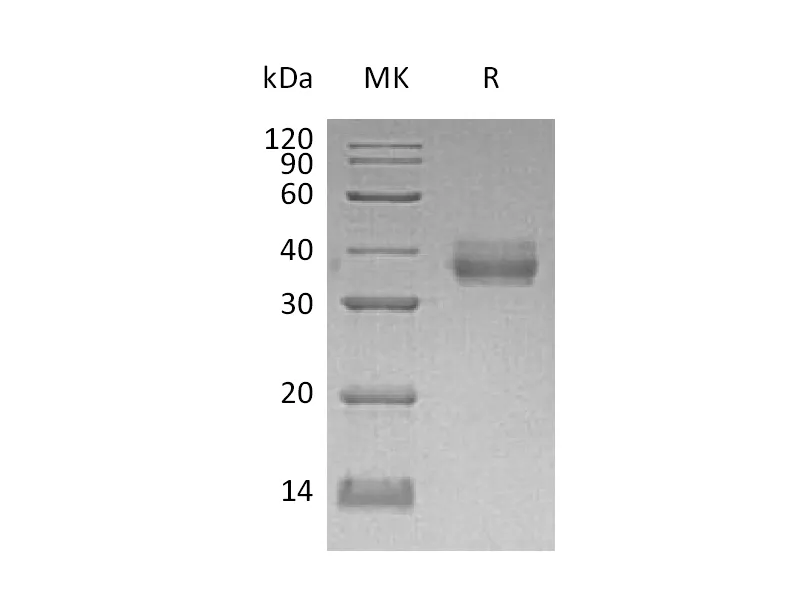
EnkiLife provides the Recombinant Human EpCAM (C-6His) protein,aslo know as Epithelial Cell Adhesion Molecule,Ep-CAM,Adenocarcinoma-Associated Antigen,Cell Surface Glycoprotein Trop-1,Epithelial Cell Surface Antigen,Epithelial Glycoprotein,EGP,Epithelial Glycoprotein 314,EGP314,hEGP314,KSA,Tumor-Associated Calcium Signal Transducer 1,CD326,EPCAM, which features high purity, high activity, and high stability. It can be applied in scientific research, biopharmaceuticals, and other fields.Purity:Greater than 95% as determined by reducing SDS-PAGE;Endotoxin Level:<1 EU/µg as determined by LAL test.;Construction:Recombinant Human Epithelial Cell Adhesion Molecule is produced by our Mammalian expression system and the target gene encoding Gln24-Lys265 is expressed with a 6His tag at the C-terminus.Accession:AAH14785.1. Expression Host:Human Cells.Species:Human.Predicted Molecular Mass:28.43 KDa. Background:Epithelial Cell Adhesion Molecule (EpCAM) is a signal type I transmembrane glycoprotein that belongs to the EPCAM family. EpCAM is composed of an extracellular domain with one thyroglobulin type-1 domain, a transmembrane domain and a cytoplasmic domain. EpCAM is found on the surface of adenocarcinoma, but not on mesodermal or neural cell membranes. The EpCAM molecule has been shown to function as a homophilic Ca2+ independent adhesion molecule. It may act as a physical homophilic interaction molecule between intestinal epithelial cells (IECs) and intraepithelial lymphocytes (IELs) at the mucosal epithelium as an immunological barrier providing the first line of defense against infection. Defects in EPCAM are a cause of hereditary non-polyposis colorectal cancer type 8 (HNPCC8) and diarrhea type 5 (DIAR5). EpCAM plays a role in embryonic stem cells proliferation and differentiation; it up-regulates the expression of FABP5, MYC and Cyclin A and Cyclin E. It is highly and selectively expressed by undifferentiated embryonic stem cells.
More from EnkiLife