
Recombinant Human HVEM (C-mFc)
PHH2060-50ug · 50ug
Verified Partner
Sign in to see pricing and request a quote.
Brand Store Product
No external links. Get your quote directly here.

Description
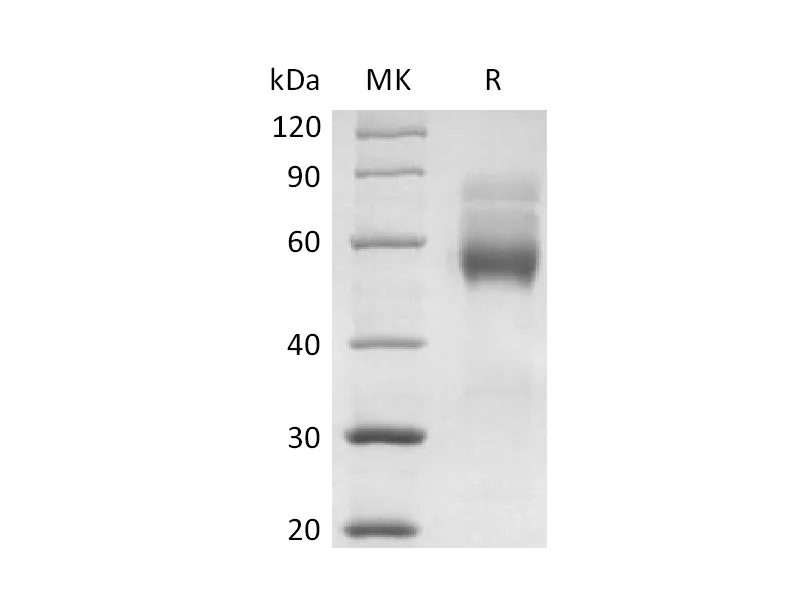
EnkiLife provides the Recombinant Human HVEM (C-mFc) protein,aslo know as Tumor Necrosis Factor Receptor Superfamily Member 14,Herpes Virus Entry Mediator A,Herpesvirus Entry Mediator A,HveA,Tumor Necrosis Factor Receptor-Like 2,TR2,CD270,TNFRSF14,HVEA,HVEM, which features high purity, high activity, and high stability. It can be applied in scientific research, biopharmaceuticals, and other fields.Purity:Greater than 95% as determined by reducing SDS-PAGE;Endotoxin Level:<1 EU/µg as determined by LAL test.;Construction:Recombinant Human Herpesvirus Entry Mediator is produced by our Mammalian expression system and the target gene encoding Pro37-Val202 is expressed with a mouse IgG1 Fc tag at the C-terminus.Accession:Q92956. Expression Host:Human Cells.Species:Human.Predicted Molecular Mass:44.1 KDa. Background:Herpesvirus entry mediator (HVEM) is a type I membrane protein in the TNF receptor superfamily, and it can both promote and inhibit T cell activity. HVEM is highly expressed on naïve CD4+ T cells, CD8+ T memory cells, regulatory T cells, dendritic cells, monocytes, and neutrophils. It functions as a receptor for BTLA, CD160, LIGHT/TNFSF14, and Lymphotoxin-alpha. Ligation of HVEM by LIGHT triggers T cell, monocyte, and neutrophil activation and contributes to Th1 inflammation and cardiac allograft rejection. In contrast, HVEM binding to CD160 or BTLA suppresses T cell and dendritic cell activation and dampens intestinal inflammation. HVEM enhances the development of CD8+ T cell memory and Treg function. It is additionally expressed on intestinal epithelial cells, where its binding by intraepithelial lymphocyte (IEL) expressed CD160 promotes epitheilal integrity and host defense. The herpesvirus envelope glycoprotein gD, which binds HVEM to initiate membrane fusion, can antagonize both BTLA and LIGHT binding.